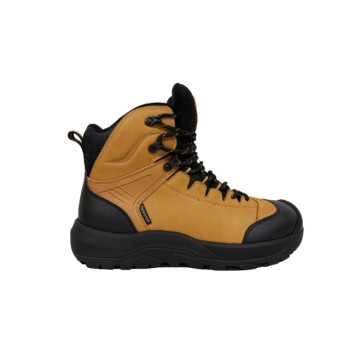
Choosing the right winter boot height is a strategic decision, not just a stylistic one. The height directly determines your level of protection against snow, your ankle support, and your overall mobility. In short, lower boots offer greater flexibility for light conditions, while taller boots provide maximum protection in deep snow at the cost of some agility.
The height of your winter boot is a direct trade-off between protection from the elements and freedom of movement. Your primary activity and the expected snow depth are the most critical factors in determining the right balance for your needs.
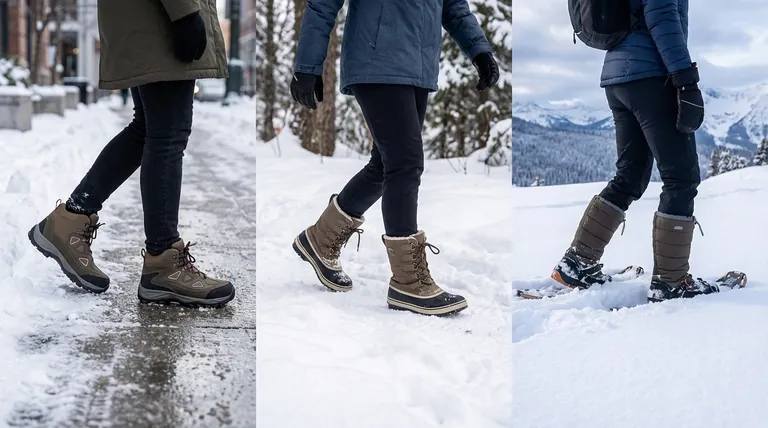
The Spectrum of Protection: From Ankle to Knee
The suitability of a boot is defined by its ability to keep snow out and support your foot during a specific activity. This is where height becomes the primary design feature to consider.
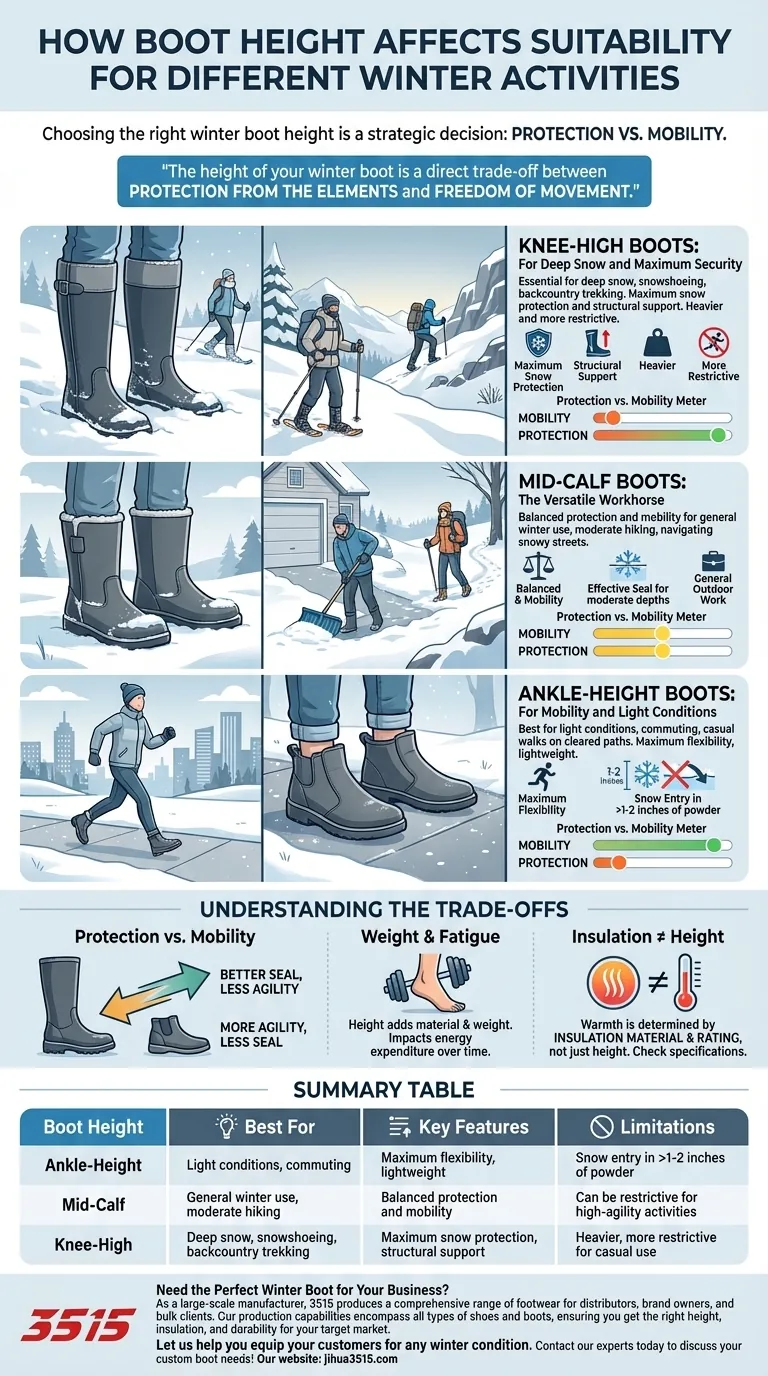
Ankle-Height Boots: For Mobility and Light Conditions
Ankle boots are designed for minimal winter conditions. They excel in environments where you encounter cold pavement or a light dusting of snow.
Their low cut provides maximum flexibility and a lightweight feel, making them ideal for commuting or casual walks on cleared paths. Their primary weakness is their inability to prevent snow from entering the top of the boot in anything more than an inch or two of powder.
Mid-Calf Boots: The Versatile Workhorse
Mid-calf boots represent the most versatile option for general winter use. They strike an effective balance between protection and mobility.
This height is high enough to keep snow out while shoveling your driveway, going for a light winter hike, or navigating snowy city streets. For most people, this is the go-to height for its all-around functionality.
Knee-High Boots: For Deep Snow and Maximum Security
Knee-high boots offer uncompromising protection for the most severe winter conditions. Their purpose is to create a complete barrier against deep snow.
This is the required height for activities like snowshoeing, backcountry winter hiking, or any work in deep, untouched powder. The added height also provides more structural support, though they are often heavier and more restrictive for casual use.
Understanding the Trade-offs
Selecting a boot height isn't just about going taller for more protection. You must consider the secondary effects that come with that choice.
Protection vs. Mobility
This is the core trade-off. A taller boot provides a better seal against the elements but can restrict the natural flexion of your ankle.
For dynamic activities requiring agility, a boot that is too high can feel cumbersome. Conversely, a boot that is too short for the conditions will inevitably lead to wet, cold feet, ending your activity early.
Weight and Fatigue
Height adds material, which almost always adds weight. While a few extra ounces may seem trivial, this weight is carried on your feet, where it has a disproportionate impact on energy expenditure.
Over a long hike or a full day of work, the difference in fatigue between a mid-calf and a knee-high boot can be significant.
Insulation is Not Height
Do not mistake a tall boot for a warm boot. While height helps keep out cold snow, the actual warmth is determined by the boot's insulation material and rating.
A well-insulated ankle boot can be much warmer than an uninsulated knee-high boot. Always check for insulation specifications in addition to considering the boot's height.
Making the Right Choice for Your Activity
Filter your choice through the lens of your most common winter environment and activity level.
- If your primary focus is urban commuting and casual walks: Ankle or mid-calf boots offer the best balance of warmth and mobility for cleared or lightly dusted pathways.
- If your primary focus is general outdoor work or moderate hiking: Mid-calf boots are your most reliable choice, providing excellent protection from common snow depths without being overly restrictive.
- If your primary focus is deep-snow activities like snowshoeing or backcountry trekking: Knee-high boots are essential for keeping snow out and providing maximum support in challenging conditions.
Ultimately, matching your boot height to the deepest snow you realistically plan to encounter is the most reliable way to ensure a warm, dry, and successful winter outing.
Summary Table:
| Boot Height | Best For | Key Features | Limitations |
|---|---|---|---|
| Ankle-Height | Light conditions, commuting | Maximum flexibility, lightweight | Snow entry in >1-2 inches of powder |
| Mid-Calf | General winter use, moderate hiking | Balanced protection and mobility | Can be restrictive for high-agility activities |
| Knee-High | Deep snow, snowshoeing, backcountry trekking | Maximum snow protection, structural support | Heavier, more restrictive for casual use |
Need the Perfect Winter Boot for Your Business?
As a large-scale manufacturer, 3515 produces a comprehensive range of footwear for distributors, brand owners, and bulk clients. Our production capabilities encompass all types of shoes and boots, ensuring you get the right height, insulation, and durability for your target market.
Let us help you equip your customers for any winter condition. Contact our experts today to discuss your custom boot needs!
Visual Guide
Related Products
- Premium Insulated Safety Boots and Shoes for Wholesale & Bulk Orders
- Factory Direct Wholesale Rain Boots Durable Waterproof & Fully Customizable
- Durable Waterproof Rain Boots | Custom Manufacturer for Wholesale & Brands
- Wholesale Waterproof Tactical Boots Custom Suede & High-Traction Soles
- Premium Waterproof High-Cut Industrial Safety Boots for Wholesale and Bulk Orders
People Also Ask
- What are the recommended insulation ratings for mild winter conditions? A Guide for Active & Stationary Workers
- How does insulation thickness correlate with temperature ranges? A Guide to Choosing the Right Warmth
- What insulation level is needed for severe cold and stationary work? 1200g or Higher is Essential
- What safety advantages do insulated boots offer beyond warmth? Dielectric Protection & Superior Grip
- How does fleece lining contribute to the warmth of insulated boots? Trapping Air for Superior Cold Protection