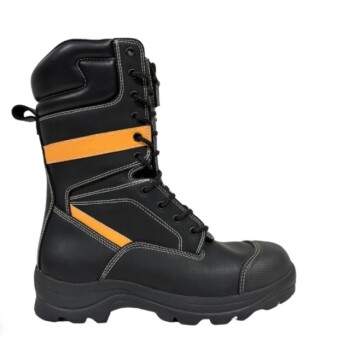
The retroreflectometer is the definitive tool for objective visibility measurement in safety gear. It functions by simulating specific real-world viewing conditions, typically employing a 12' observation angle and a 5° entrance angle. By measuring the coefficient of retroreflection (R), the device provides a repeatable numerical value that defines how effectively a material returns light to its source, ensuring it meets required safety grades.
A retroreflectometer translates the subjective concept of "brightness" into a precise scientific metric by simulating the geometric relationship between a light source and an observer. This data allows for the objective evaluation of reflective structures before and after the material undergoes environmental or physical stress.
The Mechanics of Light Simulation
Simulating the Driver’s Perspective
The device is designed to mimic the interaction between a vehicle's headlights and a driver's eyes. By using a standardized 12' observation angle, it replicates the path light takes as it travels from a source to the reflective material and back to an observer positioned near that source.
Defining the Entrance Angle
A 5° entrance angle is utilized to represent light hitting the footwear or apparel from a slight offset. This ensures the measurement accounts for realistic scenarios where a worker or pedestrian is not standing perfectly perpendicular to an approaching vehicle's light path.
Quantifying Material Performance
Calculating the Coefficient of Retroreflection (R)
The coefficient of retroreflection, or R-value, is the primary output used to determine the efficiency of light return. This metric provides a standardized way to compare different grades of reflective tape and confirm they meet the minimum thresholds established by safety regulations.
Evaluating Micro-Structures
Retroreflectometers assess the integrity of micro-bead or micro-prism arrays embedded within the fabric. These tiny structures are engineered to redirect light directly back to the source; the device measures how much of that light is successfully returned versus how much is lost to scattering.
Understanding the Trade-offs
Laboratory Precision vs. Real-World Variables
While the retroreflectometer provides high precision, it typically measures at fixed angles which may not capture a material's performance at extreme orientations. In the field, factors like heavy rain or the specific curvature of a moving limb can cause visibility to vary from the static laboratory result.
Post-Treatment Performance Drops
Measurements taken after "treatments"—such as industrial laundering or abrasion—often reveal a significant decrease in the R-value. A material that appears highly reflective when new may fail its safety grade quickly if the micro-prism structures are susceptible to physical wear or chemical damage.
How to Apply These Metrics to Material Selection
When selecting reflective materials for safety footwear and apparel, the R-value should be treated as a dynamic rather than a static measurement.
- If your primary focus is regulatory compliance: Ensure the material maintains its required R-value after the maximum number of industrial wash cycles specified for the garment.
- If your primary focus is maximum worker visibility: Prioritize materials that demonstrate high R-values across a broader range of simulated entrance angles to account for unpredictable light sources.
Understanding the technical precision of retroreflectometry ensures that the visibility of your safety equipment is a verified performance fact rather than a visual estimation.
Summary Table:
| Parameter | Standard Metric | Function in Evaluation |
|---|---|---|
| Observation Angle | 12' (minutes of arc) | Mimics the angle between vehicle headlights and a driver's eyes. |
| Entrance Angle | 5° | Represents light hitting footwear/apparel from a realistic, slight offset. |
| Primary Metric | Coefficient of Retroreflection (R) | Quantifies the efficiency of light returned to the source. |
| Structural Focus | Micro-beads / Micro-prisms | Assesses the integrity of light-redirecting arrays under stress. |
| Durability Check | Post-Treatment R-Value | Measures performance loss after washing, abrasion, or chemical exposure. |
Partner with 3515 for High-Visibility Safety Solutions
As a large-scale manufacturer serving distributors and brand owners, 3515 offers comprehensive production capabilities for all footwear types, anchored by our flagship Safety Shoes series. We understand that in the safety industry, visibility is non-negotiable. Our manufacturing process integrates rigorously tested reflective materials to ensure every pair of shoes meets global safety standards and maintains performance even after heavy use.
Our extensive portfolio covers work and tactical boots, outdoor shoes, training shoes, and sneakers, as well as Dress & Formal shoes to meet your diverse bulk requirements.
Ready to elevate your product line with verified safety performance? Contact us today to discuss your wholesale or OEM needs and benefit from our decades of manufacturing expertise.
References
- Oksan Kansoy Oral, Nіlgün Özdіl. Investigation of the changes in reflective properties of reflective tapesdue to various effects. DOI: 10.35530/it.074.03.202259
This article is also based on technical information from 3515 Knowledge Base .
Related Products
- Lightweight Breathable Sneakers with Wet-Traction Grip for Wholesale & Private Label
- Wholesale Tactical Boots High-Traction & Reflective for Bulk & Brand Orders
- Wholesale Durable Safety Boots Manufacturer Customizable Steel Toe Work Boots
- Durable High-Ankle Tactical Boots Wholesale Manufacturer for Custom & Bulk Orders
- High Performance Fire-Retardant Waterproof Safety Boots
People Also Ask
- Why are breathable sneakers necessary for tropical commuting? Stay Cool and Dry in High Humidity
- What role do lightweight training shoes play in urban traffic? Boost Agility and Reaction for Safer City Navigation
- How do lightweight shoes provide support? The Science of Efficient Cushioning & Stability
- How do lightweight shoes contribute to healthier feet? Reduce Fatigue & Prevent Foot Problems
- How do lightweight shoes improve breathability? Discover the Science of Cool, Dry Feet