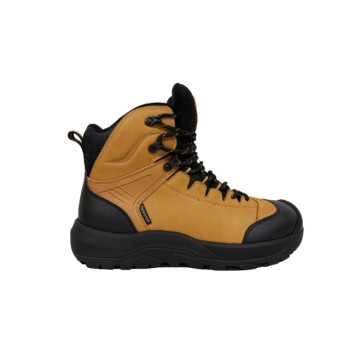
While they may look similar, winter boots are fundamentally different from standard hiking boots in four critical areas. A true winter boot is engineered with significantly more insulation for warmth, a higher upper design to block snow, a specialized waterproof membrane, and an outsole made from a rubber compound designed to stay soft and grip in freezing temperatures.
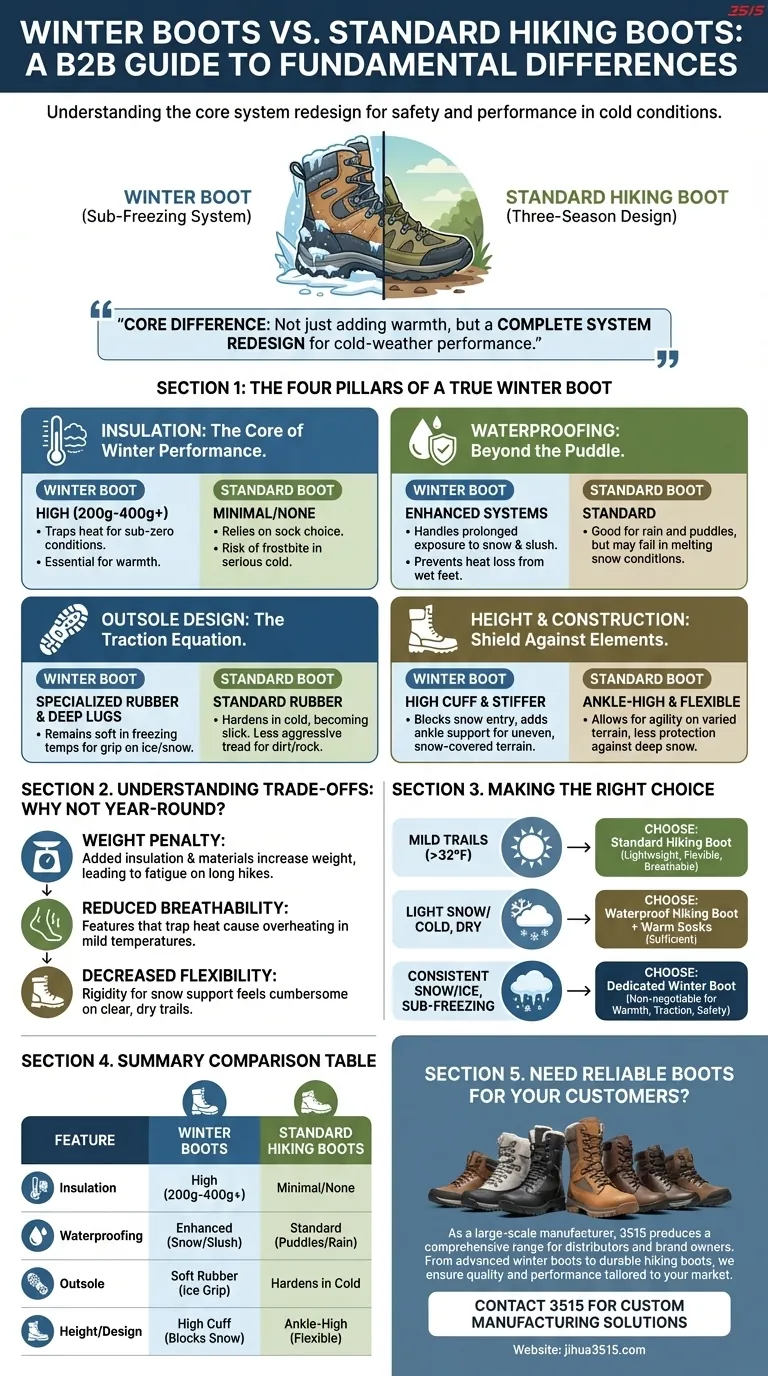
The core difference is not simply about adding warmth; it's a complete system redesign. Winter boots integrate insulation, waterproofing, and specialized sole materials to ensure safety and comfort in sub-freezing conditions where the materials and design of a standard hiking boot would fail.
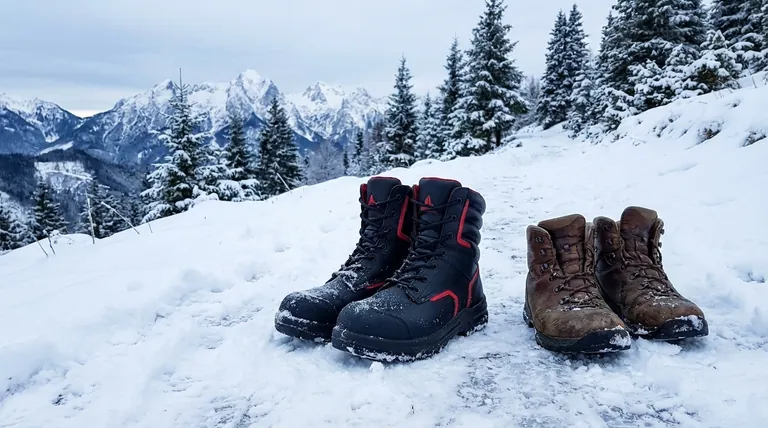
The Four Pillars of a True Winter Boot
A standard hiking boot is designed for traction and support on dirt, mud, and rock. A winter boot is purpose-built to overcome the unique challenges of cold, snow, and ice.
Insulation: The Core of Winter Performance
Insulation is the most obvious differentiator. It’s measured in grams (e.g., 200g, 400g) and is essential for trapping body heat to keep your feet warm in sub-freezing conditions.
Standard hiking boots typically have minimal or no insulation, relying on sock choice for warmth. Using them in serious cold can lead to discomfort and even frostbite.
Waterproofing: Beyond the Puddle
While many hiking boots are waterproof, winter boots feature enhanced systems designed to handle prolonged exposure to melting snow and slush.
The goal is to prevent any moisture from seeping in, as wet feet in cold weather lose heat exponentially and create a significant safety risk.
Outsole Design: The Traction Equation
This is a critical, often overlooked, difference. Winter boot outsoles have two key features: deeper, more aggressive lugs to bite into snow and a special rubber compound.
This specialized rubber is formulated to remain soft and pliable in freezing temperatures, allowing it to maintain grip on ice and packed snow. The rubber on standard hiking boots often hardens in the cold, becoming slick and unreliable.
Height and Construction: Your Shield Against the Elements
Winter boots almost always have a higher cuff that extends well above the ankle. This design serves two primary functions.
First, it prevents snow from getting inside the boot when walking through drifts. Second, it provides additional ankle support, which is vital when navigating uneven terrain hidden beneath a layer of snow.
Understanding the Trade-offs: Why Not Use Winter Boots Year-Round?
The specialized features of winter boots make them the wrong tool for fair-weather hiking. Understanding their limitations clarifies their purpose.
The Weight Penalty
The added insulation, robust materials, and thicker soles make winter boots significantly heavier than their three-season counterparts. This extra weight increases fatigue on long hikes.
Reduced Breathability
The same features that trap heat so effectively in the cold will cause your feet to overheat and sweat excessively in mild or warm temperatures.
Decreased Flexibility
Winter boots are generally stiffer to provide support in snow and accommodate attachments like snowshoes. This rigidity can feel cumbersome and restrictive on a clear, dry trail.
Making the Right Choice for Your Hike
Choosing the right footwear is a matter of safety, not just comfort. Your decision should be based entirely on the conditions you expect to face.
- If your primary focus is hiking on mild trails above freezing: A standard hiking boot offers the best balance of lightweight comfort, flexibility, and breathability.
- If your primary focus is short hikes in light snow or cold, dry conditions: A waterproof hiking boot paired with warm wool socks may be sufficient.
- If your primary focus is hiking in consistent snow, ice, or sub-freezing temperatures: A dedicated winter boot is non-negotiable for warmth, traction, and safety.
Ultimately, equipping yourself with the right boot for the conditions is the first step toward a safe and successful adventure.
Summary Table:
| Feature | Winter Boots | Standard Hiking Boots |
|---|---|---|
| Insulation | High (200g-400g+) for sub-zero warmth | Minimal or none, relies on socks |
| Waterproofing | Enhanced for snow/slush immersion | Standard for puddles/rain |
| Outsole | Soft rubber for ice grip; deep lugs for snow | Hardens in cold; less aggressive tread |
| Height/Design | High cuff to block snow; stiff for support | Ankle-high; flexible for varied terrain |
Need Reliable Winter or Hiking Boots for Your Customers?
As a large-scale manufacturer, 3515 produces a comprehensive range of footwear for distributors, brand owners, and bulk clients. Our production capabilities encompass all types of shoes and boots, including specialized winter boots with advanced insulation and traction, as well as durable hiking boots for three-season use. We ensure quality, safety, and performance tailored to your market needs.
Contact 3515 today to discuss custom manufacturing solutions and elevate your product line!
Visual Guide
Related Products
- Premium Insulated Safety Boots and Shoes for Wholesale & Bulk Orders
- Factory Direct Wholesale Rain Boots Durable Waterproof & Fully Customizable
- Durable Waterproof Rain Boots | Custom Manufacturer for Wholesale & Brands
- Wholesale Waterproof Tactical Boots Custom Suede & High-Traction Soles
- Premium Waterproof High-Cut Industrial Safety Boots for Wholesale and Bulk Orders
People Also Ask
- What are the recommended insulation ratings for mild winter conditions? A Guide for Active & Stationary Workers
- How does insulation thickness correlate with temperature ranges? A Guide to Choosing the Right Warmth
- What insulation level is needed for severe cold and stationary work? 1200g or Higher is Essential
- What safety advantages do insulated boots offer beyond warmth? Dielectric Protection & Superior Grip
- How does fleece lining contribute to the warmth of insulated boots? Trapping Air for Superior Cold Protection