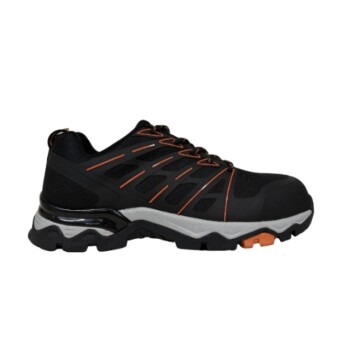
Personal protective equipment (PPE) significantly impacts thermal comfort by increasing the overall thermal resistance of a worker's clothing. While items like safety shoes and protective gloves are vital for physical defense, they simultaneously create a barrier that traps metabolic heat and restricts the body's natural cooling mechanisms.
Core Takeaway PPE introduces a critical physiological trade-off: it provides a necessary shield against external hazards but acts as an insulator that traps body heat. To maintain worker safety, thermal environment assessments must explicitly account for this "insulation penalty," as standard measurements often underestimate the heat stress caused by protective gear.
The Mechanism of Increased Thermal Stress
Elevating Clothing Thermal Resistance
The primary impact of PPE is the increase in clothing thermal resistance (Icl).
When workers don safety shoes, goggles, and protective gloves, they are effectively adding layers of insulation.
This added resistance makes it difficult for the heat generated by the worker's body (metabolic heat) to escape into the environment.
Hindering Sweat Evaporation
Evaporation is the human body's most efficient cooling mechanism during physical labor.
Thick materials used in protective gloves and heavy footwear act as a vapor barrier.
This prevents sweat from evaporating from the skin surface, neutralizing the body's ability to self-regulate its temperature.
Blocking Convective Dissipation
Under normal conditions, air flowing over the skin removes heat through convection.
PPE items cover specific body parts—often extremities like hands and feet—and seal them off from airflow.
This lack of air circulation creates localized "hot spots" that contribute to an overall sense of intensified thermal stress.
The Dual Role of Industrial Footwear
The Barrier Against External Heat
In extreme environments, such as metal smelting, the insulation provided by safety shoes is a safety feature, not a bug.
High-temperature resistant outsoles act as a thermal barrier against conductive heat from hot floors.
They also prevent the penetration of high-temperature liquids, such as molten aluminum, ensuring structural integrity and preventing severe burns.
Ergonomic Support vs. Thermal Load
While thermal comfort may be compromised by heavy footwear, physical comfort is often enhanced.
Modern safety shoes incorporate arch support, shock-absorbing midsoles, and cushioned insoles.
These features reduce fatigue and strain on the lower extremities, which is a critical factor for workers standing for long periods, even if the thermal environment is challenging.
Understanding the Trade-offs
The Insulation Paradox
The qualities that make PPE effective at blocking external hazards are often the same qualities that trap internal heat.
A material dense enough to stop molten metal will inevitably block airflow and trap sweat.
Safety managers must recognize that higher levels of physical protection almost always correlate with higher physiological heat burdens.
The Assessment Gap
A common pitfall in industrial hygiene is measuring only the ambient environment (temperature and humidity) without factoring in the PPE.
If the additional heat burden of gloves and shoes is ignored, thermal stress risks will be significantly underestimated.
Interventions based on incomplete data will fail to protect the worker.
Making the Right Choice for Your Safety Program
To balance protection with physiological safety, apply the following principles:
- If your primary focus is High-Temperature Environments (e.g., Smelting): Prioritize footwear with high-temperature resistant outsoles to block conductive heat, but implement frequent breaks to manage the internal heat trapped by the gear.
- If your primary focus is General Assembly/Labor: Select PPE with the minimum necessary thermal resistance; ensure gloves and shoes allow for maximum breathability without compromising physical safety.
- If your primary focus is Risk Assessment: You must adjust your thermal environment calculations to specifically include the resistance values of the required PPE, rather than relying solely on ambient thermometers.
True occupational safety is achieved not just by shielding the worker from the outside world, but by ensuring their body can still function effectively within that shield.
Summary Table:
| Factor | Impact on Thermal Comfort | Practical Consequence |
|---|---|---|
| Thermal Resistance | Increases (Icl) value | Traps metabolic heat near the body |
| Sweat Evaporation | Blocks vapor transmission | Neutralizes the body's natural cooling |
| Air Circulation | Restricts convection | Creates localized hot spots on hands and feet |
| External Shielding | Blocks conductive heat | Essential for smelting and high-heat floors |
| Ergonomics | Enhances physical comfort | Reduces fatigue despite higher thermal load |
Optimize Your Workforce Safety with 3515 Footwear
Balancing rigorous protection with thermal comfort is a challenge for every safety manager. As a large-scale manufacturer serving global distributors and brand owners, 3515 delivers the engineering expertise needed to manage this trade-off. Our flagship Safety Shoes series is built for extreme performance, featuring high-temperature resistant outsoles for smelting and breathable designs for general labor.
Beyond safety footwear, our comprehensive production capabilities include work and tactical boots, outdoor shoes, training shoes, sneakers, and formal dress shoes to meet all your bulk procurement requirements. Let us help you enhance worker productivity and safety through superior footwear technology.
Contact us today to discuss your bulk requirements and custom footwear solutions
References
- Constanța Rînjea, Dan Nițoi. Influence of the Thermal Environment on Occupational Health and Safety in Automotive Industry: A Case Study. DOI: 10.3390/ijerph19148572
This article is also based on technical information from 3515 Knowledge Base .
Related Products
- Premium Suede Sport Safety Shoes for Wholesale & Bulk Orders
- Premium Lightweight Safety Shoes for Wholesale & Bulk Orders
- Wholesale Anti-Smash & Puncture-Proof Safety Shoes Custom Manufacturing for Brands
- Premium KPU Injection Athletic Style Safety Shoes
- Premium Safety Shoes with Rotating Buckle Safety Sneakers
People Also Ask
- What industries have specific OSHA footwear requirements? Ensure Compliance & Protect Your Workforce
- What are the primary functions of professional safety shoes? Maximize Safety in Water Supply Confined Spaces
- What role do specialized safety shoes play in preventing falls? Engineering Stability in Industrial Environments
- How do complex outsole tread designs in safety shoes work with coated floors? Master Slip Resistance Engineering
- Why must safety training be synchronized with the provision of physical safety shoes? Achieve Optimal Workplace Protection