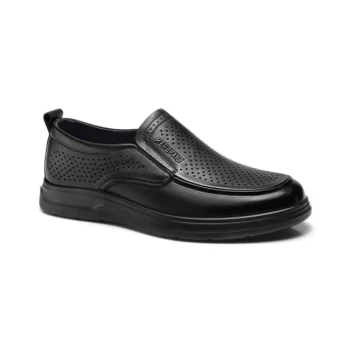
At their core, non-slip shoes protect a restaurant worker's two most valuable assets: their physical health and their financial stability. They are specifically designed to provide superior grip on the wet, greasy, and unpredictable surfaces common in food service, directly preventing the slips and falls that lead to costly and debilitating injuries.
For a restaurant worker, non-slip shoes are not merely footwear; they are a critical tool for mitigating the daily risks to both their physical well-being and their ability to earn a living.
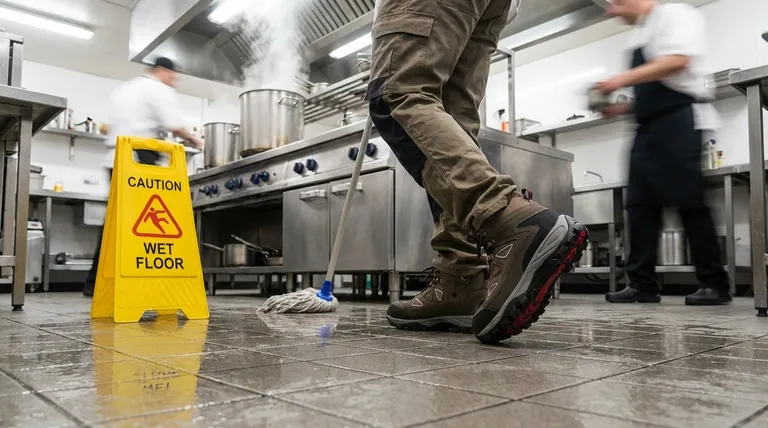
The Unique Hazards of a Restaurant Environment
To understand the value of non-slip shoes, you must first appreciate the specific risks of the workplace. A restaurant is a uniquely challenging environment for standard footwear.
The Constant Presence of Spills
Whether from mopped floors, spilled drinks in the dining room, or splashes in the dish pit, wet surfaces are a constant. Slip-resistant shoes are engineered to channel water away from the sole, maintaining contact with the floor.
Greasy and Oily Kitchen Surfaces
Commercial kitchens are the most hazardous areas, where grease and oil create extremely slippery conditions. The specialized rubber compounds and tread patterns of non-slip shoes are designed to grip these surfaces effectively.
A Fast-Paced, Unpredictable Workflow
Restaurant staff are always in motion, often carrying heavy trays or hot plates through crowded spaces. This fast pace elevates the risk that a small slip could become a serious accident for the worker and those around them.
The Direct Impact on Worker Health
A slip-and-fall incident is not a minor inconvenience; it can have immediate and severe consequences for a worker's health.
Preventing Common Injuries
The most direct health benefit is the prevention of acute injuries. These commonly include painful sprains, serious fractures, and even broken bones that can require extensive recovery time.
Reducing Strain and Improving Stability
By providing a stable and secure footing, proper footwear can also reduce the overall physical strain on the body. This helps minimize the daily wear and tear on joints in the feet, knees, and back.
The Financial Equation: An Investment, Not an Expense
The connection between physical injury and financial hardship is direct and immediate for most service industry professionals.
Avoiding Crippling Medical Costs
For workers without comprehensive health insurance, the cost of treating a single fracture can be devastating. Non-slip shoes serve as a form of personal insurance against these potentially massive medical bills.
Preventing Lost Wages
An injury doesn't just come with medical expenses; it means time away from work. For hourly employees, this directly translates to lost wages, creating significant financial pressure during recovery.
Protecting Your Livelihood
Ultimately, the ability to work safely is the ability to earn an income. Investing in proper footwear is an investment in your capacity to continue performing your job without interruption from preventable accidents.
Understanding the Trade-offs
While the benefits are clear, it's important to approach the purchase with a complete picture.
The Initial Cost
Quality slip-resistant shoes are often more expensive than standard sneakers. However, this upfront cost should be weighed against the potentially catastrophic costs of an injury.
Comfort and Durability
Not all non-slip shoes are created equal. Cheaper models may lack the cushioning and support needed for long shifts, leading to fatigue and a shorter lifespan for the shoe itself.
Not a Substitute for Caution
Slip-resistant shoes significantly reduce the risk of a fall, but they do not eliminate it entirely. They are one part of a safe work environment, which must also include cautious movement and prompt cleanup of spills.
Making the Right Choice for Your Role
Selecting the right shoe depends on your specific needs and work environment.
- If your primary focus is kitchen safety: Prioritize a shoe with a high slip-resistance rating specifically for oily conditions and a durable, easy-to-clean upper.
- If your primary focus is front-of-house comfort: Look for models that blend certified non-slip soles with excellent cushioning and a professional appearance suitable for the dining room.
- If your primary focus is financial stability: View this purchase as a critical investment in your ability to work, protecting you from the far greater costs of injury and lost income.
Investing in a quality pair of non-slip shoes is one of the most effective decisions a restaurant professional can make for their long-term health and career security.
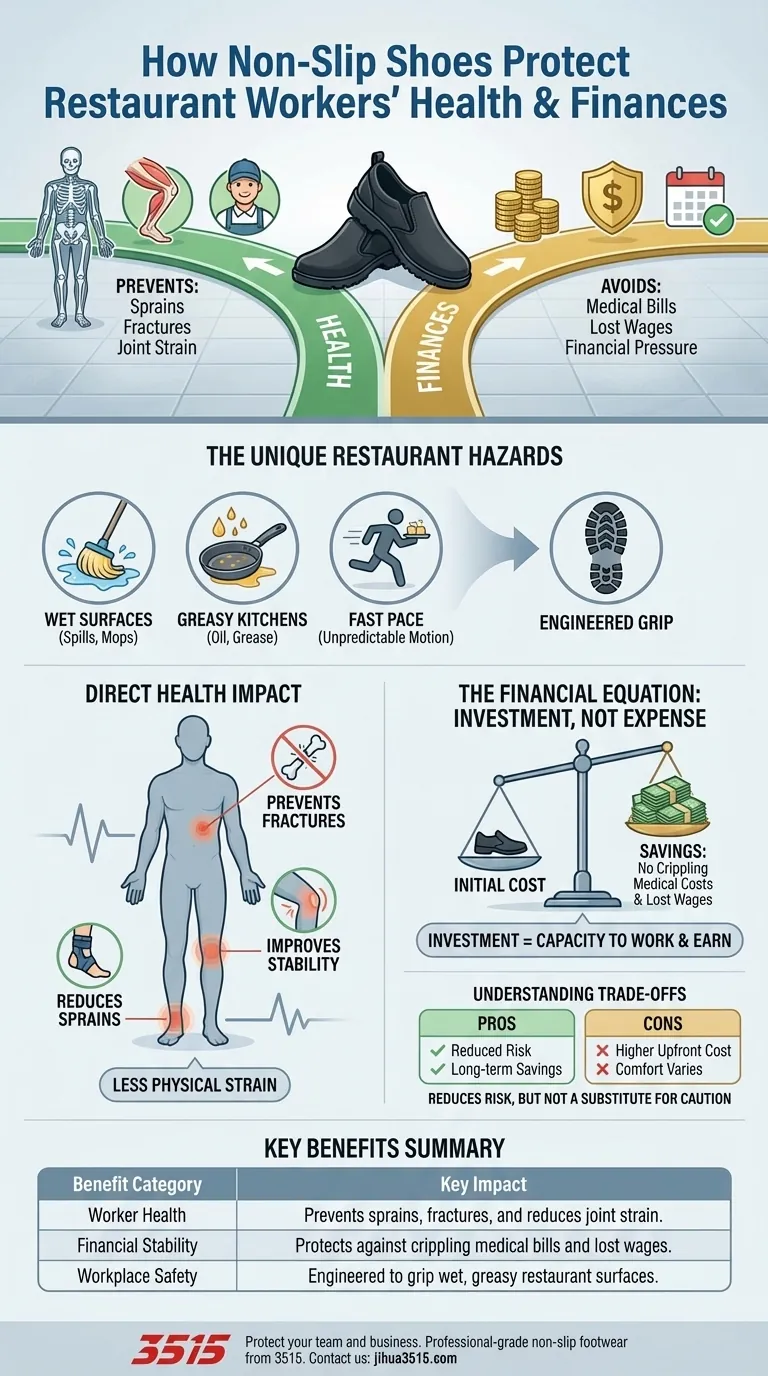
Summary Table:
| Benefit Category | Key Impact |
|---|---|
| Worker Health | Prevents sprains, fractures, and reduces joint strain from slips and falls. |
| Financial Stability | Protects against crippling medical bills and lost wages from work-related injuries. |
| Workplace Safety | Engineered to grip wet, greasy surfaces common in kitchens and dining areas. |
Protect your team's well-being and your business's bottom line with professional-grade footwear from 3515. As a large-scale manufacturer, we produce a comprehensive range of certified non-slip shoes and boots for distributors, brand owners, and bulk clients. Our footwear is designed to meet the specific demands of the food service industry, ensuring durability, comfort, and maximum safety. Contact us today to discuss your needs and discover how our production capabilities can provide the reliable footwear solutions your customers depend on.
Visual Guide
Related Products
- Advanced KPU Athletic Safety Shoe with Steel Toe Cap Anti-Slip Rotary Lacing System
- Premium Suede Sport Safety Shoes for Wholesale & Bulk Orders
- Durable High-Traction Canvas Sneakers Wholesale & Custom Manufacturing
- Heavy-Duty Waterproof Nubuck Safety Boots Safety Shoes for Bulk Supply
- Durable Goodyear Welt Leather Work Boots for Wholesale & Private Label
People Also Ask
- What are the key differences between steel toe and composite toe caps? Choose the Right Safety for Your Job
- What impact do steel toe caps have on toe skin health? Prevent Friction and Pressure in Your Safety Shoes
- What are the primary protective functions of safety shoes with steel toes in the automotive repair industry?
- What type of safety shoe is recommended for workers exposed to heavy machinery? Steel Toe Boots for Ultimate Protection
- How does defining specific friction interface models in FEA assist in predicting safety shoe toe cap failure modes?