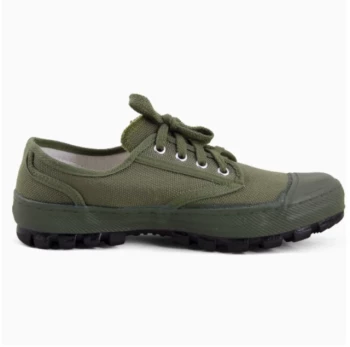
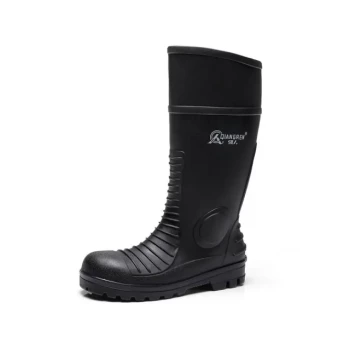
At its core, comfort in men's work shoes is an engineered system, not just a single feature. These shoes ensure comfort during long hours by combining three critical elements: structural support to align your foot, advanced cushioning to absorb impact, and ergonomic design to work with your body’s natural mechanics. Discomfort is more than an annoyance; it discourages proper use, directly compromising your safety and long-term foot health.
True work shoe comfort isn't about feeling like you're walking on a cloud. It's about providing the specific structural support and shock absorption needed to minimize fatigue, prevent strain, and allow you to focus on your job, not your feet.
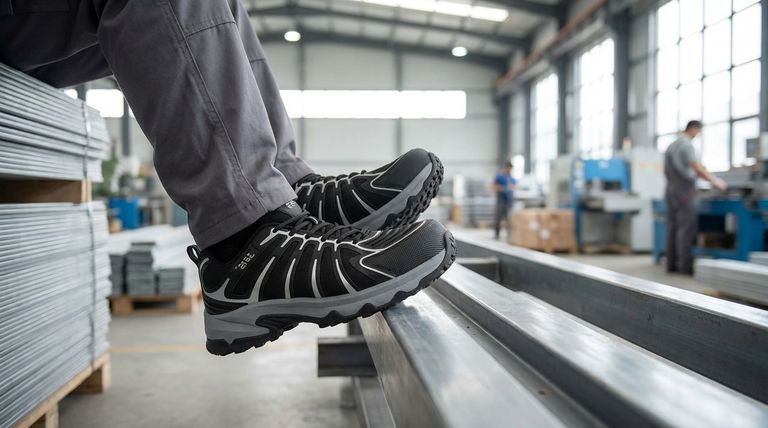
The Engineering Behind All-Day Comfort
A truly comfortable work shoe is a balanced system. Each component is designed to address a specific stressor your feet encounter throughout the day, from hard surfaces to repetitive motion.
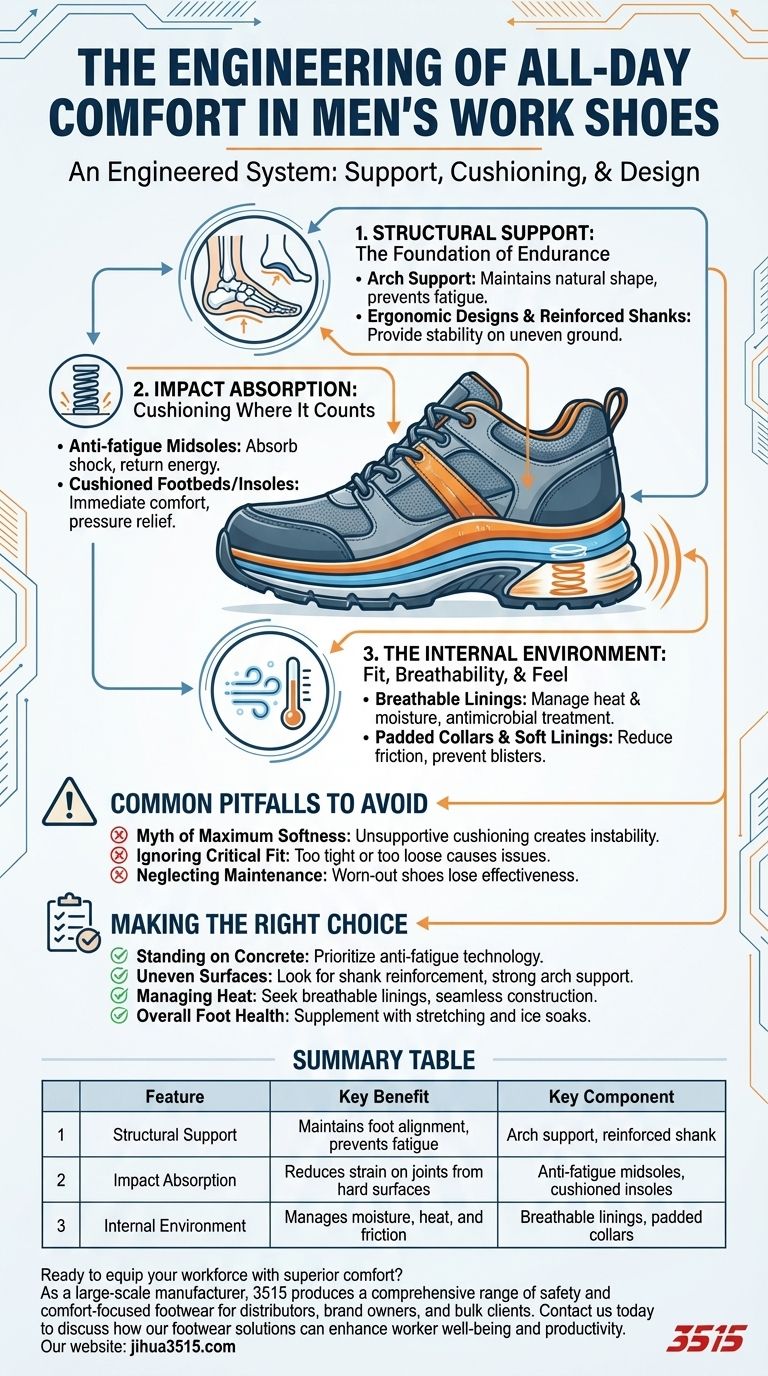
Structural Support: The Foundation of Endurance
The primary cause of foot fatigue is the breakdown of your foot's natural arch and alignment over many hours. A good work shoe acts as an external skeleton to prevent this.
Arch support is critical for maintaining your foot's natural shape, distributing weight evenly, and preventing conditions like plantar fasciitis.
Ergonomic designs and features like reinforced shanks (a rigid piece between the insole and outsole) provide stability on uneven ground and prevent the shoe from flexing in the wrong places.
Impact Absorption: Cushioning Where It Counts
Constant standing or walking on hard surfaces like concrete sends repetitive shocks through your feet, knees, and back. Cushioning is the first line of defense.
Anti-fatigue midsoles are engineered from materials that absorb shock and return energy, reducing the strain on your joints with every step.
Cushioned footbeds or insoles provide the immediate layer of comfort you feel, conforming to your foot and relieving key pressure points.
The Internal Environment: Fit, Breathability, and Feel
Comfort is also about managing the climate inside your shoe. Heat, moisture, and friction are enemies of all-day wear.
Breathable linings help manage sweat and heat, which is essential for preventing blisters and fungal infections. Many are also treated with antimicrobial agents to control odor.
Padded collars and soft linings reduce friction and irritation around the ankle and top of the foot, preventing the rubbing that leads to blisters and discomfort.
Common Pitfalls to Avoid
Achieving genuine comfort involves more than just buying a shoe with the right features. Understanding the common trade-offs and mistakes is key to making a wise investment.
The Myth of Maximum Softness
A shoe that feels extremely soft in the store may not be the best choice. Excessive, unsupportive cushioning can create instability and fail to provide the structural integrity your foot needs over an 8- or 12-hour shift.
Ignoring the Critical Role of Fit
All the advanced features in the world are useless if the shoe doesn't fit properly. A shoe that is too tight creates pressure points and blisters, while a shoe that is too loose allows your foot to slide, causing friction and instability.
Neglecting Maintenance and Replacement
The materials that provide cushioning and support break down over time. Using a shoe past its effective lifespan, often indicated by cracked soles or worn-down tread, can offer a false sense of security while providing none of the intended support.
Making the Right Choice for Your Goal
Select your footwear based on the primary challenge of your workday. Your goal is to match the shoe's strengths to your specific environment.
- If your primary focus is standing on concrete all day: Prioritize shoes with advertised anti-fatigue technology and thick, shock-absorbing midsoles.
- If your primary focus is stability on uneven or outdoor surfaces: Look for features like shank reinforcement, strong arch support, and a well-defined heel.
- If your primary focus is managing heat and preventing blisters: Seek out models with high-quality breathable linings and seamless interior construction.
- If your primary focus is overall foot health: Supplement any quality work shoe with practices like hourly stretching breaks and post-work ice water soaks to reduce swelling.
Investing in the right work shoe is a direct investment in your daily performance and long-term physical health.
Summary Table:
| Feature | Key Benefit | Key Component |
|---|---|---|
| Structural Support | Maintains foot alignment, prevents fatigue | Arch support, reinforced shank |
| Impact Absorption | Reduces strain on joints from hard surfaces | Anti-fatigue midsoles, cushioned insoles |
| Internal Environment | Manages moisture, heat, and friction | Breathable linings, padded collars |
Ready to equip your workforce with superior comfort?
As a large-scale manufacturer, 3515 produces a comprehensive range of safety and comfort-focused footwear for distributors, brand owners, and bulk clients. Our production capabilities encompass all types of durable shoes and boots engineered for long hours.
Contact us today to discuss how our footwear solutions can enhance worker well-being and productivity for your customers.
Visual Guide
Related Products
- Durable Canvas Work Shoes with Rubber Lug Sole | Wholesale Manufacturer
- Wholesale Leather Ankle Boots with Lug Soles for Custom Brand Manufacturing
- Durable Goodyear Welt Leather Work Boots for Wholesale & Private Label
- Durable Leather Work Boots for Wholesale & Custom Manufacturing
- Durable Leather Work Boots for Wholesale & Custom OEM Manufacturing
People Also Ask
- What are the properties of canvas as a shoe material? A Guide to Lightweight Comfort & Style
- Why is the selection of high-strength fabric materials necessary in the production of canvas shoes and training shoes?
- What types of jobs are canvas work boots suitable for? Ideal for Light-Duty, High-Mobility Roles
- Can canvas shoes be worn in rainy conditions? The Truth About Water Resistance
- What are the functional advantages of choosing rubber soles over leather soles for work boots? Superior Safety & Durability