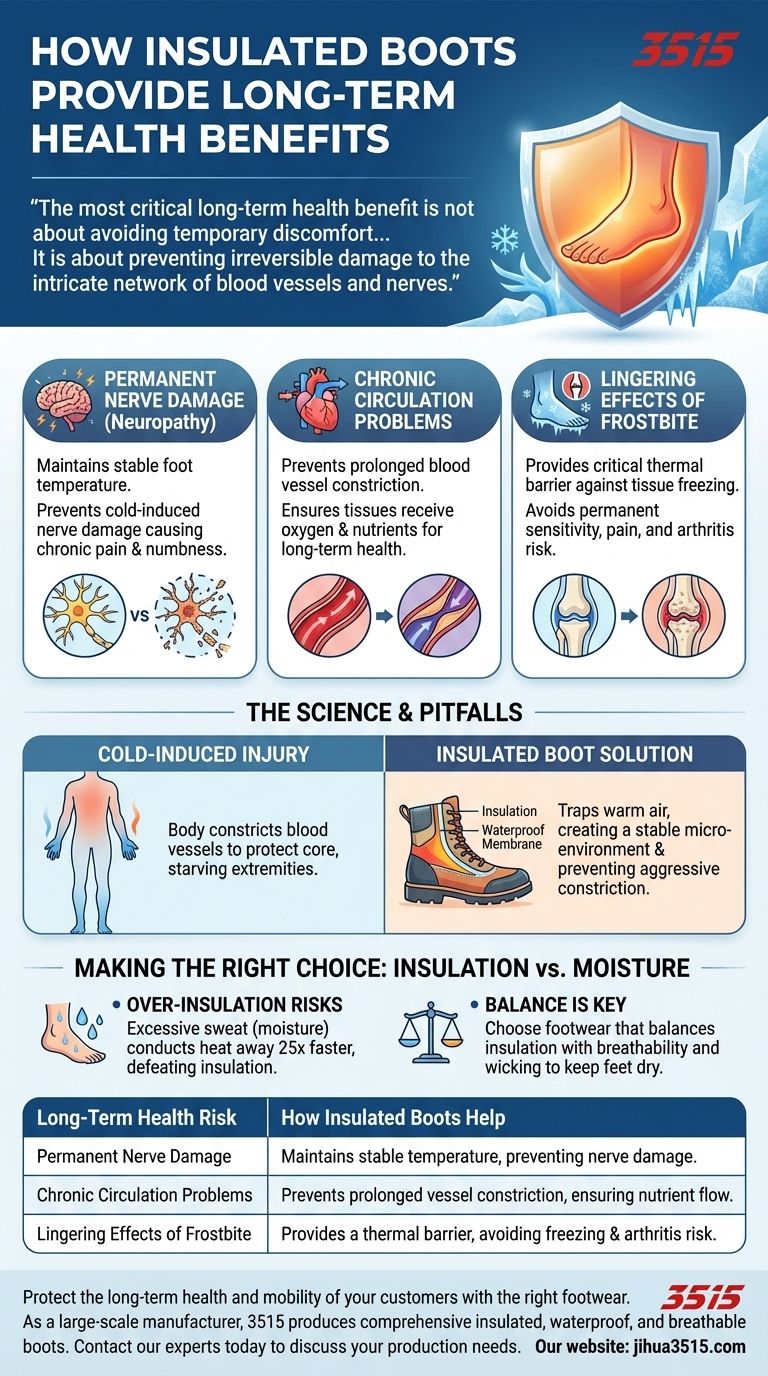
Beyond simple warmth, insulated boots provide significant long-term health benefits by creating a crucial barrier against cold-induced injuries. By regulating foot temperature, they prevent a cascade of physiological problems, including permanent nerve damage, chronic circulation issues, and the lasting effects of frostbite, which can impact your mobility and quality of life for years.
The most critical long-term health benefit of insulated boots is not about avoiding the temporary discomfort of cold feet. It is about preventing irreversible damage to the intricate network of blood vessels and nerves in your extremities, which are uniquely vulnerable to cold.
The Science of Cold-Induced Injury
Your body's primary survival instinct in cold weather is to protect its core organs. It does this by constricting blood vessels in your extremities—your hands and feet—to reduce heat loss. While effective for short-term survival, this process is the root cause of significant long-term health risks if your feet are not protected.
Averting Permanent Circulatory Damage
When blood vessels in the feet narrow for extended periods, the tissue is starved of vital oxygen and nutrients. This can lead to long-term weakness in the tissue, poor healing, and chronic circulation problems.
Insulated boots work by trapping a layer of air warmed by your own body heat. This creates a stable micro-environment, signaling to your body that it does not need to aggressively restrict blood flow to the area.
Shielding Against Nerve Damage (Neuropathy)
Nerves are extremely sensitive to temperature. Prolonged exposure to cold can directly damage nerve endings, leading to a condition known as cold-induced neuropathy.
The consequences of this damage are not temporary. They can manifest as chronic numbness, tingling, or persistent burning pain that can last a lifetime, severely impacting comfort and mobility.
Preventing the Lingering Effects of Frostbite
Frostbite is far more than a temporary injury. It is the freezing and death of body tissue. Even in mild cases that don't result in amputation, the affected area is often permanently altered.
Long-term complications of frostbite frequently include increased sensitivity to cold, chronic pain, stiffness, and a higher risk of developing arthritis in the affected joints. Proper insulation is the first and most effective line of defense against it ever occurring.
Common Pitfalls and Considerations
Simply choosing the most insulated boot is not always the correct approach. Understanding the balance between insulation and moisture management is key to foot health.
Over-Insulation and Moisture Risk
In mild or high-exertion conditions, overly insulated boots can cause your feet to sweat excessively. This moisture is not only a breeding ground for fungus but also a significant health risk in the cold.
The Danger of Dampness
Water and sweat conduct heat away from your body up to 25 times faster than air. A foot that is damp inside a boot will get cold far more quickly than a dry one, defeating the purpose of the insulation.
Insulation vs. Waterproofing
It is critical to remember that insulation and waterproofing are two different functions. Insulation is useless if it gets wet. A quality cold-weather boot system must manage both external moisture (with a waterproof membrane) and internal moisture (with breathable, wicking materials).
Making the Right Choice for Your Health
Selecting the appropriate footwear is a direct investment in your long-term well-being. Base your choice on your specific activity and environment.
- If your primary focus is preventing severe injury in extreme cold: Prioritize a boot with a high insulation rating (e.g., high Thinsulate gram count) to provide the maximum thermal barrier against frostbite and nerve damage.
- If your primary focus is activity in variable winter conditions: Choose a boot that balances moderate insulation with excellent breathability and moisture-wicking properties to keep feet dry and at a stable temperature.
- If your primary focus is managing everyday cold and wet environments: Look for a waterproof boot with light insulation that prevents chilling during periods of inactivity without causing overheating.
Ultimately, protecting your feet from the cold is a foundational component of preserving your future health and mobility.
Summary Table:
| Long-Term Health Risk | How Insulated Boots Help |
|---|---|
| Permanent Nerve Damage (Neuropathy) | Maintains stable foot temperature, preventing cold-induced nerve damage that causes chronic pain and numbness. |
| Chronic Circulation Problems | Prevents prolonged blood vessel constriction, ensuring tissues receive oxygen and nutrients for long-term health. |
| Lingering Effects of Frostbite | Provides a critical thermal barrier against tissue freezing, avoiding permanent sensitivity, pain, and arthritis risk. |
Protect the long-term health and mobility of your customers with the right footwear. As a large-scale manufacturer, 3515 produces a comprehensive range of insulated, waterproof, and breathable boots designed to prevent cold-induced injuries. We help distributors, brand owners, and bulk clients deliver footwear that balances safety, comfort, and durability for any environment. Contact our experts today to discuss your production needs and ensure your products support lifelong foot health.
Visual Guide
Related Products
- Premium Insulated Safety Boots and Shoes for Wholesale & Bulk Orders
- High Performance Fire-Retardant Waterproof Safety Boots
- Premium Wholesale Waterproof Safety Boots High Performance Protection for Industrial Markets
- Factory Direct Wholesale Rain Boots Durable Waterproof & Fully Customizable
- Premium Waterproof High-Cut Industrial Safety Boots for Wholesale and Bulk Orders
People Also Ask
- What are the recommended insulation ratings for mild winter conditions? A Guide for Active & Stationary Workers
- How does insulation thickness correlate with temperature ranges? A Guide to Choosing the Right Warmth
- What insulation level is needed for severe cold and stationary work? 1200g or Higher is Essential
- What safety advantages do insulated boots offer beyond warmth? Dielectric Protection & Superior Grip
- How does fleece lining contribute to the warmth of insulated boots? Trapping Air for Superior Cold Protection