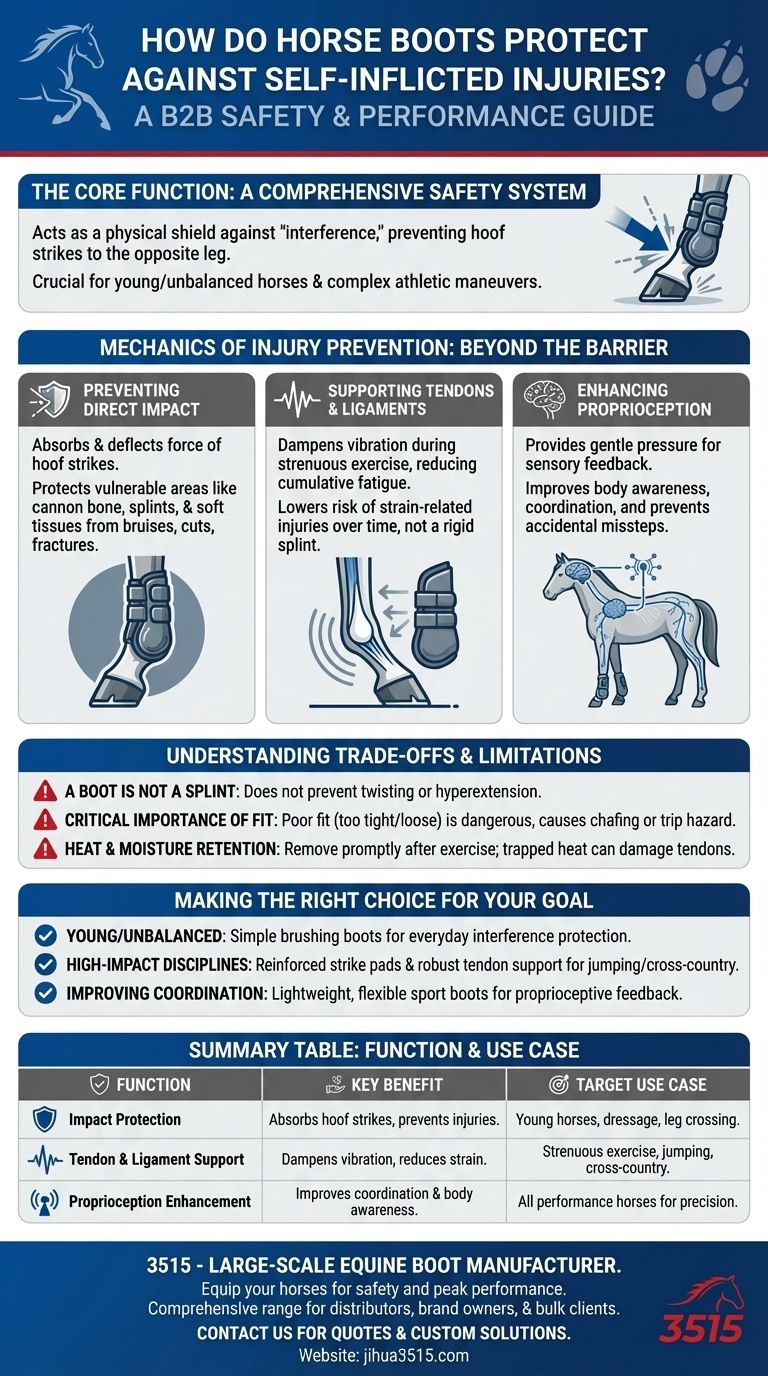
At its core, a horse boot serves as a physical shield, preventing a horse from injuring itself by striking one leg with the hoof of another. This "interference" is especially common in young, unbalanced horses or during complex athletic maneuvers like lateral work, where the legs cross over each other.
Beyond simply blocking impact, the true function of a horse boot is to provide a comprehensive safety system. It mitigates direct trauma, supports vulnerable soft tissues, and can even improve the horse's own coordination to prevent accidents before they happen.
The Mechanics of Injury Prevention
To understand how boots work, we must look beyond the simple idea of a barrier. They function on multiple levels to enhance both safety and performance.
Preventing Direct Impact
The most obvious function is absorbing and deflecting the force of a hoof strike. A horse's hoof, especially when shod, can easily cause bruises, cuts, and even fractures to the delicate structures of the opposite leg.
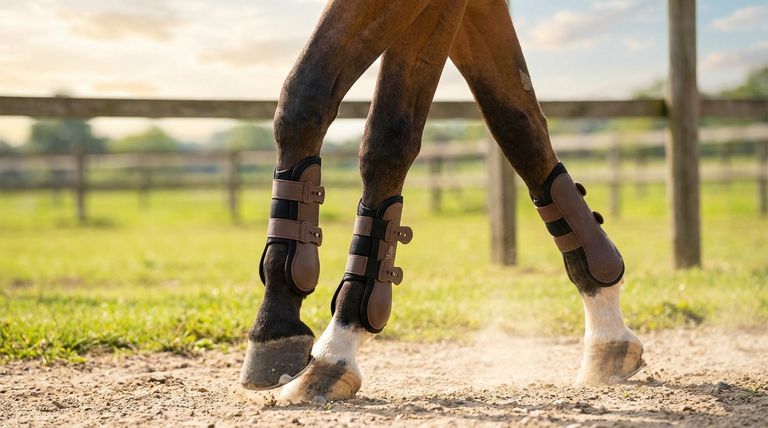
Boots made of leather, neoprene, or specialized polymers act as armor over vulnerable areas like the cannon bone, splint bones, and soft tissues of the lower leg.
Supporting Tendons and Ligaments
During strenuous exercise, the tendons and ligaments in a horse's legs are subjected to immense vibration and strain.
While a boot cannot prevent an injury from a severe misstep, it can provide support that dampens this vibration. This reduces cumulative fatigue on the soft tissues, lowering the risk of strain-related injuries over time.
Enhancing Proprioception
Proprioception is the horse's awareness of where its body and limbs are in space. The gentle, consistent pressure of a well-fitted boot provides sensory feedback.
This heightened awareness can make a horse more mindful of its own movement, leading to better coordination and a lower likelihood of accidental interference or clumsy steps.
Understanding the Trade-offs and Limitations
While highly effective, horse boots are a tool, not a guarantee of total safety. An informed owner must understand their limitations.
A Boot Is Not a Splint
It is a common misconception that boots can prevent a leg from twisting or a joint from hyperextending during a fall or bad step. Their primary function is impact protection and vibration dampening, not rigid immobilization.
The Critical Importance of Fit
A poorly fitted boot is more dangerous than no boot at all. If it's too tight, it can restrict blood flow and damage tendons. If it's too loose, it can slip, become a trip hazard, or chafe the skin, causing painful sores.
Heat and Moisture Retention
Some protective materials can trap heat and sweat against the leg. Over extended periods, excessive heat can be detrimental to tendon health. It is crucial to remove boots promptly after exercise and ensure the legs are clean and dry.
Making the Right Choice for Your Goal
Selecting the correct boot depends entirely on your horse's specific needs and the work you are asking it to perform.
- If your primary focus is a young or unbalanced horse: Choose simple brushing boots that provide basic strike protection against interference during everyday work.
- If your primary focus is high-impact disciplines: Prioritize boots with reinforced strike pads and robust tendon support to guard against the higher forces involved in jumping or cross-country.
- If your primary focus is improving coordination: Even lightweight, flexible sport boots can provide the necessary proprioceptive feedback to help a horse develop better body awareness.
Choosing the right protective equipment is a fundamental aspect of responsible horsemanship that supports your horse's well-being and performance.
Summary Table:
| Function | Key Benefit | Target Use Case |
|---|---|---|
| Impact Protection | Absorbs and deflects hoof strikes to prevent bruises, cuts, and fractures. | Young/unbalanced horses, disciplines with leg crossing (e.g., dressage). |
| Tendon & Ligament Support | Dampens vibration to reduce cumulative fatigue and strain-related injuries. | Strenuous exercise, high-impact disciplines (e.g., jumping, cross-country). |
| Proprioception Enhancement | Provides sensory feedback to improve coordination and prevent clumsy steps. | All performance horses to boost body awareness and movement precision. |
Ensure your horse has the best possible protection. As a large-scale manufacturer, 3515 produces a comprehensive range of high-quality equine boots for distributors, brand owners, and bulk clients. Our production capabilities encompass all types of protective footwear, from basic brushing boots to advanced sport boots with reinforced strike pads. Let us help you equip your horses for safety and peak performance.
Contact us today for quotes and custom solutions tailored to your needs!
Visual Guide
Related Products
- Wholesale High-Traction Camo Boots - Custom Manufacturer for Brands
- Wholesale Lightweight Tactical Boots Custom Manufacturer for Desert & Combat Use
- High-Traction Suede Tactical Boots Wholesale & Custom Manufacturing
- Durable Leather Tactical Boots Wholesale & Custom Manufacturing for Brands
- Wholesale Perforated Comfort Dress Shoes | Custom Derby Shoe Manufacturer
People Also Ask
- What are the key features of the new line of camo boots? Built for Extreme Cold & Rugged Terrain
- Are camo boots necessary for hunting success? Prioritize Performance Over Pattern
- How does the Rank Score Test identify the primary causes of premature failure in tactical and work boots? Key Insights
- What is the technical logic behind using closed-eye testing for tactical boots? Unlocking Peak Footwear Stability
- What shoes to wear for a security job? Durable, Protective Footwear for Long Shifts