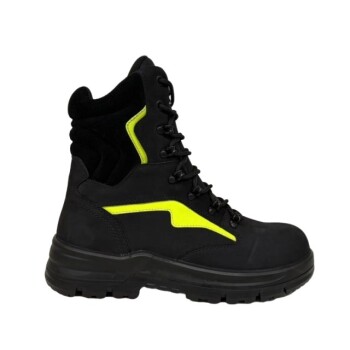
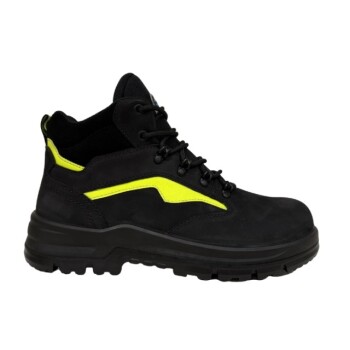
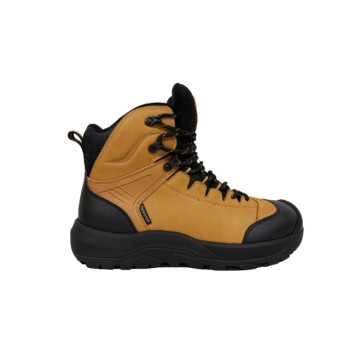
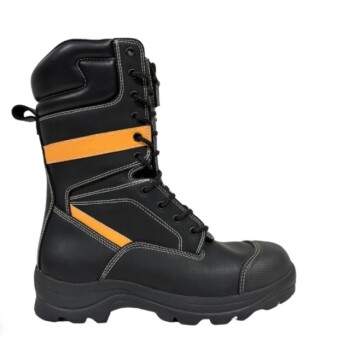
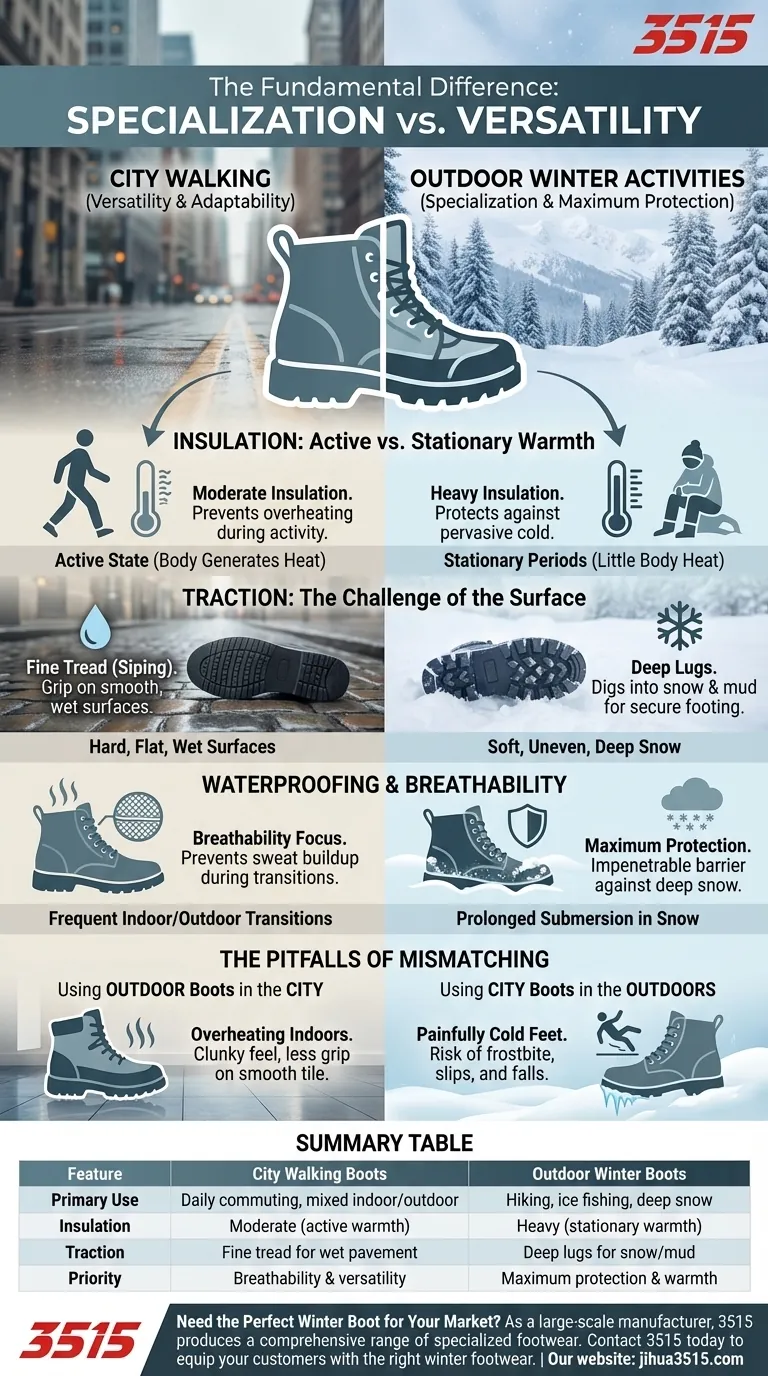
The fundamental difference is specialization versus versatility. Footwear for city walking is engineered for all-day comfort and adaptability across a mix of hard, often wet surfaces and indoor environments. In contrast, footwear for outdoor winter activities is a specialized tool designed to provide maximum protection against extreme cold and deep snow, prioritizing thermal performance and rugged traction over all-day, mixed-use wearability.
Your choice in winter footwear is a direct response to your environment's core challenges. The central mistake is assuming one boot can master both the slushy, paved landscape of a city and the deep, freezing snow of the outdoors—each demands a fundamentally different design philosophy.
Deconstructing the Core Requirements
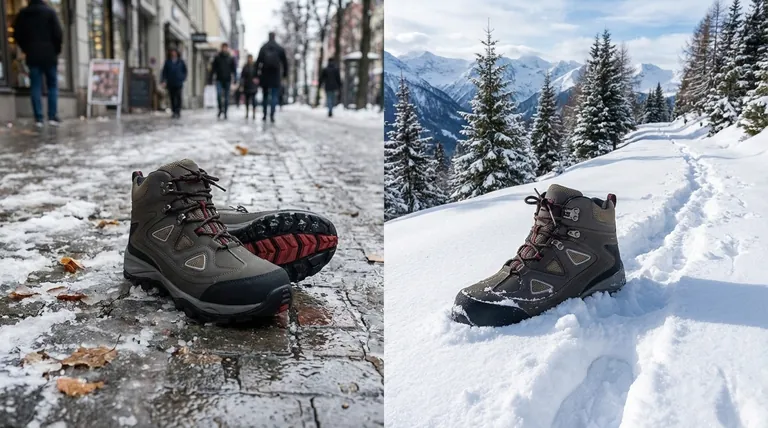
To understand why these footwear categories differ, we must analyze the specific problems each is built to solve. The demands of urban pavement are vastly different from those of a snow-covered trail.
Insulation: Active vs. Stationary Warmth
City walking is an active state. Your movement generates body heat, so boots require only moderate insulation to keep you comfortable without causing your feet to sweat indoors.
Outdoor winter activities often involve stationary periods, such as resting during a hike, ice fishing, or winter photography. In these static moments, your body generates little heat, demanding boots with significantly more insulation to protect against the pervasive cold.
Traction: The Challenge of the Surface
Urban environments consist of hard, relatively flat surfaces like concrete, asphalt, and cobblestone, which often become slick with water or ice. City boots use softer rubber compounds with a large surface area and fine tread patterns (siping) to maximize grip on these smooth, wet surfaces.
Outdoor winter terrain is soft, uneven, and often deep with snow. Activity-focused boots feature deep, aggressive lugs made from a harder rubber compound designed to dig into snow and mud for secure footing, much like the tread on a snow tire.
Waterproofing and Breathability
Both footwear types require waterproofing to keep your feet dry. However, city footwear places a higher emphasis on breathability. This is crucial because you frequently move between the cold outdoors and heated indoor spaces, and breathable materials prevent sweat from building up and making your feet cold and damp.
Outdoor winter boots prioritize a complete, impenetrable barrier against deep snow and slush. While they incorporate breathable membranes, the primary focus is on ensuring no moisture gets in, even when submerged in snow for extended periods.
Understanding the Trade-offs: The Pitfalls of Mismatching
Using the wrong boot for the environment doesn't just lead to discomfort; it can lead to poor performance and even safety risks. Understanding these compromises is key to making an informed decision.
Using Outdoor Boots in the City
Wearing a heavy-duty winter hiking boot for a day of urban errands often results in overheating indoors. Their aggressive, deep lugs can feel clunky and may even offer less traction on smooth, wet tile or stone floors because less rubber is in direct contact with the surface.
Using City Boots in the Outdoors
This is the more hazardous mismatch. A stylish city boot taken on a winter trail will provide inadequate insulation, leading to painfully cold feet and increasing the risk of frostbite. Furthermore, their shallow tread offers minimal grip in deep snow, significantly raising the risk of slips and falls.
Making the Right Choice for Your Environment
Select your footwear not by the season, but by the specific activity and terrain you will face most often.
- If your primary focus is daily urban commuting: Prioritize moderate insulation, excellent traction on wet pavement, and a balance of waterproofing and breathability for indoor/outdoor transitions.
- If your primary focus is active outdoor recreation like winter hiking: You need a boot with substantial ankle support, deep lugs for snow, and robust waterproofing, with insulation matched to your activity level.
- If your primary focus is stationary outdoor activities like ice fishing or winter events: Your absolute priority is maximum thermal insulation (often rated by temperature) to protect against prolonged, static exposure to cold.
By aligning your footwear's features with the demands of your environment, you ensure comfort, safety, and performance through any winter condition.
Summary Table:
| Feature | City Walking Boots | Outdoor Winter Boots |
|---|---|---|
| Primary Use | Daily commuting, mixed indoor/outdoor | Hiking, ice fishing, deep snow |
| Insulation | Moderate (for active warmth) | Heavy (for stationary warmth) |
| Traction | Fine tread for wet pavement | Deep lugs for snow/mud |
| Priority | Breathability & versatility | Maximum protection & warmth |
Need the Perfect Winter Boot for Your Market?
As a large-scale manufacturer, 3515 produces a comprehensive range of specialized footwear for distributors, brand owners, and bulk clients. Whether you need versatile city boots with superior breathability or rugged outdoor boots built for extreme conditions, our production capabilities cover all types of shoes and boots.
Contact 3515 today to discuss your specific needs and leverage our expertise to equip your customers with the right winter footwear.
Visual Guide
Related Products
- Durable Waterproof Rain Boots | Custom Manufacturer for Wholesale & Brands
- Factory Direct Wholesale Rain Boots Durable Waterproof & Fully Customizable
- Premium Waterproof Nubuck Safety Boots for Wholesale
- Wholesale Premium Waterproof Nubuck Safety Shoes Boots
- Wholesale Waterproof Tactical Boots Custom Suede & High-Traction Soles
People Also Ask
- What are the main materials for waterproof rain boots? Choose the Right Material for Durability & Comfort
- What is the overall recommendation for choosing rain boot materials? A Guide to Rubber vs. PVC
- How does boot height affect waterproofing? Choose the Right Height for Ultimate Protection
- Why are rain boots more flexible and comfortable than snow boots? The Key Differences Explained
- What are the best types of shoes for different gardening conditions? Find Your Perfect Match.