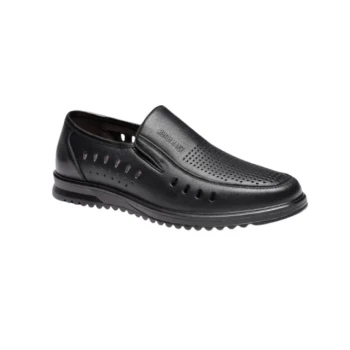
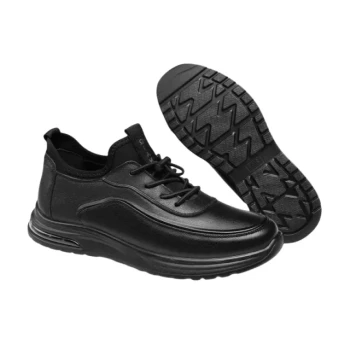
At their core, anti-slip shoes enhance workplace safety by providing significantly better traction on potentially hazardous surfaces. Their specialized outsoles are engineered to grip the floor, which directly reduces the frequency of slips, trips, and falls—one of the leading causes of preventable workplace injuries.
The true value of anti-slip footwear isn't just about preventing a fall; it's about creating a foundational layer of security. This boosts employee confidence, reduces employer liability, and contributes to a more productive and safety-conscious work culture.
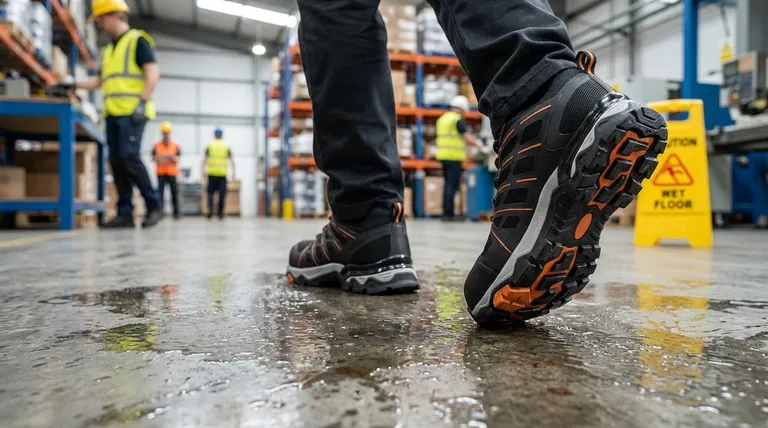
The Mechanics of Grip: How Anti-Slip Shoes Work
To understand their impact, you first need to understand their design. The safety benefits of anti-slip shoes originate entirely from the engineering of the outsole.
The Role of the Outsole
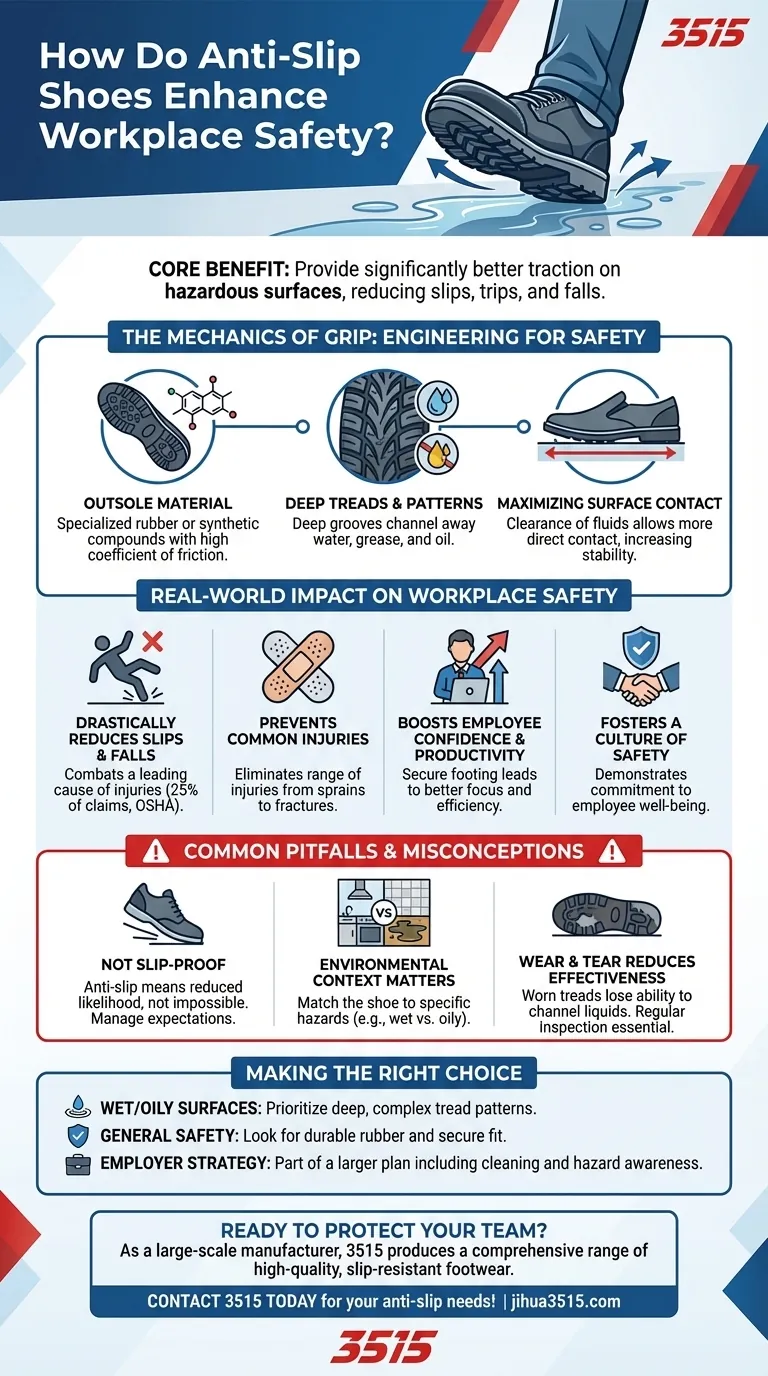
The material of the outsole is the first line of defense. Most slip-resistant shoes use high-quality rubber or synthetic compounds chosen specifically for their high coefficient of friction, which helps them "stick" to the ground.
Deep Treads and Patterns
The design of the tread is critical. Anti-slip shoes feature deep grooves and intricate patterns that serve a purpose similar to car tires. They channel liquids like water, grease, and oil away from the bottom of the shoe.
Maximizing Surface Contact
By clearing fluids, the tread pattern allows more of the outsole's surface to make direct contact with the floor. This increases friction and creates a much more stable footing for the wearer, even on contaminated surfaces.
The Real-World Impact on Workplace Safety
The engineering of anti-slip shoes translates directly into tangible safety outcomes that protect both employees and businesses.
Drastically Reducing Slips and Falls
This is the primary benefit. According to OSHA, slips, trips, and falls account for 15% of all accidental deaths and about 25% of all reported injury claims. Slip-resistant shoes directly combat this statistic by providing stability where it's needed most.
Preventing Common Injuries
A simple slip can lead to severe consequences, from minor sprains and bruises to serious fractures and head injuries. By preventing the initial incident, these shoes help eliminate a wide range of potential injuries.
Boosting Employee Confidence and Productivity
When employees feel secure on their feet, they can focus on their tasks without hesitation. This stability not only prevents accidents but also improves overall efficiency and productivity.
Fostering a Culture of Safety
Providing appropriate personal protective equipment (PPE), including anti-slip shoes, sends a clear message. It demonstrates an employer's commitment to employee well-being and helps foster a proactive safety culture.
Common Pitfalls and Misconceptions
While highly effective, it's crucial to approach anti-slip footwear with a clear understanding of its capabilities and limitations.
"Anti-Slip" is Not "Slip-Proof"
This is the most critical point to understand. No shoe can completely eliminate the risk of slipping in every condition. The term "anti-slip" means the shoe is designed to reduce the likelihood of slipping, not make it impossible. This distinction is vital for managing safety expectations.
The Importance of Environmental Context
The effectiveness of a shoe depends on the specific hazard. A shoe designed for wet kitchen tiles might not perform as well on an oily machine shop floor. The shoe must be matched to the specific environmental risks.
Wear and Tear Reduces Effectiveness
Over time, the tread on an outsole will wear down. As the grooves become shallower, the shoe's ability to channel away liquids decreases, and its slip-resistant properties diminish. Regular inspection and replacement are essential parts of any safety program.
Making the Right Choice for Your Goal
Selecting the right footwear is a key decision for maintaining a safe environment.
- If your primary focus is working on wet or oily surfaces: Prioritize shoes with deep, complex tread patterns specifically designed to channel liquids and maximize surface contact.
- If your primary focus is general safety in a varied environment: Look for a durable rubber outsole and ensure a proper, secure fit is valued over stylistic considerations.
- If you are an employer implementing a safety program: Remember that anti-slip footwear is one critical component of a larger strategy that must also include regular floor cleaning, maintenance, and hazard awareness.
Ultimately, investing in the right anti-slip footwear is a foundational step toward building a safer and more productive workplace for everyone.
Summary Table:
| Benefit | Key Impact |
|---|---|
| Reduces Slips/Falls | Combats a leading cause of workplace injuries (25% of claims). |
| Prevents Injuries | Minimizes sprains, fractures, and head injuries from falls. |
| Boosts Confidence | Employees feel secure, leading to higher focus and productivity. |
| Fosters Safety Culture | Demonstrates a commitment to employee well-being. |
| Important Considerations | Shoes are anti-slip, not slip-proof; effectiveness depends on tread and environment. |
Ready to protect your team and enhance workplace safety?
As a large-scale manufacturer, 3515 produces a comprehensive range of high-quality, slip-resistant footwear for distributors, brand owners, and bulk clients. Our production capabilities encompass all types of safety shoes and boots, engineered with the precise outsoles and tread patterns needed for your specific work environment.
We can help you reduce liability, prevent costly accidents, and build a stronger safety culture. Contact 3515 today to discuss your anti-slip footwear needs and request a quote!
Visual Guide
Related Products
- Advanced KPU Athletic Safety Shoe with Steel Toe Cap Anti-Slip Rotary Lacing System
- Premium Suede Sport Safety Shoes for Wholesale & Bulk Orders
- Heavy-Duty Waterproof Nubuck Safety Boots Safety Shoes for Bulk Supply
- Customizable Slip-On Safety Shoes Direct from the Factory for Wholesale
- Durable Goodyear Welt Leather Work Boots for Wholesale & Private Label
People Also Ask
- What are the key differences between steel toe and composite toe caps? Choose the Right Safety for Your Job
- What impact do steel toe caps have on toe skin health? Prevent Friction and Pressure in Your Safety Shoes
- What are the primary protective functions of safety shoes with steel toes in the automotive repair industry?
- What type of safety shoe is recommended for workers exposed to heavy machinery? Steel Toe Boots for Ultimate Protection
- How does defining specific friction interface models in FEA assist in predicting safety shoe toe cap failure modes?