
For most common stains on rubber boots, the most effective method is a simple solution of mild detergent and warm water. A mixture of one teaspoon of detergent with two cups of hot water, applied with a soft cloth, is sufficient to remove surface-level grime, heavy soil, and even stubborn salt stains.
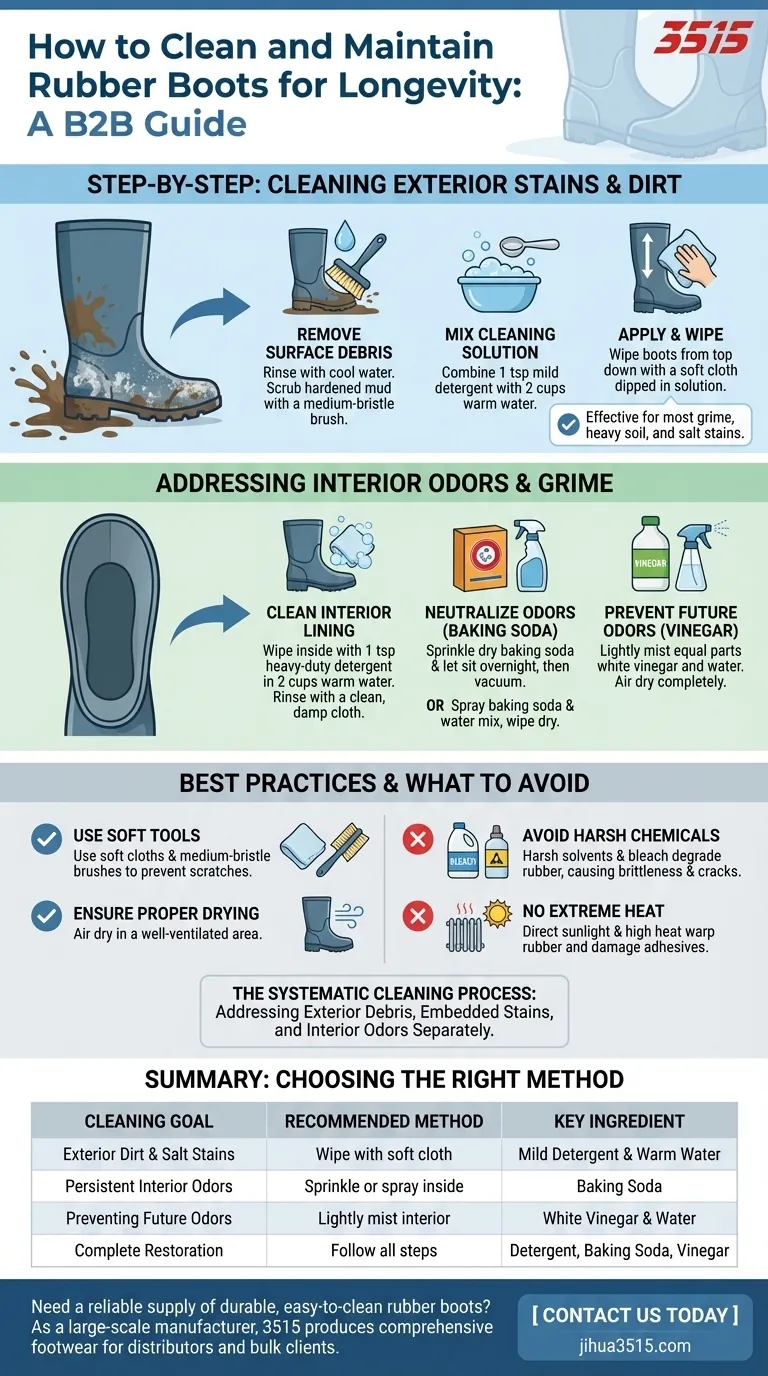
The key to truly restoring rubber boots isn't a single cleaning agent, but a systematic process that addresses exterior debris, embedded stains, and interior odors separately for a complete clean.
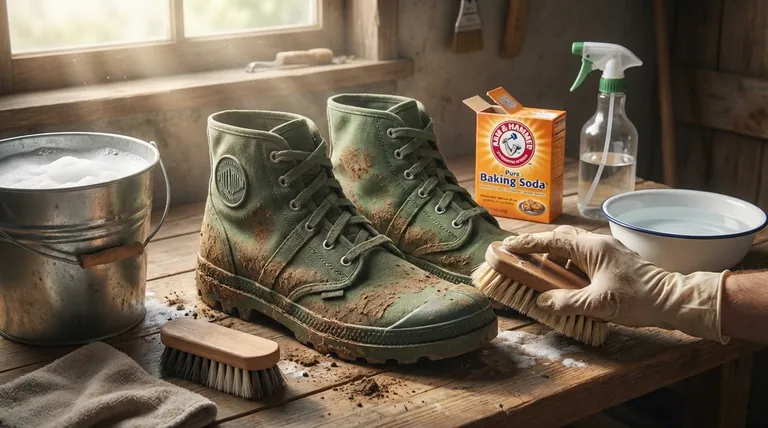
A Step-by-Step Guide to Cleaning Rubber Boots
To properly clean and restore your boots, it's best to follow a structured approach. This ensures you remove all dirt without damaging the rubber material.
Step 1: Remove Surface Debris
Before addressing stains, you must remove any loose dirt and mud. This prevents you from grinding abrasive particles into the boot's surface during cleaning.
Use cool water to rinse off initial layers of dust and dirt.
For hardened mud, use a medium-bristle brush to gently scrub away the caked-on layers. Follow this with a soft cloth and warm water to wipe away any remaining grime.
Step 2: Mix and Apply a Cleaning Solution
This is the primary step for stain removal. A simple, non-abrasive solution is all that is required for the vast majority of common stains.
Create a cleaning mixture by combining one teaspoon of dish soap or laundry detergent with two cups of warm water.
Dip a soft cloth into the solution and wipe the boots from the top down. This methodical approach prevents dirty streaks from running over already cleaned areas.
Addressing Odors and Interior Grime
A clean exterior is only half the battle. The inside of your boots requires a different approach to handle moisture, bacteria, and resulting odors.
Cleaning the Interior Lining
For general interior cleaning, use a slightly stronger solution. Mix one teaspoon of heavy-duty laundry detergent with two cups of warm water.
Wipe the inside of the boots with a cloth soaked in this solution. Follow up immediately by rinsing the interior with a second cloth soaked in plain warm water to remove soap residue.
Neutralizing Odors with Baking Soda
Baking soda is a highly effective and safe deodorizer. You can apply it using either a wet or dry method.
For a spray solution, mix baking soda and water, spray it inside the boots, and let it sit for a few hours before wiping it clean with a damp cloth.
Alternatively, for a dry method, simply sprinkle dry baking soda inside each boot. Let it sit overnight to absorb odors, then vacuum it out the next morning.
Preventing Future Odors with Vinegar
To proactively prevent odors from developing, you can use a simple vinegar spray after cleaning.
Mix equal parts white vinegar and water in a spray bottle. Lightly mist the inside of your boots and allow them to air dry completely. The vinegar smell will dissipate as it dries.
Best Practices and What to Avoid
Following the right technique is just as important as using the right solution. Mishandling the process can fail to remove stains or even damage your boots.
Use the Right Tools
Always use a soft cloth or a medium-bristle brush for cleaning. Stiff brushes or abrasive scouring pads can create fine scratches on the rubber surface, making it dull and more susceptible to future staining.
Avoid Harsh Chemicals
Stick to mild detergents and natural cleaners like baking soda and vinegar. Harsh chemical solvents or bleach can degrade the rubber, causing it to become brittle, discolored, or cracked over time.
Ensure Proper Drying
Never leave your boots to dry in direct sunlight or near a high-heat source like a radiator. Excessive heat can warp the rubber and compromise the integrity of the seams and adhesives. Always let them air dry in a well-ventilated area.
Making the Right Choice for Your Goal
Select your cleaning method based on the specific problem you need to solve.
- If your primary focus is removing exterior dirt and salt stains: A simple solution of mild detergent and warm water is your most effective tool.
- If your primary focus is eliminating persistent odors: Use the baking soda overnight method for deep absorption or a vinegar spray for prevention.
- If your primary focus is a complete restoration: Follow the entire process, from pre-brushing the exterior to cleaning and deodorizing the interior.
By treating cleaning as a methodical process, you can easily maintain and extend the life of your rubber boots.
Summary Table:
| Cleaning Goal | Recommended Method | Key Ingredient |
|---|---|---|
| Exterior Dirt & Salt Stains | Wipe with soft cloth | Mild Detergent & Warm Water |
| Persistent Interior Odors | Sprinkle or spray inside | Baking Soda |
| Preventing Future Odors | Lightly mist interior | White Vinegar & Water |
| Complete Restoration | Follow all steps | Detergent, Baking Soda, Vinegar |
Need a reliable supply of durable, easy-to-clean rubber boots? As a large-scale manufacturer, 3515 produces a comprehensive range of footwear for distributors, brand owners, and bulk clients. Our production capabilities encompass all types of durable, high-quality shoes and boots designed for easy maintenance. Let us be your trusted manufacturing partner. Contact us today to discuss your needs!
Visual Guide
Related Products
- Factory Direct Wholesale Rain Boots Durable Waterproof & Fully Customizable
- Durable Rubber Sole Outdoor Shoes Wholesale & Custom Manufacturing
- Wholesale Durable Camouflage Canvas Shoes with High-Traction Cleated Rubber Sole
- Durable Leather Work Boots for Wholesale & Custom Manufacturing
- Wholesale Durable Leather Work Boots | 8-Inch Goodyear Welt Manufacturer
People Also Ask
- What are the characteristics of rain boots? A Guide to Waterproof Footwear for Every Need
- What factors should be considered when choosing rain boots? Find the Perfect Boot for Your Needs
- What are the main differences between rain boots and snow boots? Choose the Right Boot for Your Climate
- How should one decide between PVC and rubber for rain boots? A Guide to Choosing the Right Material
- Why are rain boots more flexible and comfortable than snow boots? The Key Differences Explained















