
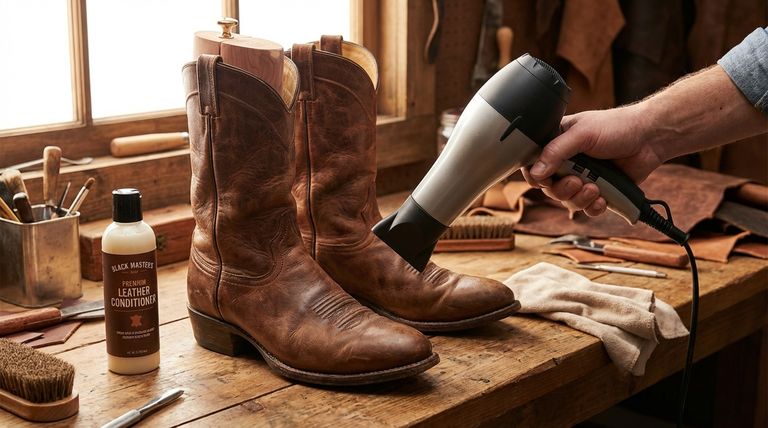
To remove minor creases from cowboy boots, the most effective home method involves stuffing the boot tightly to smooth the leather from the inside, applying gentle, low heat with a hairdryer to make it pliable, and then massaging the crease out. This process must be followed by applying a quality leather conditioner to replenish moisture and prevent the leather from drying out and cracking.
The core challenge isn't just removing a crease, but doing so without damaging the leather. The most reliable strategy combines gentle heat to temporarily relax the leather's fibers with proper conditioning and prevention to maintain the boot's long-term health and structure.
Why Leather Boots Crease in the First Place
Understanding the cause is the first step toward effective treatment and prevention. Leather, as a natural material, is designed to flex and move with your foot.
The Impact of Foot Movement
Every step you take bends the boot at its natural flex points, primarily across the vamp (the top of your foot). Over time, these repeated motions cause the leather fibers to compress and set, forming creases.
The Role of Moisture
Leather loses its natural oils and moisture over time, especially when exposed to dry air or heat. Dry leather is less supple and more prone to developing deep, permanent creases rather than flexing smoothly.
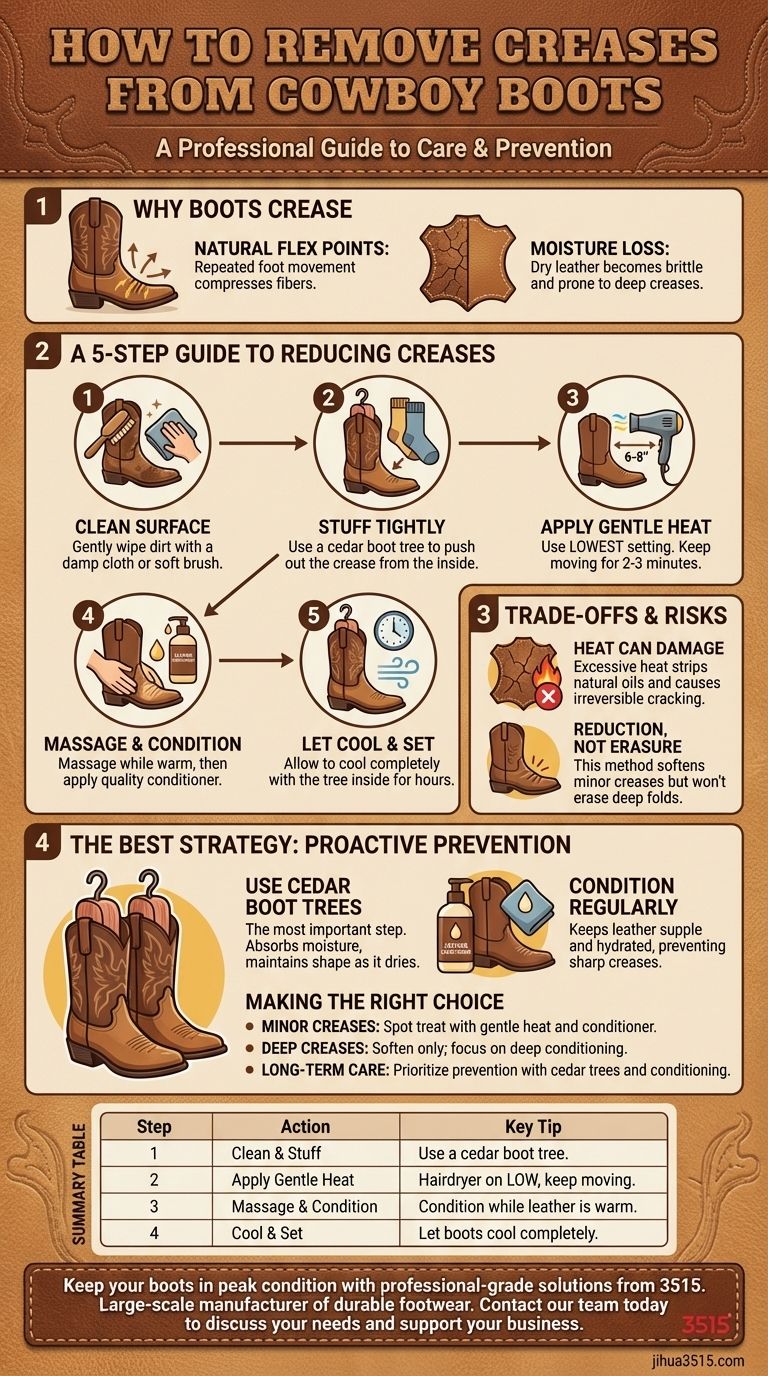
A Step-by-Step Guide to Reducing Creases
This method is best suited for softening minor to moderate creases. It will not completely erase deep-set folds that have become a permanent part of the leather's structure.
Step 1: Clean the Surface
Before applying heat or conditioner, gently wipe the boots with a damp cloth or a soft brush to remove any dirt or dust. Working on a clean surface prevents grime from being rubbed into the leather's pores.
Step 2: Stuff the Boot Tightly
Firmly pack the inside of the boot with a boot tree, rolled-up socks, or soft fabric. The goal is to push the creased area out from the inside, making the leather as smooth and taut as possible. A cedar boot tree is the ideal tool for this.
Step 3: Apply Gentle, Indirect Heat
Set a hairdryer to its lowest heat and speed setting. Hold it 6-8 inches away from the creased area, moving it continuously to avoid concentrating heat on one spot. Warm the leather for no more than 2-3 minutes until it is warm, not hot, to the touch.
Step 4: Massage and Condition
Immediately after warming, use your fingers or a soft cloth to gently massage the crease. Work in the direction of the leather's grain. While the leather is still warm and its pores are open, apply a small amount of high-quality leather conditioner to the area to replenish essential oils.
Step 5: Let it Cool and Set
Leave the stuffing or boot tree inside the boot and allow it to cool completely to room temperature. This lets the leather fibers set in their new, smoother position. This process can take several hours.
Understanding the Trade-offs and Risks
Applying heat to leather is an effective technique, but it is not without risk. Understanding the limitations is crucial to avoid causing permanent damage.
Heat Can Irreversibly Damage Leather
Excessive heat is the fastest way to ruin a pair of boots. It will strip the natural oils from the hide, causing it to become brittle and prone to cracking. Always use the lowest heat setting and keep the heat source moving.
This Method Reduces, It Doesn't Erase
Think of this process as relaxing the leather, not erasing its history. It can significantly soften and reduce the appearance of creases, but it cannot completely remove deep folds that have formed over years of wear.
The Best Strategy: Proactive Prevention
The most effective way to manage creases is to prevent them from setting deeply in the first place. This requires consistent care.
Use Cedar Boot Trees
This is the single most important step. Cedar boot trees absorb moisture, neutralize odors, and, most importantly, hold the boot's proper shape as it dries, preventing creases from setting in. Insert them as soon as you take your boots off.
Condition Your Boots Regularly
Well-conditioned leather is hydrated, supple, and flexible. It bends more easily and is far less likely to develop the sharp, deep creases that appear in dry, brittle leather. Condition your boots every few months, or more often if you live in a dry climate.
Making the Right Choice for Your Boots
- If your primary focus is reducing minor, recent creases: The gentle heat and massage method is an effective spot treatment, but always follow it with a leather conditioner.
- If your primary focus is dealing with deep-set, old creases: Manage your expectations; you can soften them, but you won't remove them. Focus instead on deep conditioning to improve the leather's overall health.
- If your primary focus is long-term care and preservation: Invest in a pair of cedar boot trees and a quality leather conditioner. Consistent prevention is always more effective than reactive repair.
Ultimately, proper care and prevention will do more to keep your boots looking their best than any single attempt at crease removal.
Summary Table:
| Step | Action | Key Tip |
|---|---|---|
| 1 | Clean & Stuff | Use a cedar boot tree for best results. |
| 2 | Apply Gentle Heat | Use a hairdryer on low, keep it moving. |
| 3 | Massage & Condition | Condition while leather is warm. |
| 4 | Cool & Set | Let boots cool completely with trees inside. |
Keep your boots in peak condition with professional-grade solutions from 3515. As a large-scale manufacturer, we produce a comprehensive range of durable footwear for distributors, brand owners, and bulk clients. Whether you need rugged cowboy boots or any other type of shoe, our expertise ensures superior quality and longevity. Contact our team today to discuss your footwear needs and discover how we can support your business.
Visual Guide
Related Products
- Wholesale High-Traction Camo Boots - Custom Manufacturer for Brands
- High-Traction Suede Tactical Boots Wholesale & Custom Manufacturing
- Wholesale Lightweight Tactical Boots Custom Manufacturer for Desert & Combat Use
- Durable Leather Tactical Boots Wholesale & Custom Manufacturing for Brands
- Wholesale Durable Mid-Cut Tactical Boots for Custom & Private Label Brands
People Also Ask
- What are the key features of the new line of camo boots? Built for Extreme Cold & Rugged Terrain
- Are camo boots necessary for hunting success? Prioritize Performance Over Pattern
- What is the technical logic behind using closed-eye testing for tactical boots? Unlocking Peak Footwear Stability
- How does the Rank Score Test identify the primary causes of premature failure in tactical and work boots? Key Insights
- What shoes to wear for a security job? Durable, Protective Footwear for Long Shifts

















