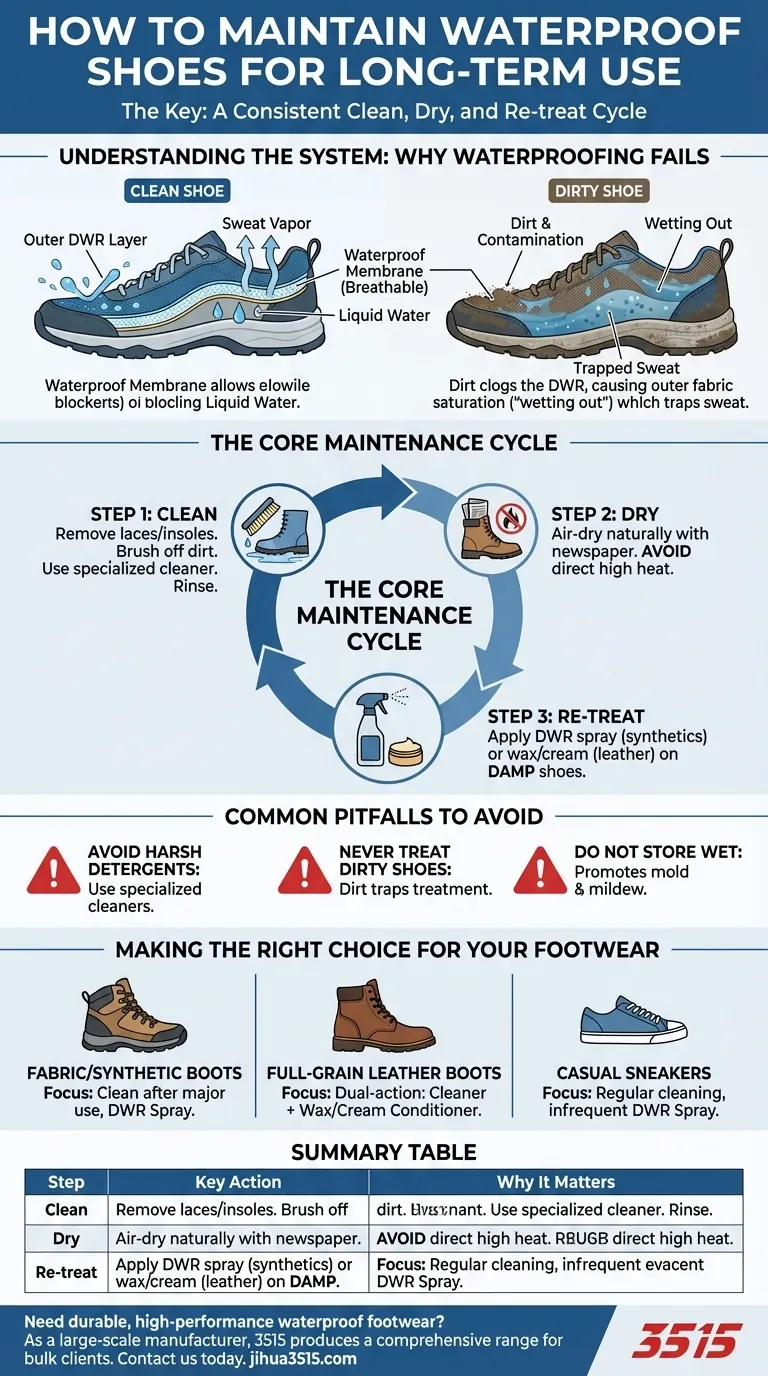
The key to long-term waterproof shoe maintenance is a consistent, three-part cycle: clean, dry, and re-treat. Simply put, dirt, oils, and abrasion are the enemies of waterproofing. By regularly removing contaminants and reapplying a water-repellent finish, you restore the shoe's ability to shed water and breathe, extending its effective lifespan significantly.
The most common misconception is that "waterproof" is a permanent feature. In reality, it is a high-performance system combining an outer water-repellent coating and an inner membrane, both of which require regular maintenance to function correctly.
Why Waterproofing Fails: Understanding the System
To maintain your shoes effectively, you must first understand what you're protecting. Most waterproof footwear relies on a two-part system.
The Outer Layer: Your First Line of Defense
This is a Durable Water Repellent (DWR) finish applied to the shoe's exterior. Its job is to make water bead up and roll off the surface.
When the DWR is working properly, the shoe's fabric avoids becoming saturated with water. This is critical for both dryness and breathability.
The Inner Layer: The Waterproof Membrane
Beneath the outer material lies a microscopic membrane (like Gore-Tex or a similar proprietary technology). This layer has pores small enough to block liquid water molecules but large enough to let water vapor (sweat) escape.
This membrane is the true waterproof barrier, but it can only "breathe" effectively if the outer fabric isn't waterlogged.
The Real Culprit: Dirt and Contamination
Dirt, mud, and natural oils from your skin clog the DWR finish. This causes the outer fabric to absorb water, a state known as "wetting out."
When the outer fabric is saturated, the waterproof membrane cannot breathe. Your foot sweat gets trapped, making your socks feel damp and cold, even if no external water has actually breached the shoe.
The Core Maintenance Cycle: A Step-by-Step Guide
Follow this process after heavy use or whenever you notice water is no longer beading on the surface.
Step 1: Thorough Cleaning
You cannot waterproof dirt. Cleaning is the most critical step.
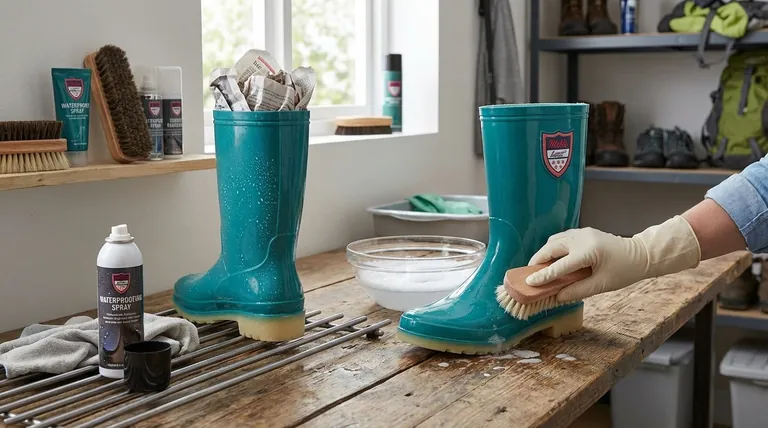
First, remove the laces and insoles. Use a soft brush to knock off all loose mud and debris. For stubborn grime, use a specialized footwear cleaner or a gentle, non-detergent soap and lukewarm water. Rinse thoroughly.
Step 2: Proper Drying
Never use direct, high heat (like a radiator, campfire, or hair dryer) to dry your shoes. This can damage the materials, warp the shape, and destroy the adhesives holding the shoe together.
Stuff your shoes with newspaper and let them air-dry naturally in a cool, well-ventilated area away from direct sunlight.
Step 3: Reapplying the Water-Repellent Treatment
This step restores the DWR finish. It's best done while the shoes are still slightly damp, as this helps the treatment absorb more evenly.
Follow the product instructions carefully. For fabric and synthetic shoes, a waterproofing spray is typically best. For leather shoes, waxes or creams are often preferred as they also condition the material.
Common Pitfalls to Avoid
Mistakes in the maintenance process can be just as damaging as neglect.
Pitfall 1: Using Harsh Detergents
Standard laundry or dish soaps contain wetting agents and surfactants that can strip the factory DWR and leave behind a residue that actually attracts water. Stick to specialized footwear cleaners.
Pitfall 2: Applying Treatment to a Dirty Shoe
Applying a new waterproofing layer over a dirty surface simply traps the dirt. This prevents the treatment from bonding to the fabric and renders it ineffective.
Pitfall 3: Storing Footwear While Wet
Putting away damp shoes is a recipe for disaster. It promotes the growth of mold and mildew, which can break down materials and create permanent odors. Always ensure they are completely dry before storing them in a cool, dry place.
Making the Right Choice for Your Goal
Your maintenance strategy should align with your footwear type and usage.
- If your primary focus is fabric or synthetic hiking boots: Your priority is cleaning off mud after every major hike and reapplying a DWR spray as soon as you see signs of wetting out.
- If your primary focus is full-grain leather boots: You need a dual-action approach, using a cleaner followed by a wax or cream conditioner that both nourishes the leather and restores robust water repellency.
- If your primary focus is casual waterproof sneakers: Regular cleaning with a soft brush is key to preventing the buildup of city grime, with less frequent but still necessary DWR spray treatments.
By treating your waterproof footwear as the technical equipment it is, you ensure it protects you for years to come.
Summary Table:
| Maintenance Step | Key Action | Why It Matters |
|---|---|---|
| Clean | Remove laces/insoles; brush off dirt; use specialized cleaner. | Dirt and oils clog the DWR finish, causing 'wetting out'. |
| Dry | Air-dry naturally with newspaper stuffing; avoid direct heat. | Prevents material damage and maintains shoe shape. |
| Re-treat | Apply DWR spray (synthetics) or wax/cream (leather) on damp shoes. | Restores water beading and breathability of the waterproof membrane. |
Need durable, high-performance waterproof footwear that's built to last?
As a large-scale manufacturer, 3515 produces a comprehensive range of footwear for distributors, brand owners, and bulk clients. Our production capabilities encompass all types of shoes and boots, designed with robust waterproofing systems from the start.
Contact us today to discuss your footwear needs and benefit from our manufacturing expertise.
Visual Guide
Related Products
- Wholesale Premium Waterproof Nubuck Safety Shoes Boots
- Premium Wholesale Waterproof Safety Boots High Performance Protection for Industrial Markets
- Heavy-Duty Waterproof Nubuck Safety Boots Safety Shoes for Bulk Supply
- Wholesale Waterproof Tactical Boots Custom Suede & High-Traction Soles
- Durable Waterproof Rain Boots | Custom Manufacturer for Wholesale & Brands
People Also Ask
- Why are waterproof safety boots recommended for certain work environments? Essential Protection for Wet & Hazardous Jobs
- What materials are commonly used in waterproof boots? The Complete Guide to Durable, Breathable Protection
- What are the drawbacks of waterproof boots? The Breathability vs. Protection Trade-Off
- What is the advantage of one-piece construction in waterproof boots? Unbeatable Seamless Protection
- What is the difference between waterproof, water-resistant, and water-repellent boots? Choose the Right Protection for Your Feet