A brand indicates quality by acting as a shorthand for a company's established reputation. Reputable brands build their name over time by consistently delivering on the core elements of a great shoe: high-grade materials, durable construction, and a commitment to comfort and style.
While a trusted brand is a strong starting point, it is not a blind guarantee of quality. True evaluation requires looking past the logo to the specific materials and construction methods that built the brand's reputation in the first place.
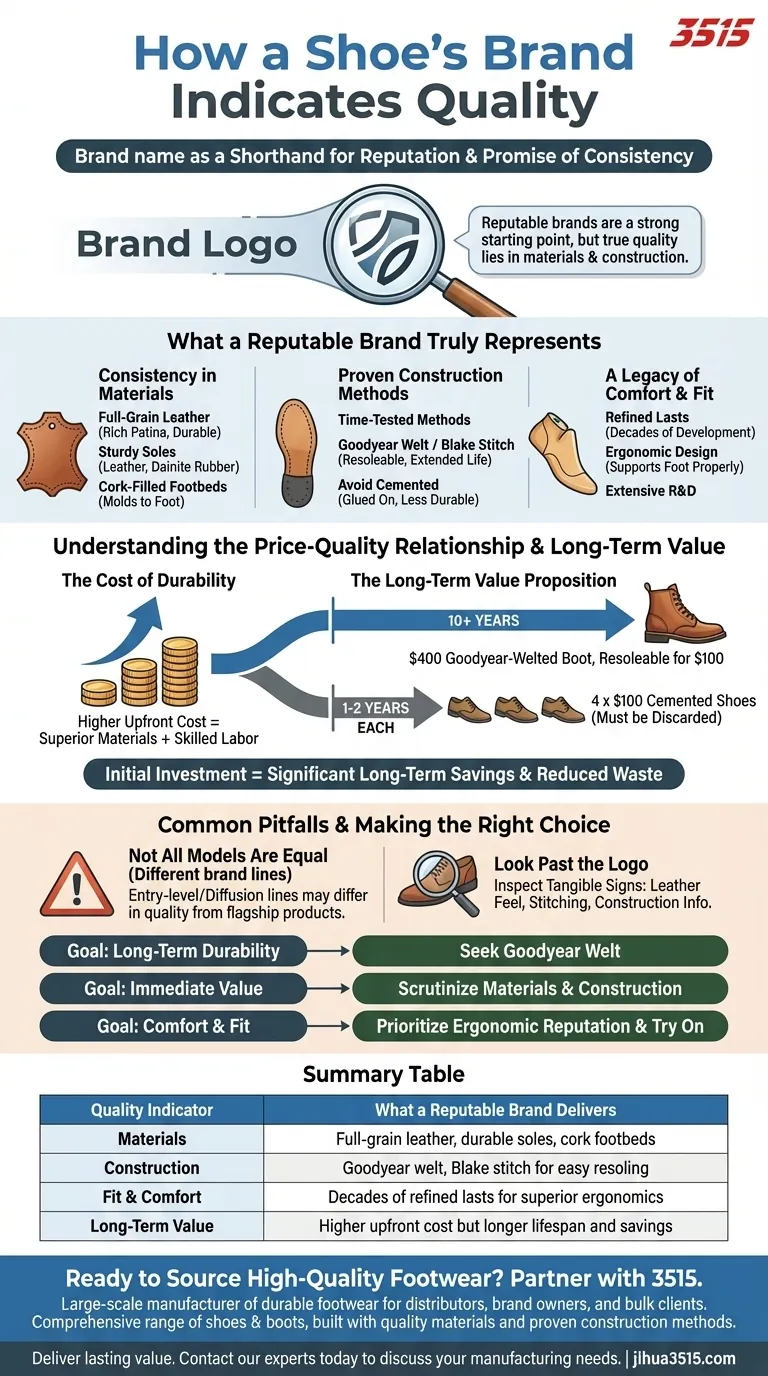
What a Reputable Brand Truly Represents
A brand's name is essentially a promise of consistency. For respected shoemakers, this promise is built on a foundation of tangible, high-quality attributes that you can learn to recognize.
Consistency in Materials
Top-tier brands are known for sourcing superior materials. This often means full-grain leather, which is durable and develops a rich patina over time, rather than cheaper "corrected grain" or bonded leathers.
This commitment extends to other components as well, from sturdy leather or Dainite rubber soles to cork-filled footbeds that mold to your foot.
Proven Construction Methods
The way a shoe is put together is a critical indicator of its quality and lifespan. Premium brands often use time-tested, labor-intensive methods.
Methods like a Goodyear welt or a Blake stitch allow a shoe to be resoled multiple times, dramatically extending its life. Cheaper shoes are often cemented, meaning the sole is simply glued on and cannot be easily replaced.
A Legacy of Comfort and Fit
Established brands have spent decades, sometimes centuries, perfecting their "lasts"—the forms a shoe is built around. This results in a more refined and ergonomic fit.
Their reputation for comfort is not an accident; it's the result of extensive research and development into design that supports the foot properly.
Understanding the Price-Quality Relationship
While a high price tag doesn't automatically equal a better shoe, there is often a strong correlation between what you pay and the quality you receive.
The Cost of Durability
The higher cost of a well-made shoe directly reflects the expense of superior materials and the skilled labor required for more complex construction.
Investing more upfront for a durable, repairable shoe is often more cost-effective than repeatedly buying and replacing cheaper alternatives.
The Long-Term Value Proposition
A $400 pair of Goodyear-welted boots that can be resoled for $100 might last you a decade. Four pairs of $100 cemented shoes might only last a year or two each before needing to be discarded entirely.
In this scenario, the initial investment in quality delivers significant long-term savings and reduces waste.
Common Pitfalls to Avoid
Relying on a brand name alone can be misleading. It's crucial to be aware of the nuances and potential exceptions to the rule.
Not All Models Are Created Equal
Many prestigious brands offer different lines of products at various price points. A brand's entry-level or "diffusion" line may not be made with the same materials or construction standards as their flagship products.
The Focus Should Be on the Shoe, Not the Logo
Always inspect the shoe itself. Look for the tangible signs of quality: the feel of the leather, the neatness of the stitching, and information about its construction. A brand name should guide your search, not end it.
Making the Right Choice for Your Goal
Use the brand as a starting point, then verify the details that matter most to you.
- If your primary focus is long-term durability: Seek out brands known specifically for using repairable construction methods like a Goodyear welt.
- If your primary focus is immediate value: Scrutinize the materials and construction of any shoe, regardless of brand, to ensure you are paying for substance and not just marketing.
- If your primary focus is comfort and fit: Prioritize brands with a long-standing reputation for ergonomics and consider trying them on in person if possible.
Ultimately, becoming an informed buyer empowers you to choose shoes based on genuine quality, not just a familiar name.
Summary Table:
| Quality Indicator | What a Reputable Brand Delivers |
|---|---|
| Materials | Full-grain leather, durable soles, cork footbeds |
| Construction | Goodyear welt, Blake stitch for easy resoling |
| Fit & Comfort | Decades of refined lasts for superior ergonomics |
| Long-Term Value | Higher upfront cost but longer lifespan and savings |
Ready to Source High-Quality Footwear? Partner with 3515.
As a large-scale manufacturer, 3515 produces a comprehensive range of durable footwear for distributors, brand owners, and bulk clients. Our production capabilities encompass all types of shoes and boots, built with the quality materials and proven construction methods detailed in this article.
Let us help you deliver lasting value to your customers. Contact our experts today to discuss your manufacturing needs.
Visual Guide
Related Products
- Wholesale Durable Camouflage Canvas Shoes with High-Traction Cleated Rubber Sole
- Advanced KPU Athletic Safety Shoe with Steel Toe Cap Anti-Slip Rotary Lacing System
- Wholesale Modern Perforated Leather Derby Shoes with Chunky Sole for Custom Branding
- Wholesale Modern Business Shoes with Dial Closure System for Bulk Orders
- Factory Direct Wholesale Leather Comfort Shoes with Dial Closure
People Also Ask
- Why is the selection of high-strength fabric materials necessary in the production of canvas shoes and training shoes?
- What are the properties of canvas as a shoe material? A Guide to Lightweight Comfort & Style
- Can canvas shoes be worn in rainy conditions? The Truth About Water Resistance
- What are some examples of vulcanized shoes? Discover the Flexibility and Board Feel of Classic Sneakers
- What are the characteristics of canvas as a shoe material? A Guide to Lightweight, Breathable Footwear