
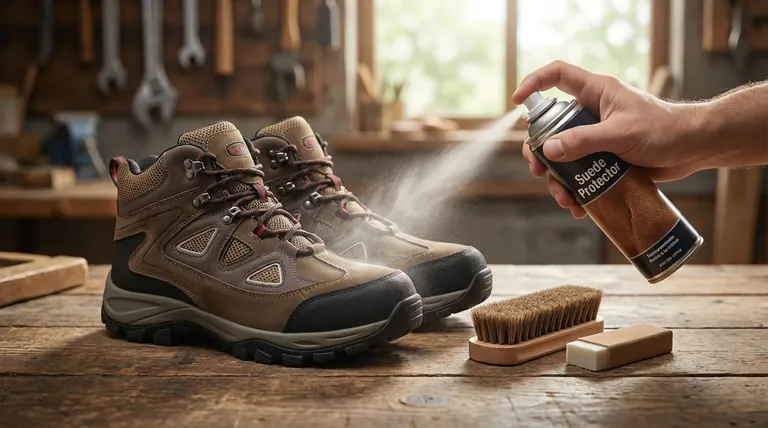
To waterproof suede boots without damage, you must first clean them thoroughly with a suede-specific brush and then apply a light, even coat of a waterproofing spray formulated specifically for suede or nubuck. This creates a protective barrier that repels water without clogging the material's delicate nap, unlike heavy waxes or creams which are meant for smooth leather and will ruin suede's texture.
Suede is inherently porous and delicate, making it highly susceptible to water damage and staining. The solution is not to make it waterproof, but water-resistant, by using a specialized spray that coats the fibers without matting them down, preserving the material's signature look and feel.
Why Suede Requires a Different Approach
Suede is fundamentally different from traditional smooth leather. Understanding this difference is the key to protecting it correctly.
The Nature of Suede
Suede is made from the underside of the animal hide, which is sanded to create a soft, fibrous surface known as a nap. This napped texture is what gives suede its velvety feel.
Unfortunately, this open-pored structure also acts like a sponge, readily absorbing water, oils, and dirt, leading to stains and discoloration.
The Wrong Tools for the Job
Products designed for smooth leather, such as waxes, oils, or heavy creams, are disastrous for suede. They will clog the fine fibers, mat down the nap, permanently darken the color, and destroy the soft texture you want to preserve.
The goal with suede is to create an invisible shield over the fibers, not to saturate the material itself.
The Step-by-Step Waterproofing Process
Follow this precise method to ensure you protect your boots without causing harm. Always work in a well-ventilated area.
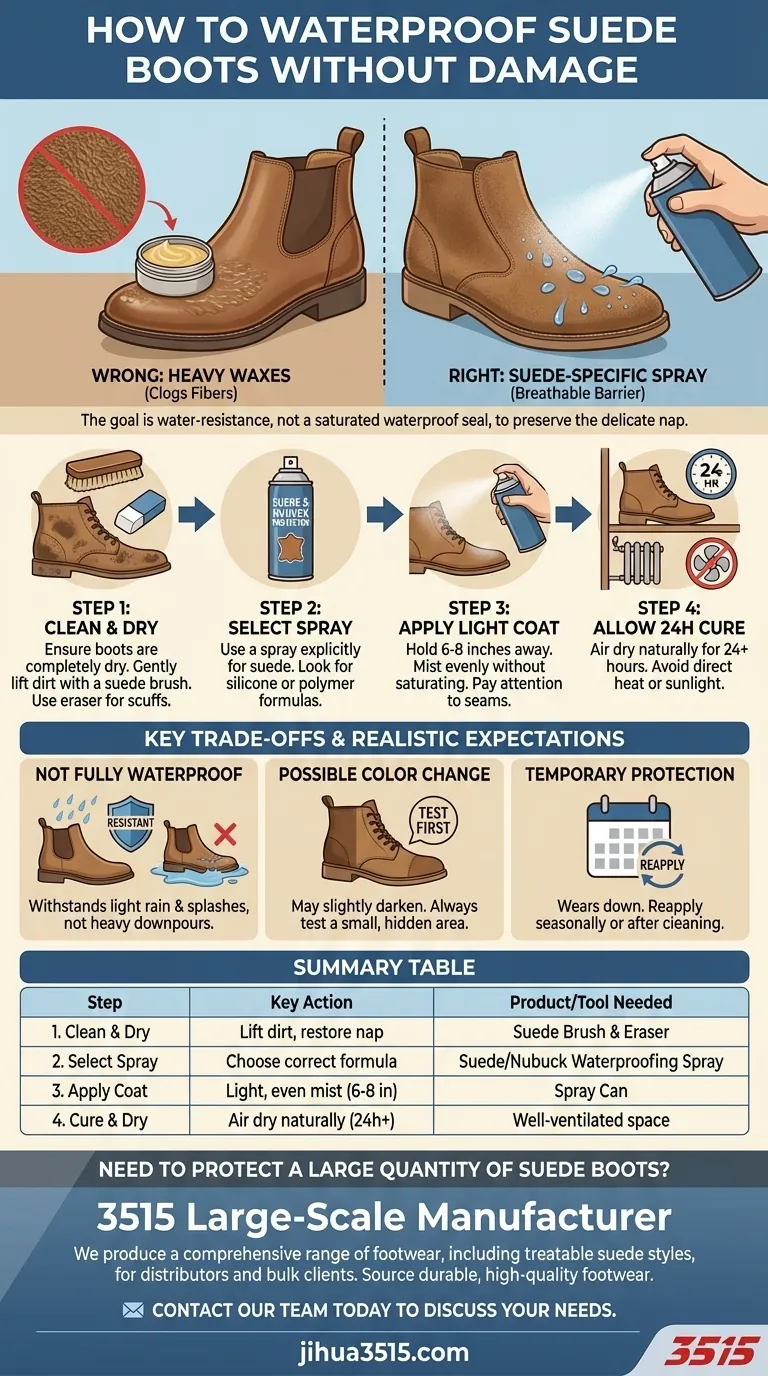
Step 1: Start with a Clean, Dry Surface
Any dirt or debris trapped under the waterproofing layer will become a permanent stain.
First, ensure the boots are completely dry. Then, use a suede brush to gently brush the surface in one direction. This lifts away dirt and restores the nap. For tougher scuffs, use a suede eraser before brushing.
Step 2: Select a Suede-Specific Spray
This is the most critical step. Purchase a waterproofing spray explicitly labeled for use on suede and nubuck.
These sprays typically use silicone or other polymers that create a breathable, water-repellent barrier without altering the texture.
Step 3: Apply a Light, Even Coat
Hold the spray can approximately 6-8 inches away from the boot.
Apply a light, consistent mist across the entire surface. Don't saturate any single area. Pay attention to seams and stitching, as these are common weak points for water entry.
Step 4: Allow for Proper Curing
Let the boots air dry naturally for at least 24 hours in a well-ventilated space, away from direct sunlight or heat sources like radiators.
Using direct heat can cause the suede to dry out, become brittle, or even warp. A fan can help circulate air but should not be pointed directly at the boots. After they are dry, you can lightly brush them again to soften the nap.
Understanding the Trade-offs
Properly treating your suede provides protection, but it's important to have realistic expectations.
Water-Resistant is Not Waterproof
This process makes your boots water-resistant, not fully waterproof. They will be able to withstand light rain or minor splashes.
However, suede boots are not the right choice for heavy downpours, deep puddles, or snow. No surface treatment can change the fundamental nature of the material.
A Slight Color Change is Possible
Even with the correct product, applying a waterproofing spray can sometimes slightly darken the color of the suede.
Always test the spray on a small, inconspicuous area first—like the inner ankle or tongue—to see how it affects the color before treating the entire boot.
Protection is Temporary
The protective barrier you create will wear down over time with use and exposure to the elements. You will need to reapply the waterproofing spray periodically, typically at the start of a season or after a thorough cleaning.
Making the Right Choice for Your Boots
Your maintenance routine should align with how you use your boots.
- If your primary focus is daily wear in fair weather: Clean your boots with a brush as needed and reapply a waterproofing spray every 2-3 months to guard against unexpected splashes.
- If your primary focus is preparing for occasional light rain: Ensure you have applied a fresh, fully cured coat of protectant spray before wearing the boots out.
- If your primary focus is restoring and protecting older boots: Always perform a deep clean with a suede eraser and brush before applying any waterproofing product to avoid sealing in old stains.
Ultimately, protecting suede is about gentle prevention rather than heavy-handed correction.
Summary Table:
| Step | Key Action | Product/Tool Needed |
|---|---|---|
| 1 | Clean & Dry | Suede Brush & Eraser |
| 2 | Select Spray | Suede/Nubuck Waterproofing Spray |
| 3 | Apply Coat | Light, even mist from 6-8 inches away |
| 4 | Cure & Dry | Air dry naturally for 24+ hours |
Need to protect a large quantity of suede boots? As a large-scale manufacturer, 3515 produces a comprehensive range of footwear for distributors, brand owners, and bulk clients. Our production capabilities encompass all types of shoes and boots, including suede styles that can be treated with the appropriate protective finishes. Let us help you source durable, high-quality footwear for your business. Contact our team today to discuss your needs.
Visual Guide
Related Products
- High-Traction Suede Tactical Boots Wholesale & Custom Manufacturing
- Wholesale Waterproof Tactical Boots Custom Suede & High-Traction Soles
- Durable Leather High-Ankle Tactical Boots for Wholesale & Custom Manufacturing
- Durable Leather Work Boots for Wholesale & Custom Manufacturing
- Durable Leather Work Boots for Wholesale & Custom OEM Manufacturing
People Also Ask
- Why is sequential analysis utilized to evaluate tactical boots? Master Dynamic Boot Development and Ergonomic Performance
- How does the material of tactical boots affect their performance? Choose the Right Material for Your Mission
- How do tactical boots differ from regular boots? Performance, Durability & Design Explained
- How do military uniforms and tactical boots impact the prediction of thermal risk? Essential Safety Insights
- What are the benefits of integrating FES and sEMG into tactical boots? Safety, Reliability & Field-Ready Performance

















