
Plantar warts are not a sign of poor hygiene, but rather an opportunistic viral infection. They are caused by the human papillomavirus (HPV), which enters the body through tiny cuts or weak spots on the soles of your feet. Wearing dedicated indoor footwear creates a protective barrier, drastically reducing the risk of contracting the virus from contaminated surfaces or spreading it within your home.
The core reason for adopting indoor-only footwear is twofold: it provides a critical hygienic shield against the virus that causes plantar warts and delivers the essential structural support your feet need to prevent mechanical strain and pain from hard, flat floors.
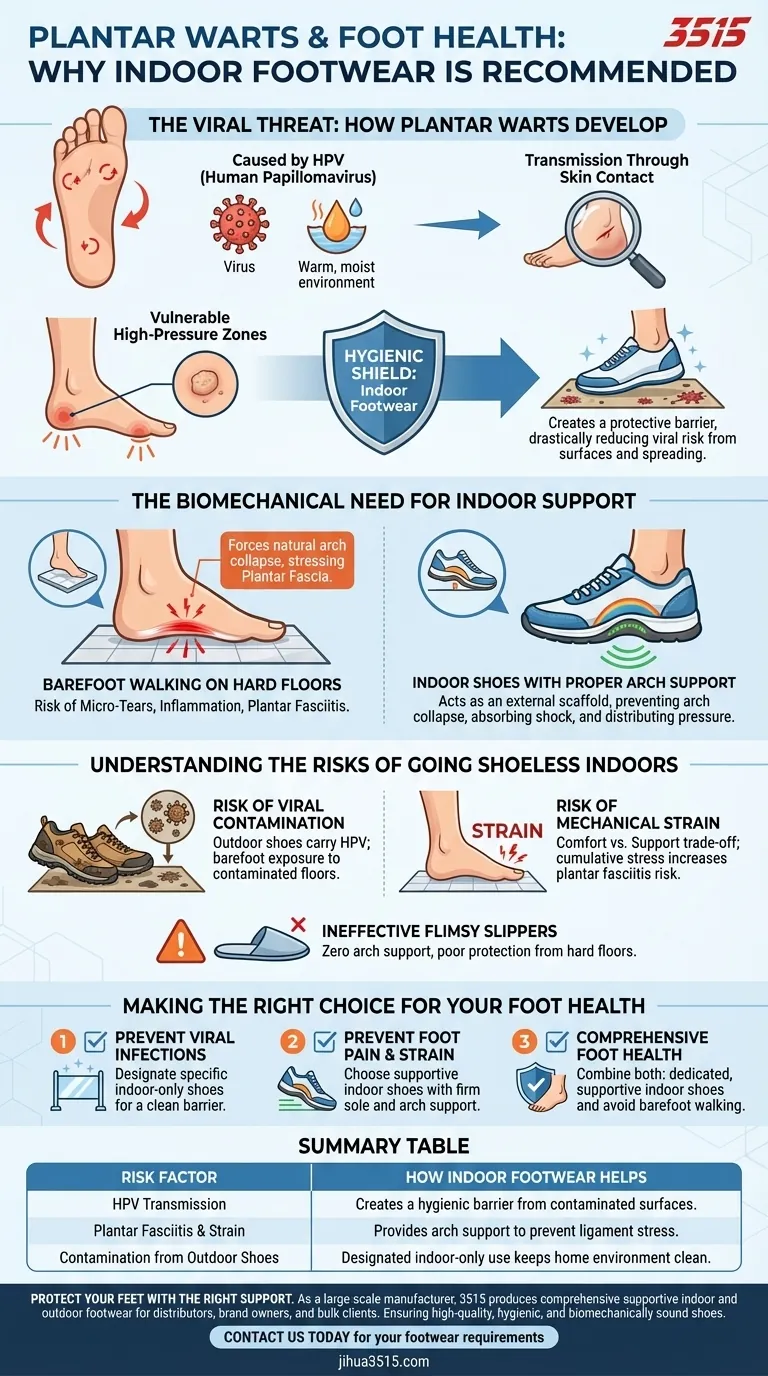
The Viral Threat: How Plantar Warts Develop
Plantar warts are a direct result of a viral infection that targets the skin on the bottom of your feet. Understanding the transmission mechanism is key to prevention.
The Culprit is Human Papillomavirus (HPV)
The direct cause of plantar warts is specific strains of HPV. This virus thrives in warm, moist environments and can survive on surfaces for some time.
Transmission Through Skin Contact
The virus capitalizes on compromised skin. It enters through small cuts, scrapes, or abrasions on the sole of your foot, which are often invisible to the naked eye.
High-Pressure Zones Are Vulnerable
Warts commonly appear on the heel or the ball of the foot. This is because the constant pressure and friction in these areas can create the microscopic breaks in the skin that allow the virus to take hold.
The Biomechanical Need for Indoor Support
While preventing warts is a major benefit, the argument for indoor footwear goes deeper than hygiene. It's about protecting the fundamental structure of your foot from the modern environment.
The Problem with Barefoot Walking
Most modern homes have hard, unforgiving surfaces like tile or hardwood. Walking barefoot on these floors forces the natural arch of your foot to collapse with every step.
Protecting the Plantar Fascia
This repeated collapsing puts significant stress on the plantar fascia, the ligament connecting your heel to your toes. Over time, this can cause micro-tears, inflammation, and the sharp, debilitating pain associated with plantar fasciitis.
How Indoor Shoes Provide Stability
A good indoor shoe with proper arch support acts as an external scaffold for your foot. It prevents the arch from collapsing, absorbing shock and distributing pressure more evenly, which directly reduces stress on the plantar fascia.
Understanding the Risks of Going Shoeless Indoors
The decision to go barefoot or wear outdoor shoes inside carries distinct risks that a dedicated indoor shoe is designed to mitigate.
The Risk of Viral Contamination
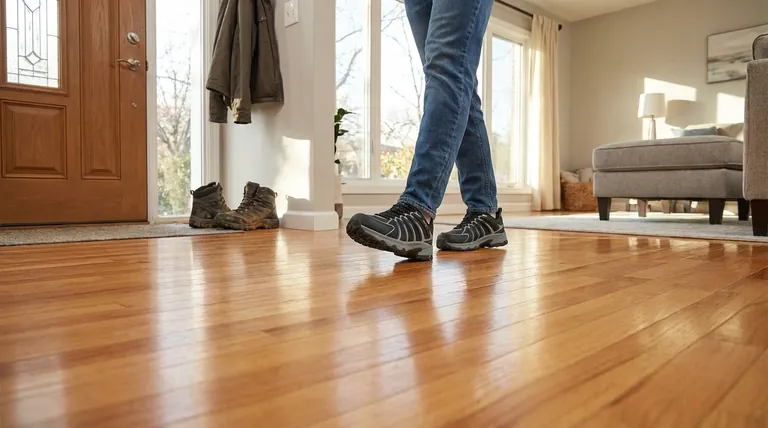
Your outdoor shoes walk across countless surfaces, potentially picking up and carrying HPV. Wearing them inside contaminates your floors, while walking barefoot then exposes your feet directly to this contaminated environment.
The Risk of Mechanical Strain
The primary trade-off of walking barefoot is comfort versus support. While it may feel liberating, it exposes your feet to cumulative mechanical stress, increasing the long-term risk of conditions like plantar fasciitis.
The Ineffectiveness of Flimsy Slippers
Not all indoor footwear is created equal. Simple cloth or foam slippers may offer warmth but often provide zero arch support, doing little to prevent the biomechanical strain caused by hard floors.
Making the Right Choice for Your Foot Health
Your specific goal will determine the most important factor in your footwear choice.
- If your primary focus is preventing viral infections: Designate a specific pair of shoes for indoor use only to create a clean barrier between outdoor contaminants and your floors.
- If your primary focus is preventing foot pain and strain: Choose a supportive indoor shoe or slipper with a firm sole and noticeable arch support to protect your ligaments from hard surfaces.
- If your primary focus is comprehensive foot health: Combine both strategies by using a dedicated, supportive indoor shoe and consistently avoiding walking barefoot.
By protecting your feet from both invisible viral threats and daily mechanical stress, you take a simple yet powerful step toward ensuring long-term comfort and health.
Summary Table:
| Risk Factor | How Indoor Footwear Helps |
|---|---|
| HPV Virus Transmission | Creates a hygienic barrier from contaminated surfaces. |
| Plantar Fasciitis & Strain | Provides arch support to prevent ligament stress on hard floors. |
| Contamination from Outdoor Shoes | Designated indoor-only use keeps your home environment clean. |
Protect your feet with the right support. As a large-scale manufacturer, 3515 produces a comprehensive range of supportive indoor and outdoor footwear for distributors, brand owners, and bulk clients. Our production capabilities ensure high-quality, hygienic, and biomechanically sound shoes and boots for all your needs.
Contact us today to discuss your footwear requirements and ensure long-term foot health for your customers.
Visual Guide
Related Products
- Wholesale Durable Camouflage Canvas Shoes with High-Traction Cleated Rubber Sole
- Wholesale Safety Boots Manufacturer for Custom & Private Label Orders
- Premium Suede Sport Safety Shoes for Wholesale & Bulk Orders
- Wholesale Customizable Safety Boots Durable & Protective Footwear Manufacturing
- Lightweight Breathable Training Shoes for Wholesale & Custom OEM Manufacturing
People Also Ask
- Why is the selection of high-strength fabric materials necessary in the production of canvas shoes and training shoes?
- What are the properties of canvas as a shoe material? A Guide to Lightweight Comfort & Style
- Can canvas shoes be worn in rainy conditions? The Truth About Water Resistance
- What are some examples of vulcanized shoes? Discover the Flexibility and Board Feel of Classic Sneakers
- What are the characteristics of canvas as a shoe material? A Guide to Lightweight, Breathable Footwear


















