
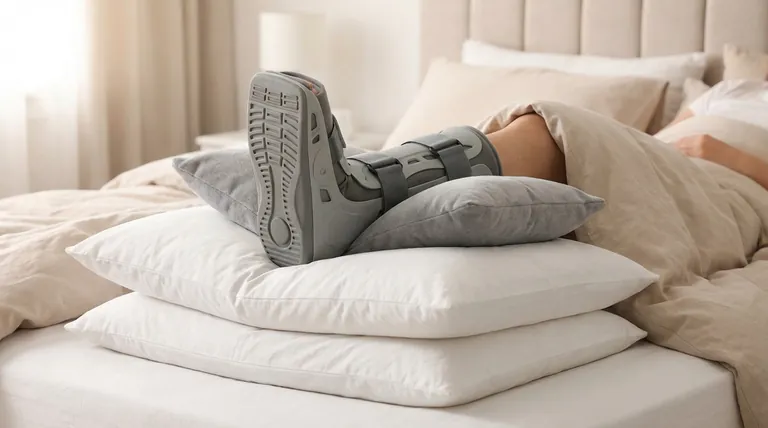
The right placement of pillows is critical when sleeping with a walking boot. They serve three primary functions: to elevate your foot, to provide stability and prevent it from shifting, and to create a soft cushion against accidental bumps during the night. This strategic support is essential for managing pain, reducing swelling, and achieving restorative sleep.
A walking boot disrupts your natural sleep posture. Using pillows correctly is the most effective way to create a stable, elevated, and comfortable environment that supports healing and allows you to rest.
The Core Functions of Pillows with a Walking Boot
Sleeping with a large, rigid boot is unnatural and often uncomfortable. Pillows are your primary tool to counteract this disruption and create a supportive sleep setup.
Achieving Proper Elevation
The most important role of a pillow is to elevate your injured foot. Keeping your foot raised, ideally slightly above the level of your heart, helps reduce swelling and throbbing by promoting fluid drainage.
This simple act of elevation can significantly decrease pain and discomfort, which are often the biggest barriers to sleep during recovery.
Providing Stability
A walking boot is heavy and can cause your leg to roll into awkward positions while you sleep. Pillows provide crucial stability.
By placing pillows on either side of the booted leg, you create a supportive trough that cradles the boot. This prevents it from twisting or falling to the side, protecting your injury from strain and minimizing the risk of waking up from sudden movements.
Cushioning Against Bumps
During the night, you might accidentally knock your booted foot against the bed frame, a wall, or your other leg. Pillows act as a buffer.
Placing a pillow between your knees or along the side of the boot provides soft cushioning, absorbing the impact of these bumps and preventing sharp pains that can jolt you awake.
A Practical Strategy for Comfortable Sleep
While pillows are the foundation, a holistic approach is needed to ensure a good night's rest. Combining pillow strategy with other adjustments can make a significant difference.
Prepare Your Sleep Position
The best position is typically sleeping on your back. This posture makes it easiest to build a stable and elevated pillow structure for your foot.
Place one or two firm pillows directly under your booted foot and calf to achieve elevation. Use additional pillows on either side to prevent it from rolling.
Adjust the Boot for Comfort
Unless your doctor has instructed otherwise, you can often loosen the boot's straps slightly before going to bed. This can relieve pressure and improve circulation without compromising the support needed for your injury.
Consider keeping your booted foot outside of the main covers. This prevents overheating and gives you more room to adjust without disturbing your blankets.
Manage Pain and Discomfort
If you are experiencing significant pain, speak with your doctor about your options. Taking prescribed or over-the-counter pain medication about 30-60 minutes before bed can help you fall asleep more easily.
Some find it helpful to take the boot off for an hour before bed to let the foot breathe, but be sure to put it back on securely before you intend to fall asleep.
Common Pitfalls to Avoid
Using pillows incorrectly can sometimes make things worse. Being aware of common mistakes ensures you are getting the full benefit of your supportive setup.
Creating an Unstable Pillow Stack
Using a tall stack of soft, squishy pillows can be very unstable. Your boot can easily slide off during the night, waking you up and potentially straining your injury.
It is better to use one or two firmer pillows or a dedicated wedge pillow to create a solid, reliable base that won't shift easily.
Ignoring Other Comfort Factors
Focusing only on elevation can cause you to neglect other sources of discomfort. The weight of the boot, pressure from straps, and overheating are also major issues.
Remember to address these by loosening straps, keeping the boot outside the covers, and using pillows for cushioning in addition to elevation.
Making the Right Choice for Your Recovery
Your specific strategy will depend on your primary goal for the night.
- If your primary focus is reducing swelling: Use firm pillows or a wedge to elevate your foot securely above the level of your heart while sleeping on your back.
- If your primary focus is minimizing pain from bumps: Place a soft pillow between your knees or along the outside of the boot to act as a protective cushion.
- If your primary focus is stability: Build a supportive nest of pillows around your leg to prevent it from rolling or shifting during sleep.
Properly using pillows transforms them from simple comfort items into essential tools for your recovery.
Summary Table:
| Pillow Function | Key Benefit |
|---|---|
| Elevation | Reduces swelling and pain by promoting fluid drainage |
| Stability | Prevents the boot from twisting or rolling during sleep |
| Cushioning | Protects against accidental bumps and jolts |
Struggling to get restful sleep in your walking boot? As a large-scale manufacturer, 3515 produces a comprehensive range of orthopedic and recovery footwear designed for comfort and support. Our production capabilities encompass all types of therapeutic shoes and boots for distributors, brand owners, and bulk clients. Let us help you find a better solution for your recovery needs.
Contact us today to learn more about our products and how we can support your business or recovery journey!
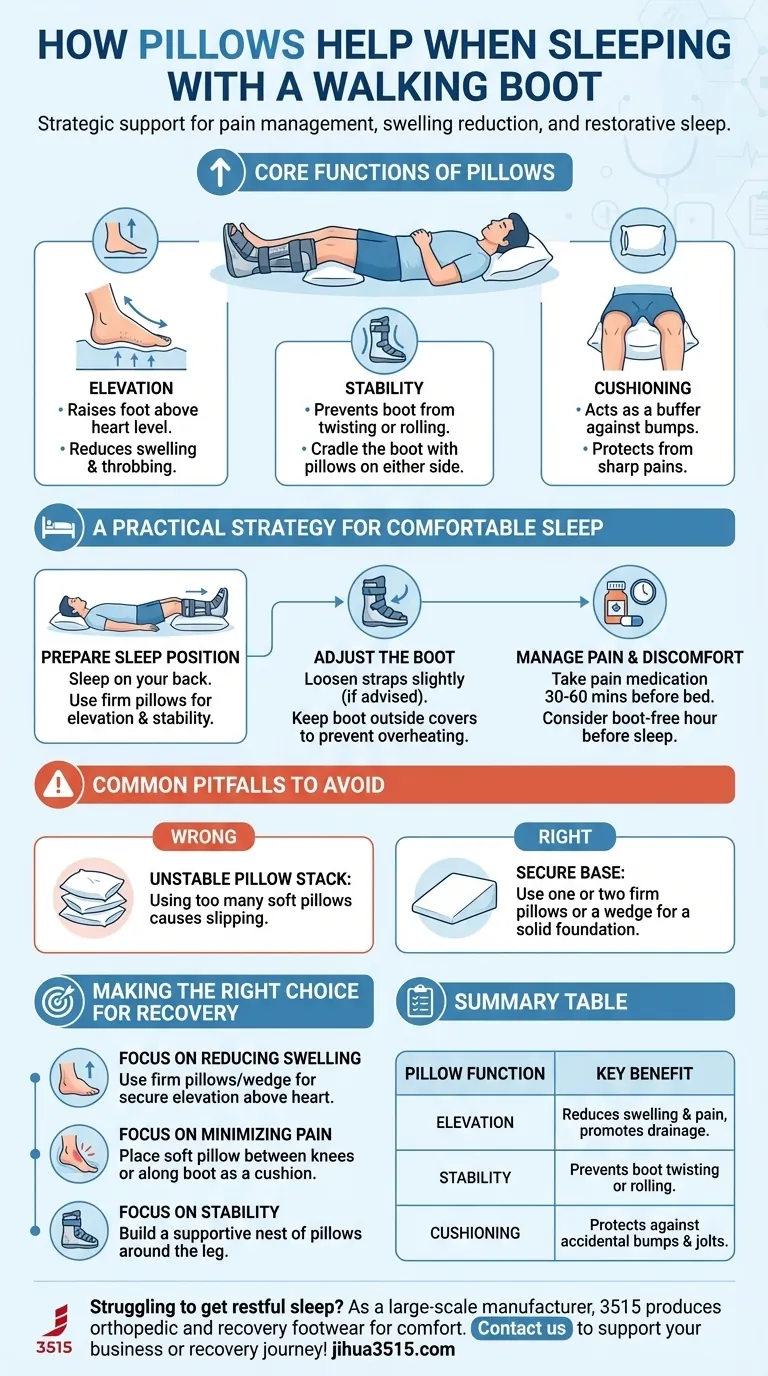
Visual Guide
Related Products
- Durable Rubber Sole Outdoor Shoes Wholesale & Custom Manufacturing
- Durable Goodyear Welt Leather Work Boots for Wholesale & Private Label
- Wholesale Customizable Safety Boots Durable & Protective Footwear Manufacturing
- Heavy-Duty Waterproof Nubuck Safety Boots Safety Shoes for Bulk Supply
- Wholesale Durable Camouflage Canvas Shoes with High-Traction Cleated Rubber Sole
People Also Ask
- What is the function of the sole in outdoor shoes? Find the Perfect Grip and Support
- What role do outdoor shoes and sneakers play in navigating external terrains? Engineered Stability for Every Surface
- How is AI utilized in the design of outdoor and safety footwear? Harnessing Big Data for Market-Driven Shoe Innovation
- Why is durability important when selecting outdoor shoes? A Guide to Safety & Long-Term Value
- What are the key components of outdoor shoes that affect comfort and sturdiness? A Guide to Durable, High-Performance Footwear


















