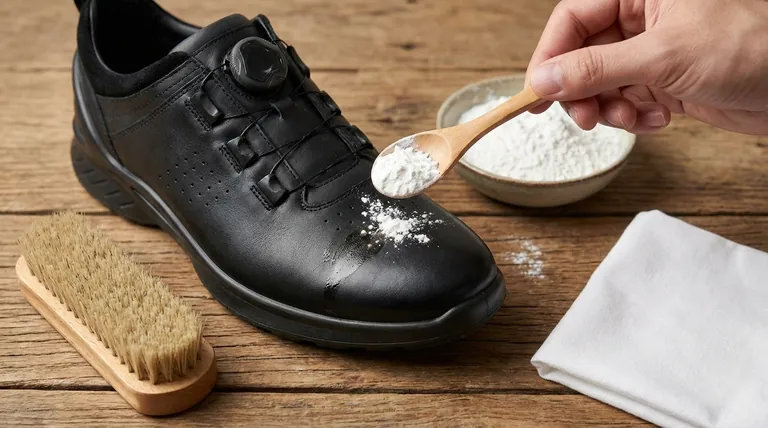
The most effective way to remove a fresh grease or oil stain from leather shoes is to absorb it immediately with an absorbent powder. Sprinkle talcum powder, baby powder, or cornstarch liberally over the entire stain. Allow the powder to sit for at least two to three hours to draw the oil out of the leather before gently brushing it away.
Your primary goal is to lift the oil out of the porous leather, not rub it deeper into the material. For this reason, an absorbent powder is the safest and most effective first step for treating grease and oil stains.
Why Powder is Your First Line of Defense
When oil or grease hits leather, it immediately begins to seep into the material's pores. Aggressive scrubbing or using the wrong liquid can permanently set the stain or spread it further.
The Principle: Absorption, Not Abrasion
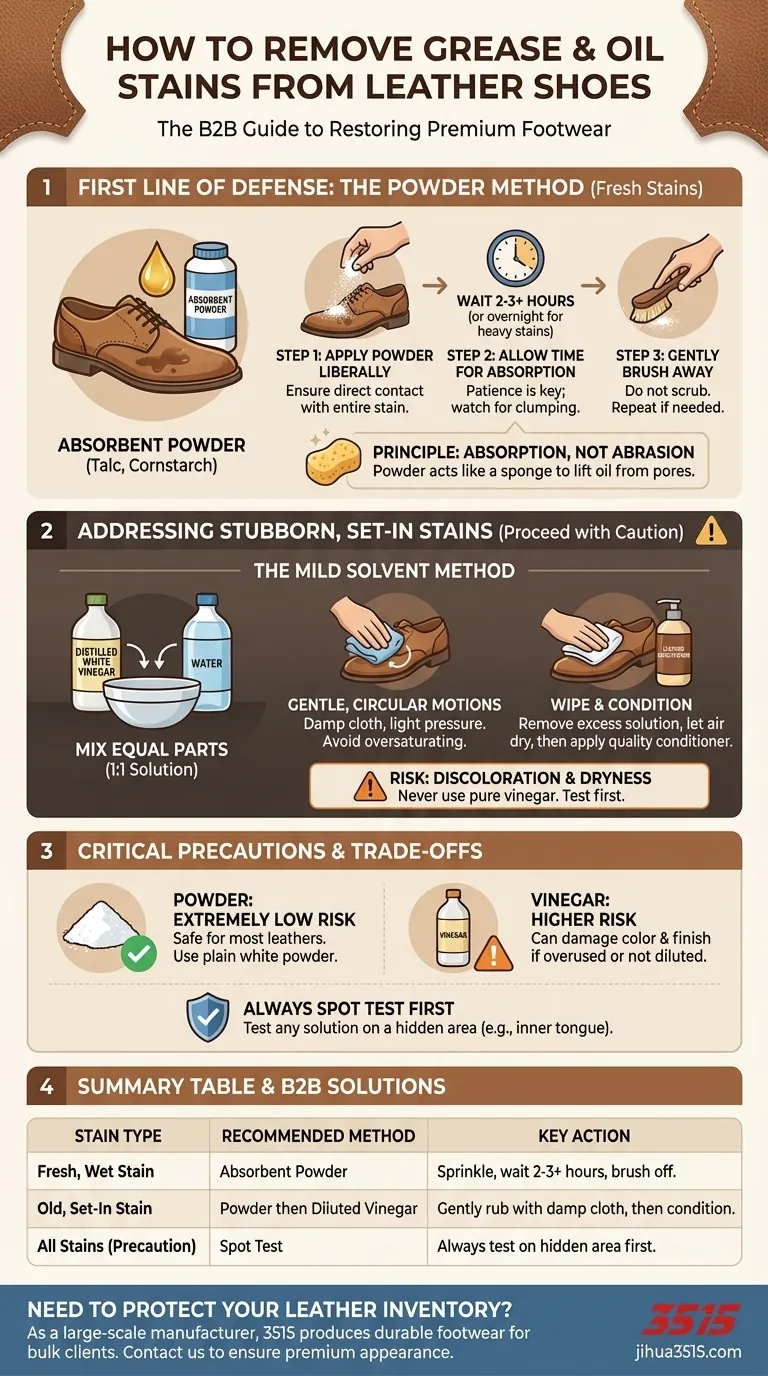
The fine particles in talcum powder or cornstarch have a massive collective surface area. This allows them to act like a sponge, pulling the liquid oil up and out of the leather's pores through capillary action.
This method removes the oil without requiring harsh chemicals or abrasive rubbing that could damage the leather's delicate finish.
Step 1: Apply the Powder Liberally
Do not be shy with the application. Completely cover the fresh grease stain with a thick layer of talcum powder, baby powder, or cornstarch.
The key is to ensure the powder is in direct contact with the entire affected area.
Step 2: Allow Ample Time for Absorption
Patience is critical for this process to work. Let the powder sit undisturbed on the stain for a minimum of two to three hours. For heavier stains, leaving it overnight can yield better results.
During this time, you may see the powder change color or clump together as it absorbs the oil. This is a sign that the method is working.
Step 3: Gently Brush Away the Residue
Once the waiting period is over, use a soft-bristled shoe brush or a clean, dry cloth to gently brush the powder off the shoe.
Avoid scrubbing. The goal is simply to remove the now oil-saturated powder from the surface. Repeat the process if the stain remains.
Addressing Stubborn, Set-In Stains
If the powder method doesn't fully remove an older, more established stain, you can proceed to a more active cleaning method, but with caution.
The Principle: Using a Mild Solvent
For stains that have already set, a mild solvent can help break down the remaining grease. A diluted solution of distilled white vinegar and water can serve this purpose.
The Method: A Diluted Vinegar Solution
Mix equal parts distilled white vinegar and water. Never apply pure vinegar directly to leather, as its acidity can cause damage.
The Technique: Gentle, Circular Motions
Dampen a clean, soft cloth with the diluted solution—it should be damp, not dripping wet.
Gently rub the stain in small, circular motions with light pressure. The goal is to lift the remaining residue without oversaturating the leather or stripping its color.
The Follow-Up: Wipe and Condition
After treating the spot, use a separate cloth dampened with only water to wipe away any excess vinegar solution. Let the leather air dry completely.
Crucially, after using vinegar, you should apply a quality leather conditioner to the area to restore moisture and oils that the vinegar may have stripped away.
Understanding the Trade-offs and Risks
While these methods are effective, leather is a natural material that can be sensitive. Understanding the potential risks is key to a successful outcome.
The Risk of Powder: Extremely Low
The powder method is exceptionally safe. The only minor risk is using a colored powder on very light-colored leather, so always stick to plain white talcum or cornstarch.
The Risk of Vinegar: Discoloration and Dryness
Vinegar is an acid. If the solution is too concentrated, if you apply too much, or if you scrub too hard, you risk discoloring or permanently drying out the leather.
Always Test on an Inconspicuous Area First
Before applying any liquid solution to a visible stain, always test it on a small, hidden part of the shoe first, like the inner side of the tongue. This allows you to see how your specific leather reacts before you risk damaging a prominent area.
Making the Right Choice for Your Stain
Your approach should depend on the age and severity of the stain.
- If the stain is fresh and still wet: Your immediate priority is absorption. Apply powder right away.
- If the stain is old and has set: Begin with the powder method to remove as much oil as possible, but be prepared to follow up carefully with the diluted vinegar solution.
- If your shoes are light-colored or made of delicate leather: Exercise extreme caution and always test any solution on a hidden spot before proceeding.
By understanding the principles of absorption and careful cleaning, you can confidently restore your leather footwear.
Summary Table:
| Stain Type | Recommended Method | Key Action |
|---|---|---|
| Fresh, Wet Stain | Absorbent Powder (Talc, Cornstarch) | Sprinkle powder, let sit 2-3+ hours, brush off. |
| Old, Set-In Stain | Powder followed by Diluted Vinegar Solution | Gently rub with a damp cloth, then condition leather. |
| All Stains (Precaution) | Spot Test | Always test any solution on a hidden area first. |
Need to protect or restore a large quantity of leather footwear? As a large-scale manufacturer, 3515 produces a comprehensive range of durable shoes and boots for distributors, brand owners, and bulk clients. Let us help you ensure your inventory or product line maintains its premium appearance. Contact our team today to discuss your manufacturing needs.
Visual Guide
Related Products
- Factory Direct Wholesale Leather Comfort Shoes with Dial Closure
- Classic Leather Derby Dress Shoes Wholesale & Custom Manufacturing
- Custom Manufactured Air Cushion Leather Business Shoes for Wholesale
- Wholesale Comfort Leather Business Shoes with Dial Lacing System
- Wholesale Leather Apron Toe Derby Shoes Custom Factory Production
People Also Ask
- What are some common materials used to make men's leather shoes? A Guide to Calfskin, Cordovan & Suede
- How can you waterproof leather shoes? Choose the Right Method for Maximum Protection
- What role do auxiliary materials play in leather shoe product mix optimization? Maximize Profit & Stability
- What are the best practices for storing leather shoes? Preserve Your Investment for Years to Come
- What are the maintenance requirements for leather shoes? A Complete Guide to Longevity