
At their core, tactical boots are used in outdoor sports for the same reasons they are trusted by military and law enforcement: they offer a powerful combination of durability, foot protection, and ankle support designed to handle demanding terrain and conditions. Activities like hunting, hiking, and paintball benefit from their rugged construction, stability on uneven ground, and features designed for all-day wear.
Tactical boots serve as a versatile bridge between traditional work boots and specialized hiking footwear. They excel in providing robust protection and support, but understanding their specific design intent is crucial to knowing if they're the right choice for your particular outdoor activity.
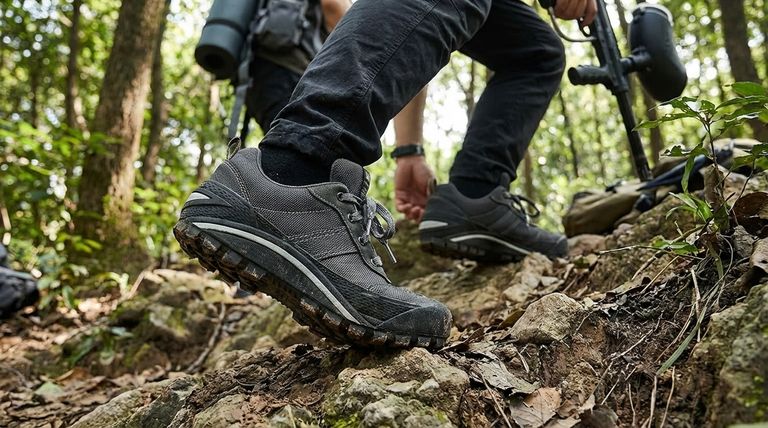
What Defines a "Tactical" Boot?
Originally designed for military and law enforcement personnel, tactical boots prioritize performance under stress. They are built to withstand tough conditions while allowing for agility and comfort over long periods.
Construction and Durability
The defining feature of a tactical boot is its rugged construction. Manufacturers often use double or triple stitching at key stress points to prevent blowouts.
Many models feature reinforced toe and heel areas, offering crucial protection against impacts from rocks, roots, and other environmental hazards encountered on a trail or in a game of paintball.
Construction methods like Goodyear welts create a highly durable and water-resistant seal, while lighter cement construction offers more flexibility and reduced weight.
Support and Stability
A key advantage in outdoor sports is superior ankle support. The high-cuff design helps prevent twists and sprains when navigating uneven or slippery terrain, which is common in both hiking and hunting.
This stability provides a secure platform, reducing foot fatigue and giving you more confidence with every step, whether you're tracking game or climbing a steep incline.
All-Day Comfort Features
Despite their tough exterior, modern tactical boots are engineered for comfort. They often incorporate lightweight fabrics and materials to reduce the energy you expend.
Features like breathable membranes and moisture-wicking liners are critical. They help manage sweat and keep your feet dry, which is essential for preventing blisters and discomfort during long days outdoors.
Understanding the Trade-offs: Tactical vs. Hiking Boots
While tactical boots are highly capable, they are not always a direct replacement for specialized outdoor footwear. It's important to recognize the trade-offs.
The Weight Factor
Protection often comes with a penalty in weight. While many tactical boots are surprisingly light, some heavy-duty models can be bulkier and heavier than a dedicated trail runner or lightweight hiking boot. This can lead to faster fatigue on long-distance treks.
Flexibility and Ground Feel
Tactical boots are often built with stiffer soles to protect the foot from puncture and provide a stable platform. This can sometimes reduce the boot's flexibility and the "feel" of the trail beneath your feet, which some long-distance hikers prefer for agility.
The Purpose of Neutral Colors
The neutral, earthy colors common to tactical boots are not just for style. For activities like hunting or wildlife photography, this muted appearance provides a practical advantage by helping you blend into the natural environment.
Making the Right Choice for Your Activity
Selecting the right footwear depends entirely on matching the boot's strengths to your specific needs.
- If your primary focus is hunting, paintball, or airsoft: A tactical boot is an excellent choice, as its emphasis on durability, protection, and ankle support is perfectly suited for these activities.
- If your primary focus is casual day-hiking or outdoor work: The versatility of a lightweight tactical boot makes it a strong contender, offering more protection than a trail shoe without excessive weight.
- If your primary focus is long-distance backpacking: You may be better served by a dedicated hiking boot that prioritizes low weight and specific flex characteristics for trekking thousands of steps.
Ultimately, choosing the right boot is about understanding your own priorities for protection, support, and comfort on the trail.
Summary Table:
| Feature | Benefit for Outdoor Activities |
|---|---|
| Rugged Construction | Withstands tough terrain, rocks, and impacts. |
| Superior Ankle Support | Prevents twists and sprains on uneven ground. |
| All-Day Comfort | Breathable liners and lightweight design reduce fatigue. |
| Durable Materials | Double stitching and reinforced toes ensure longevity. |
Find Your Perfect Tactical Boot for the Outdoors
As a large-scale manufacturer, 3515 produces a comprehensive range of durable tactical and outdoor footwear for distributors, brand owners, and bulk clients. Our production capabilities encompass all types of boots designed for demanding conditions.
Whether you need reliable boots for hunting, hiking, or other rugged activities, we can provide the durable, supportive, and comfortable footwear your customers demand.
Contact 3515 today to discuss your tactical boot needs and leverage our manufacturing expertise to equip your customers for any adventure.
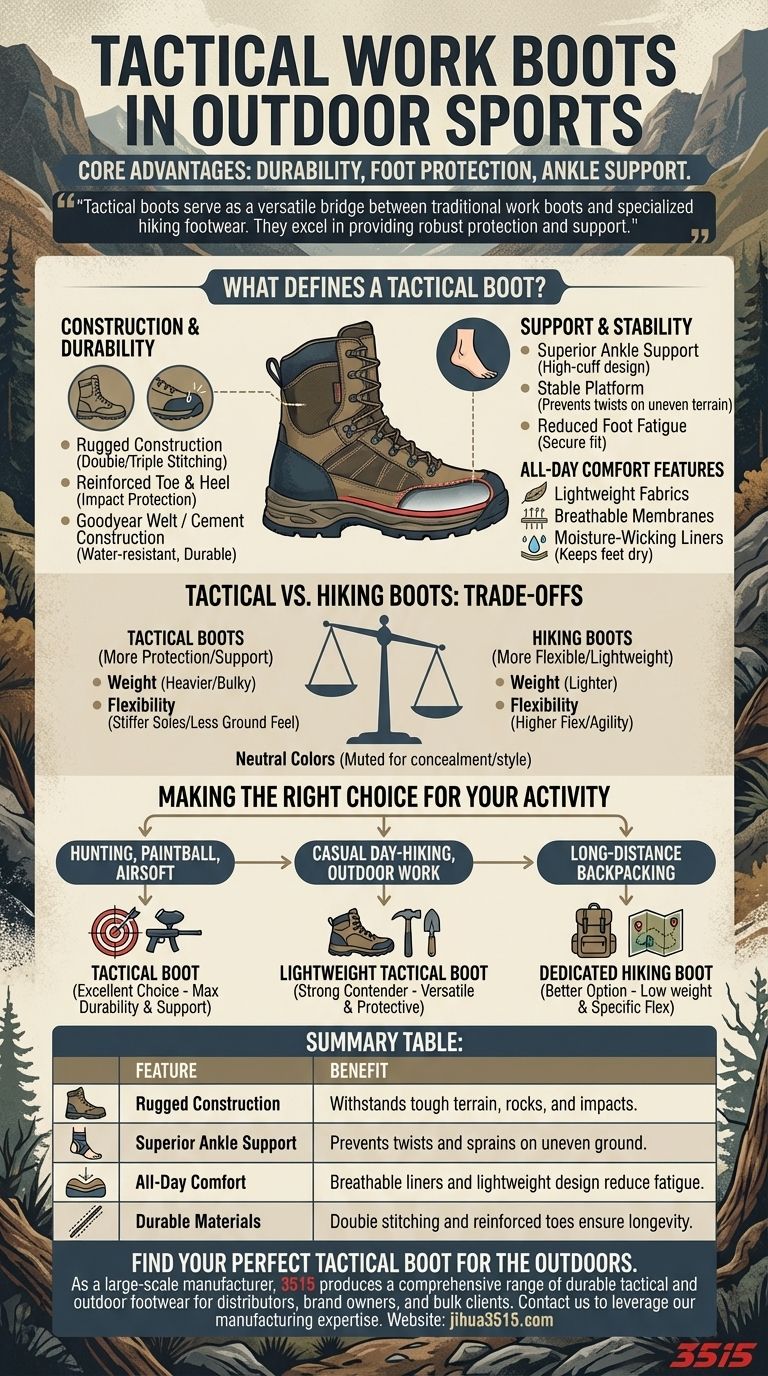
Visual Guide
Related Products
- Durable Leather Tactical Boots Wholesale & Custom Manufacturing for Brands
- High-Traction Suede Tactical Boots Wholesale & Custom Manufacturing
- Durable Leather High-Ankle Tactical Boots for Wholesale & Custom Manufacturing
- Durable Mid-Cut Tactical Boots for Wholesale & Private Label
- Wholesale Tactical Boots High-Traction & Reflective for Bulk & Brand Orders
People Also Ask
- What specialized protections do tactical boots offer? Maximize Endurance with High-Performance Footwear
- What features should law enforcement officers look for in tactical boots? Essential Guide for Safety & Performance
- Importance of Professional Tactical Boots in Loess Gully Regions: Ensure Safety and Precision for Field Monitoring
- What is rucking, and why are tactical boots suitable for it? Discover the Ultimate Footwear for Heavy Loads
- What makes the traction of tactical boots superior? Unlock the Science of Unbeatable Grip















