Absolutely. Selecting a hunting boot based on the specific game you pursue is not an over-complication; it's a fundamental strategy for increasing your effectiveness and endurance in the field. Different animals inhabit different terrains and possess unique senses, and your boots must be specialized to overcome those specific challenges, from the scent-sensitivity of a whitetail deer to the water-logged environment of a duck blind.
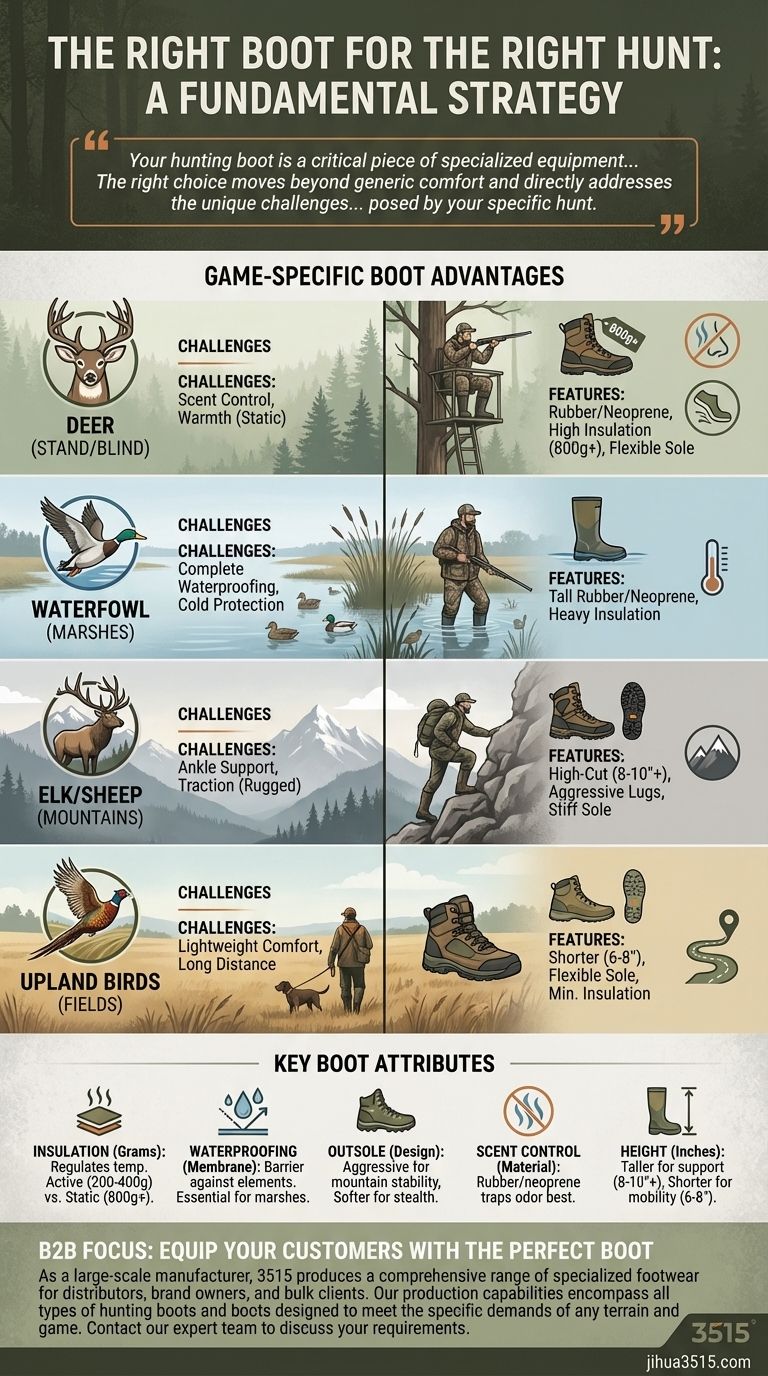
Your hunting boot is a critical piece of specialized equipment, not just footwear. The right choice moves beyond generic comfort and directly addresses the unique challenges—from terrain and temperature to an animal's keen senses—posed by your specific hunt.
Key Boot Attributes That Define Performance
To match a boot to your hunt, you first need to understand the core components that dictate its function. Each feature serves a specific purpose, and the right combination is what makes a boot ideal for one type of game over another.
Insulation for Temperature Regulation
Insulation, typically measured in grams (e.g., 200g to 1200g), is crucial for managing temperature. The key is to match the insulation level to your activity.
More insulation is not always better. Static hunting, like sitting in a tree stand for deer or a blind for waterfowl, requires higher insulation (800g+) to keep your feet warm.
Active hunting, such as stalking elk or walking fields for upland birds, generates significant body heat. For these hunts, minimal insulation (200g-400g) or even uninsulated boots are better to prevent excessive sweating, which can lead to blisters and cold feet once you stop moving.
Waterproofing as an Environmental Barrier
A waterproof membrane, like Gore-Tex, is a near-universal requirement for most hunting scenarios. It protects you from morning dew, creek crossings, rain, and snow.
For waterfowl hunting, this is non-negotiable. Tall, seamless rubber or neoprene boots are the standard, offering complete protection when wading in marshes or setting decoys.
For arid, hot environments, a non-waterproof but highly breathable boot can sometimes be preferable to maximize airflow and prevent moisture buildup from sweat.
Outsole Design for Terrain and Stealth
The outsole is your direct connection to the ground. Its design dictates both your stability and your stealth.
Aggressive, deep lugs and a stiff sole are essential for mountain hunting (elk, sheep, goat), providing critical traction and support on steep, uneven terrain.
Conversely, a softer, more flexible sole is better for still-hunting deer or turkey. It allows you to feel the ground beneath your feet, helping you move quietly and avoid snapping twigs.
Scent Control for Olfactory Advantage
Many game animals, particularly whitetail deer, have an exceptionally sensitive sense of smell. Scent control is a major advantage in these situations.
Rubber and neoprene boots are the best choice for minimizing human odor. Their non-porous material traps scent far more effectively than leather or textile boots.
Boot Height for Support and Protection
The height of your boot, measured in inches, determines its level of ankle support and protection from the environment.
Taller boots (8-10 inches or more) offer superior ankle support, which is vital for preventing injury in the challenging terrain of a mountain hunt.
Shorter boots (6-8 inches) are lighter and offer more mobility, making them a good choice for upland bird hunting over relatively flat or rolling ground.
Understanding the Inevitable Trade-offs
Choosing the perfect boot always involves balancing competing features. A boot that excels in one area will necessarily compromise in another. Acknowledging these trade-offs is key to making an informed decision.
Stiffness vs. Stealth
A rigid mountain boot provides excellent support for carrying heavy packs over treacherous ground. However, that same stiffness makes it loud and clumsy, ruining any chance of a quiet stalk in the woods.
Insulation vs. Versatility
A heavily insulated boot (1000g+) is a lifesaver during a frigid, late-season sit. But that same boot becomes an oven on an early-season active hunt, leading to debilitating sweat and discomfort.
Waterproofing vs. Breathability
A fully waterproof membrane is essential for keeping water out, but it also limits the boot's ability to let sweat vapor escape. In hot and dry conditions, this can lead to wetter feet than a more breathable, non-waterproof option.
Making the Right Choice for Your Hunt
To select the optimal boot, prioritize the primary challenge presented by your game and its environment.
- If your primary focus is deer from a stand or blind: Prioritize scent control (rubber boots) and insulation to remain undetected and warm during long, static sits.
- If your primary focus is waterfowl in a marsh: Choose tall, completely waterproof rubber or neoprene boots with heavy insulation for absolute protection from water and cold.
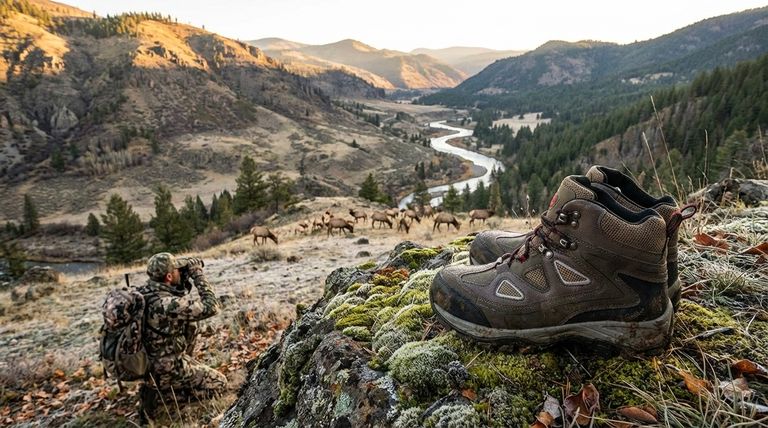
- If your primary focus is elk or sheep in the mountains: Invest in a durable, high-cut boot with excellent ankle support and an aggressive outsole for stability on rugged terrain.
- If your primary focus is upland birds in fields: Select a lightweight, comfortable, and flexible boot that allows you to cover miles of ground with minimal fatigue.
Choosing the right boot is the foundational step that supports every other aspect of a successful and comfortable hunt.
Summary Table:
| Game Animal | Primary Challenge | Recommended Boot Features |
|---|---|---|
| Deer (from a stand/blind) | Scent control, warmth during static sits | Rubber/neoprene construction, high insulation (800g+) |
| Waterfowl (in marshes) | Complete waterproofing, cold protection | Tall rubber/neoprene boots, heavy insulation |
| Elk/Sheep (in mountains) | Ankle support, traction on rugged terrain | High-cut (8-10+ inches), aggressive outsole, stiff sole |
| Upland Birds (in fields) | Lightweight comfort for long-distance walking | Shorter height (6-8 inches), flexible sole, minimal insulation |
Ready to equip yourself with the perfect hunting boots for your next adventure?
As a large-scale manufacturer, 3515 produces a comprehensive range of specialized footwear for distributors, brand owners, and bulk clients. Our production capabilities encompass all types of hunting boots and boots designed to meet the specific demands of any terrain and game.
We can help you source or develop the ideal boots that provide the critical advantages your customers need. Contact our expert team today to discuss your requirements and discover how we can enhance your product line.
Visual Guide
Related Products
- Safety Footwear Wholesale Manufacturer for Custom OEM/ODM Production
- Durable Rubber Sole Outdoor Shoes Wholesale & Custom Manufacturing
- Wholesale Safety Footwear Manufacturer for Bulk & Custom OEM Orders
- Wholesale Customizable Safety Boots Durable & Protective Footwear Manufacturing
- Wholesale Durable Safety Boots | Custom Steel Toe & Puncture-Resistant Manufacturing
People Also Ask
- What are the cultural perspectives on wearing shoes in the house? A Guide to Home Etiquette & Hygiene
- How do industrial safety shoes provide protection for personnel? Safeguard Your Team from Heavy Crane Hazards
- How do safety shoes contribute to cost savings for companies? A Strategic Investment in Risk and Cost Management
- How do professional construction boots improve operational efficiency? Boost Site Productivity with Advanced Footwear
- Why can metal protective toecaps become a risk factor for dorsal foot ulcers? Learn to Prevent Pressure Point Injuries