
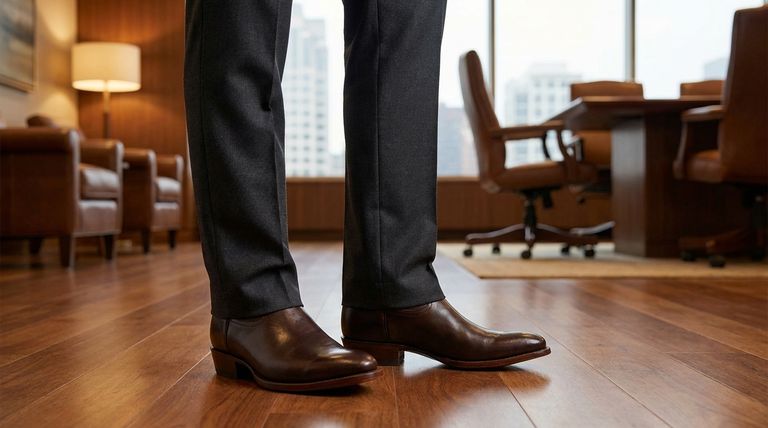
Yes, but with precision. A well-chosen pair of cowboy boots can absolutely be worn with a suit, creating a look that is both refined and distinctly confident. This pairing has a long history, embraced by everyone from U.S. presidents to business leaders, proving it can be executed successfully in professional and formal settings.
The question isn't if you can wear cowboy boots with a suit, but how. Success hinges on treating the boot as a formal dress shoe, prioritizing a sleek silhouette, premium materials, and a perfect fit with the trouser.
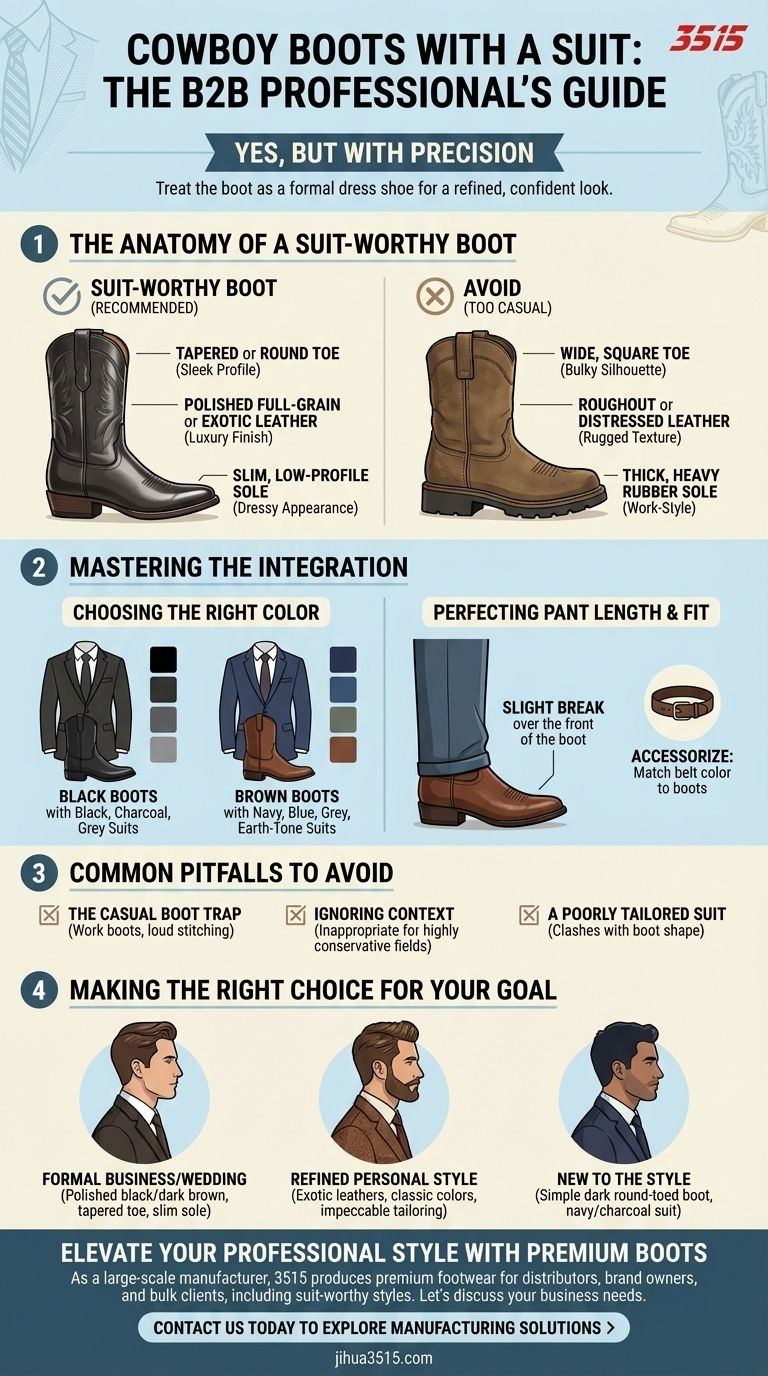
The Anatomy of a Suit-Worthy Boot
Not all cowboy boots are created equal. To work with tailoring, the boot must lean towards dressy and elegant, leaving the rugged, work-style boots for casual wear.
The Critical Role of Toe Shape
The shape of the toe is the most immediate indicator of formality.
For a cohesive and professional look, opt for boots with a tapered or traditional round toe. These shapes mimic the sleek profile of a classic dress shoe.
Avoid wide, square-toe boots, as their bulky silhouette is inherently more casual and will clash with the clean lines of a suit.
Material Matters Most
The leather and finish of the boot dictate its level of formality.
Choose boots made from polished, full-grain leather or sophisticated exotic leathers like ostrich or lizard. These materials signal luxury and attention to detail.
Steer clear of casual materials like roughout leather or distressed goat skin. Their rugged texture is at odds with the smooth finish of suit fabric.
Consider the Sole
The foundation of the boot is just as important as the upper.
A suit-worthy boot should have a slim, low-profile sole, preferably made of leather or a sleek composite. This maintains a dressy appearance.
Thick, heavy rubber soles are designed for work and durability, not for formalwear, and should be avoided.
Mastering the Integration
Pairing the right boot with the right suit requires following a few fundamental style principles.
Choosing the Right Color
Coordinate your boots with your suit just as you would with dress shoes.
Black boots pair best with black, charcoal, or grey suits. Brown boots are versatile and work well with navy, blue, grey, and earth-toned suits.
Perfecting the Pant Length
The interaction between the boot shaft and your trousers is crucial for a clean look.
Your suit trousers should be tailored with enough length to create a slight break over the front of the boot, ensuring the pant leg doesn't get caught or bunch up on the shaft.
Accessorize Cohesively
Your accessories tie the entire look together.
Always match the color of your belt to your boots. This creates a deliberate and polished visual line.
Common Pitfalls to Avoid
Successfully pulling off this look is as much about what you don't do as what you do.
The Casual Boot Trap
The most common mistake is choosing a boot that is simply too casual. Work boots, ropers, and boots with loud, multi-colored stitching are not appropriate for pairing with a suit.
Ignoring the Context
While stylish, this look is not suitable for every environment. It excels at weddings, creative business settings, and formal events with a Western or regional flair. It may be out of place in highly conservative corporate or legal fields.
A Poorly Tailored Suit
Even the perfect boots cannot save a poorly fitting suit. Ensure your suit is impeccably tailored to accommodate the unique shape of the boots and present a sharp, intentional silhouette.
Making the Right Choice for Your Goal
Select your combination based on the occasion and your desired impression.
- If your primary focus is a formal business or wedding setting: Opt for black or dark brown boots in polished leather with a tapered toe and a slim leather sole.
- If your primary focus is a refined but distinct personal style: Consider exotic leathers in classic colors, ensuring your suit is perfectly tailored to create a bold statement.
- If you are new to this style: Start with a simple, dark, round-toed boot paired with a navy or charcoal suit for the most conservative and safest combination.
Ultimately, wearing cowboy boots with a suit is a deliberate style choice that, when executed correctly, projects confidence and character.
Summary Table:
| Key Element | Recommended Choice | Avoid |
|---|---|---|
| Toe Shape | Tapered or traditional round toe | Wide, square toe |
| Material | Polished full-grain or exotic leather (e.g., ostrich) | Roughout or distressed leather |
| Sole | Slim, low-profile leather or composite sole | Thick, heavy rubber work soles |
| Color Coordination | Black boots with black/grey suits; Brown boots with navy/earth tones | Clashing colors |
| Pant Length | Slight break over the boot shaft | Trousers bunching on the shaft |
Ready to Elevate Your Professional Style with the Perfect Boots?
As a large-scale manufacturer, 3515 produces a comprehensive range of premium footwear for distributors, brand owners, and bulk clients. Our production capabilities encompass all types of dress and fashion boots, including the sleek, suit-worthy styles detailed in this guide.
We help our partners provide high-quality footwear that combines timeless style with modern craftsmanship. Let's discuss how we can support your business needs.
Contact us today to explore our manufacturing solutions
Visual Guide
Related Products
- Wholesale High-Traction Camo Boots - Custom Manufacturer for Brands
- High-Traction Suede Tactical Boots Wholesale & Custom Manufacturing
- Wholesale Lightweight Tactical Boots Custom Manufacturer for Desert & Combat Use
- Durable Leather Tactical Boots Wholesale & Custom Manufacturing for Brands
- Wholesale Durable Mid-Cut Tactical Boots for Custom & Private Label Brands
People Also Ask
- What are the key features of the new line of camo boots? Built for Extreme Cold & Rugged Terrain
- Are camo boots necessary for hunting success? Prioritize Performance Over Pattern
- How does the Rank Score Test identify the primary causes of premature failure in tactical and work boots? Key Insights
- What is the technical logic behind using closed-eye testing for tactical boots? Unlocking Peak Footwear Stability
- What shoes to wear for a security job? Durable, Protective Footwear for Long Shifts


















