
Yes, the right pair of women's wellies can be perfectly suitable for long walks. However, not all wellington boots are created equal; a basic festival wellie will cause discomfort, while a technical walking wellie is specifically engineered for distance with features like cushioned insoles, robust arch support, and high-traction soles.
The critical distinction is not between wellies and other footwear, but between a standard rubber boot and a true "walking wellie." The latter is a specialized tool designed with the ergonomics of a walking boot and the waterproofing of a traditional wellington.
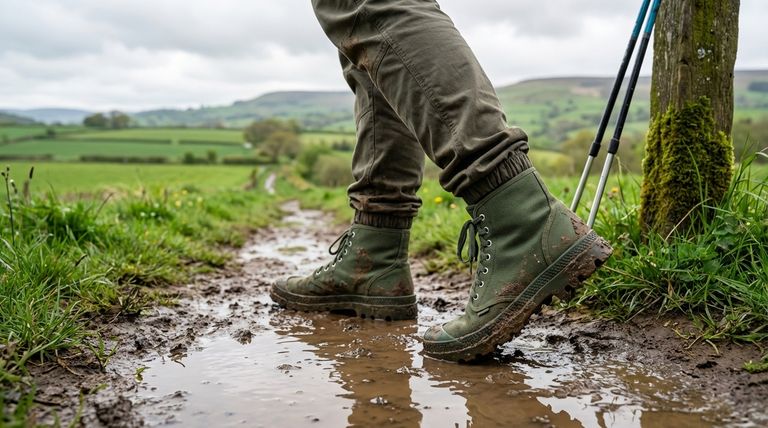
Beyond the Puddle: The Anatomy of a Walking Wellie
A common mistake is assuming all wellies offer the same experience. A cheap boot is simply a waterproof shell, but a wellie designed for walking is a complex system built for comfort and performance over miles of terrain.
The Foundation: Sole and Grip
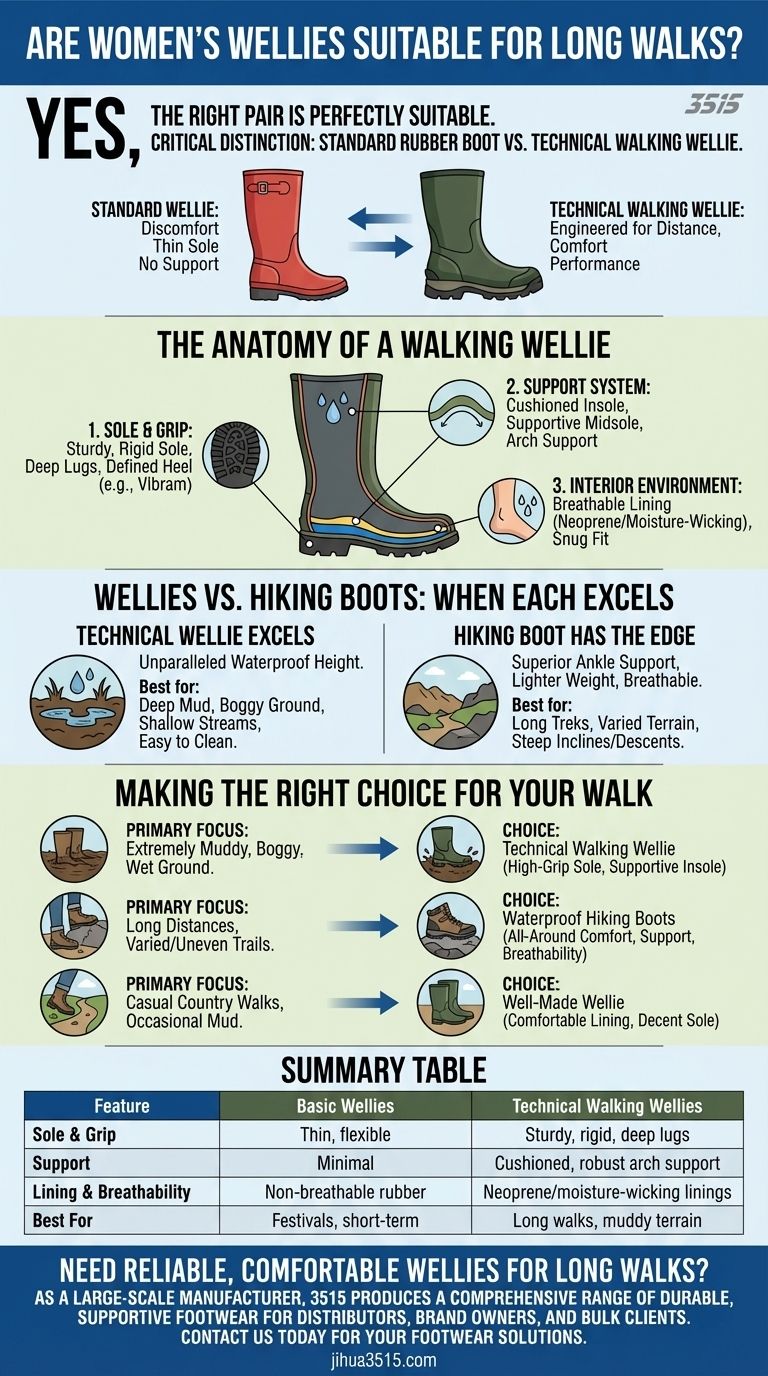
The sole is the most critical point of contact with the ground. Basic wellies often have thin, flexible soles that offer poor protection and support.
For long walks, you need a sturdy, rigid sole that prevents sharp rocks from bruising your feet. Look for boots with deep lugs and a defined heel for superior traction, especially in mud. Premium models often feature Vibram soles, a gold standard known for all-terrain grip and durability.
The Support System: Midsole and Insole
Walking for extended periods without proper support can lead to foot fatigue and pain in your arches, ankles, and knees.
A quality walking wellie incorporates a cushioned insole and a supportive midsole that provides arch support. This structure cradles your foot, absorbs impact, and helps maintain proper alignment with every step, which is non-negotiable for long distances.
The Interior Environment: Lining and Fit
Traditional rubber is not breathable. On a long walk, your feet will sweat, and without a proper lining, that moisture gets trapped, leading to chafing and blisters.
Look for wellies with breathable linings, such as neoprene or specialized moisture-wicking fabrics. These materials help manage sweat and provide insulation. A snug fit around the heel and ankle is also crucial to prevent your foot from sliding, which is a primary cause of friction blisters.
Understanding the Trade-offs: Wellies vs. Hiking Boots
While a technical wellie is a capable tool, it's essential to understand its role compared to a traditional waterproof hiking boot. Choosing the right one depends entirely on the conditions you expect to face.
When Wellies Excel
The primary advantage of a wellington boot is its unparalleled waterproof height. For walks through extremely deep mud, boggy ground, or shallow streams, no other footwear keeps you as dry and clean. They are simple to clean and highly durable against wet, abrasive conditions.
Where Hiking Boots Have the Edge
For long treks on varied or rocky terrain, waterproof hiking boots often have the advantage. They typically offer superior ankle support, are significantly more breathable, and are lighter weight. The lacing system allows for a much more precise and secure fit, which is crucial for preventing foot movement on steep inclines and descents.
Making the Right Choice for Your Walk
Your ideal footwear depends on the terrain and your primary goal. Use this guide to make an informed decision.
- If your primary focus is navigating extremely muddy, boggy, or wet ground: A technical walking wellie with a high-grip sole and supportive insole is the superior choice.
- If your primary focus is covering long distances on varied or uneven trails: A quality pair of waterproof hiking boots will likely provide better all-around comfort, support, and breathability.
- If your primary focus is casual country walks with occasional mud and puddles: A well-made wellie with a comfortable lining and a decent sole offers a practical and effective solution.
Ultimately, matching the right footwear to your environment is the key to ensuring your long walk is a pleasure, not a pain.
Summary Table:
| Feature | Basic Wellies | Technical Walking Wellies |
|---|---|---|
| Sole & Grip | Thin, flexible soles | Sturdy, rigid soles with deep lugs (e.g., Vibram) |
| Support | Minimal arch support | Cushioned insoles & robust arch support |
| Lining & Breathability | Non-breathable rubber | Neoprene or moisture-wicking linings |
| Best For | Festivals, short-term use | Long walks, muddy terrain, wet conditions |
Need reliable, comfortable wellies for long walks? As a large-scale manufacturer, 3515 produces a comprehensive range of durable, supportive footwear for distributors, brand owners, and bulk clients. Our production capabilities encompass all types of technical walking wellies designed for comfort and performance. Contact us today to discuss your needs and discover how we can provide the perfect footwear solution for your customers.
Visual Guide
Related Products
- Durable Waterproof Rain Boots | Custom Manufacturer for Wholesale & Brands
- Wholesale Women's Leather Derby Shoes Custom Factory Production
- Wholesale Classic Leather Lace-Up Ankle Boots for Brand Manufacturing
People Also Ask
- What are the main materials for waterproof rain boots? Choose the Right Material for Durability & Comfort
- What is the overall recommendation for choosing rain boot materials? A Guide to Rubber vs. PVC
- How does boot height affect waterproofing? Choose the Right Height for Ultimate Protection
- Why are rain boots more flexible and comfortable than snow boots? The Key Differences Explained
- What are the best types of shoes for different gardening conditions? Find Your Perfect Match.


