
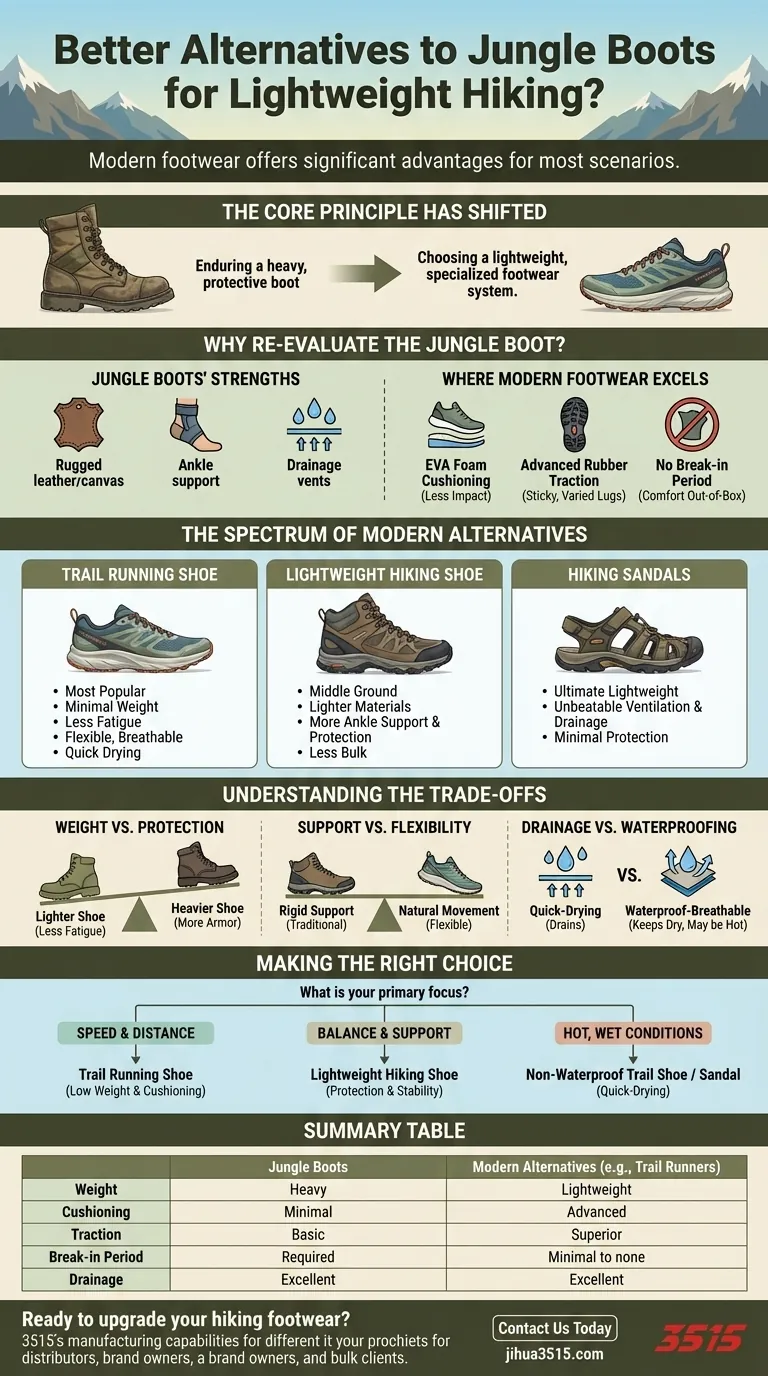
Yes, for most lightweight hiking scenarios, modern footwear offers significant advantages over traditional jungle boots. While jungle boots are renowned for their durability and ability to drain water, advancements in materials and design have led to alternatives that provide better cushioning, traction, and comfort with less weight and no break-in period.
The core principle has shifted from enduring a heavy, protective boot to choosing a lightweight, specialized "footwear system." Modern alternatives like trail runners and lightweight hikers offer superior performance for most conditions by prioritizing comfort and reducing fatigue.
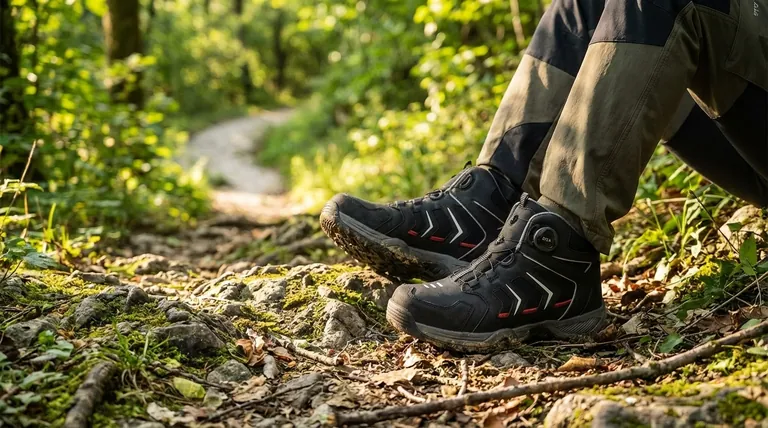
Why Re-evaluate the Jungle Boot?
The classic jungle boot was designed for a very specific purpose: durability and water management in hot, wet environments. Understanding its original design helps clarify why modern alternatives are often better for general hiking.
Strengths of the Classic Design
The jungle boot’s primary strengths are its rugged leather and canvas construction, decent ankle support, and iconic drainage vents.
These vents don't keep water out; they let it escape quickly after a river crossing or downpour, which was critical for preventing foot issues in constantly wet conditions.
Where Modern Footwear Excels
Modern footwear technology has surpassed this older design in several key areas. Materials science has introduced EVA foam midsoles for superior cushioning, reducing impact on your joints.
Outsole rubber compounds are stickier and feature more advanced lug patterns for better traction on varied surfaces like wet rock and loose dirt. Finally, modern shoes are designed to be comfortable right out of the box, eliminating the painful break-in period associated with stiff leather boots.
The Spectrum of Modern Lightweight Alternatives
Today's hiker can choose from a range of options, each optimized for different needs. The best choice depends entirely on the terrain, the load you're carrying, and your personal preference for support versus flexibility.
The Trail Running Shoe
This is the most popular choice for lightweight and ultralight hiking. Trail runners are essentially running shoes with more aggressive traction and slightly more durable uppers.
Their main advantage is minimal weight, which directly translates to less fatigue over a long day. They are flexible and highly breathable, promoting quick drying times.
The Lightweight Hiking Shoe
This category occupies the middle ground. It looks like a traditional hiking boot but is built with the lighter, more flexible materials of a running shoe.
These often come in low or mid-cut heights, offering more ankle support and underfoot protection than a trail runner without the bulk of a traditional boot. The Altberg Sneeker mentioned in the references is a good example of a modern, lightweight boot.
The Minimalist Option: Hiking Sandals
For well-maintained trails in hot weather or routes with constant water crossings, hiking sandals offer unbeatable ventilation and drainage.
They are the ultimate lightweight option, though they provide minimal protection from rocks, roots, or insects.
Understanding the Trade-offs
Choosing footwear is a balancing act. Every design choice that enhances one characteristic often compromises another. Being aware of these trade-offs is key to selecting the right tool for the job.
Weight vs. Protection
This is the fundamental trade-off. A lighter shoe, like a trail runner, reduces the energy you expend with every step. However, it offers less protection from sharp rocks and stubbed toes.
A heavier, more robust hiking shoe provides a stiffer sole and more armor but adds to fatigue over long distances.
Support vs. Flexibility
Traditional boots provide rigid ankle support, which can help prevent twists on highly uneven and unstable terrain, especially when carrying a heavy pack.
Flexible footwear allows your foot to move more naturally, which can improve balance and comfort on less demanding trails. Some hikers augment flexible shoes with elastic ankle wraps for temporary support when needed.
Drainage vs. Waterproofing
Jungle boots were built to drain. Many modern hikers adopt this same philosophy, choosing non-waterproof trail runners that get soaked easily but also dry extremely quickly.
The alternative is a waterproof-breathable membrane (like Gore-Tex). This keeps your feet dry from external moisture but can feel hot and may struggle to dry out once completely saturated.
Making the Right Choice for Your Hike
Instead of searching for one perfect boot, think about the specific demands of your planned hike. Match the footwear to the conditions.
- If your primary focus is speed and distance on well-maintained trails: A trail running shoe offers the best combination of low weight and cushioning.
- If your primary focus is a balance of support and low weight for varied terrain: A lightweight, mid-cut hiking shoe provides more protection and stability without excessive bulk.
- If your primary focus is hiking in hot, wet conditions with frequent water crossings: A non-waterproof, quick-drying trail shoe or a dedicated hiking sandal is the modern equivalent of the jungle boot's core function.
By choosing footwear that aligns with your specific goal, you can leverage modern designs to hike with greater comfort and efficiency.
Summary Table:
| Feature | Jungle Boots | Modern Alternatives (e.g., Trail Runners) |
|---|---|---|
| Weight | Heavy | Lightweight |
| Cushioning | Minimal | Advanced (EVA foam) |
| Traction | Basic | Superior (advanced rubber compounds) |
| Break-in Period | Required | Minimal to none |
| Drainage | Excellent (via vents) | Excellent (quick-drying materials) |
Ready to upgrade your hiking footwear? As a large-scale manufacturer, 3515 produces a comprehensive range of specialized footwear for distributors, brand owners, and bulk clients. Whether you need durable trail runners, lightweight hiking shoes, or custom designs, our production capabilities cover all types of shoes and boots. Let us help you deliver the comfort and performance your customers demand. Contact us today to discuss your needs!
Visual Guide
Related Products
- Premium Lightweight Safety Shoes for Wholesale & Bulk Orders
- Lightweight Breathable Sneakers with Wet-Traction Grip for Wholesale & Private Label
- Lightweight Breathable Training Shoes for Wholesale & Custom OEM Manufacturing
- Wholesale Lightweight Tactical Boots Custom Manufacturer for Desert & Combat Use
- Wholesale Lightweight Cushioned Athletic Sneakers for Custom Bulk Production
People Also Ask
- How is the absence of PPE (safety shoes & helmets) categorized in construction motion data labeling? Unlock Real-Time Safety Insights!
- What role does blockchain play in footwear supply chain transparency? Enhance Safety Shoe Traceability and Verification
- What is a recommended alternative to using hairspray for slip resistance? Ditch Unreliable Hacks for Real Safety
- What workplace hazards indicate the need for safety shoes? Identify risks to protect your workforce.
- What role do specialized safety shoes play in preventing falls? Engineering Stability in Industrial Environments










