
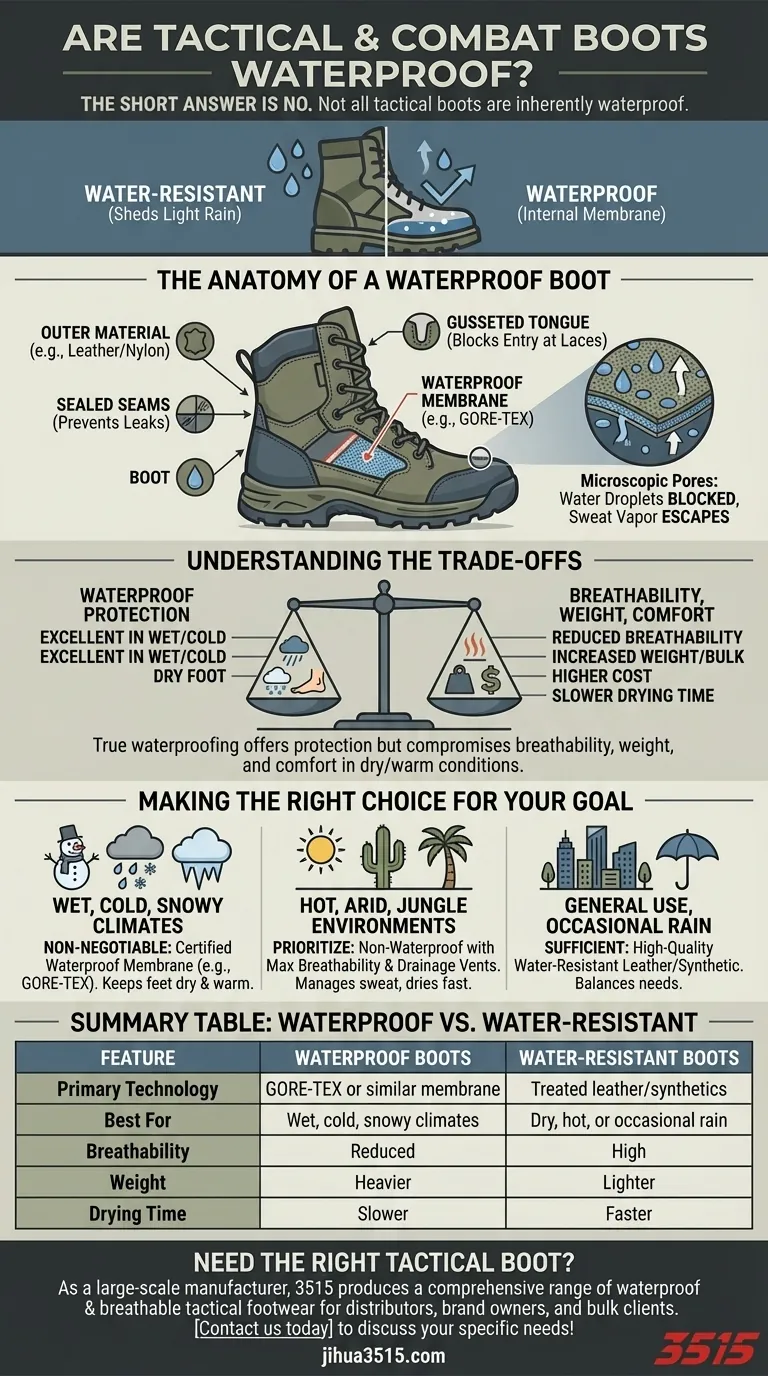
The short answer is no, not all tactical and combat boots are waterproof. While many modern designs incorporate waterproof features, it is a specific feature you must look for, not an inherent quality of all boots in this category. A boot's waterproof capability depends entirely on its construction, materials, and whether it includes a dedicated waterproof membrane.
The core issue isn't whether a boot is labeled "waterproof," but understanding the significant trade-offs that come with it. True waterproofing offers excellent protection in wet conditions but often at the cost of breathability, weight, and comfort in dry, warm environments.
The Anatomy of a Waterproof Boot
To understand the differences, you need to look at how a boot achieves its water protection. This isn't just about the outer material; it's about a complete system.
Waterproof vs. Water-Resistant
These terms are not interchangeable. A water-resistant boot, typically made of leather or treated nylon, will shed light rain and splashes for a short period. However, it will eventually become saturated.
A truly waterproof boot uses a specific liner or membrane—a sock-like layer built inside the boot's structure. This membrane has microscopic pores large enough for sweat vapor to escape but too small for water droplets to penetrate.
The Role of Membranes
The most well-known waterproof breathable membrane is GORE-TEX. It is the technology that allows a boot to be highly waterproof while still letting your feet breathe to a degree.
Many other brands have developed their own proprietary waterproof membranes that function on the same principle. If a boot is truly waterproof, its product description will prominently feature the name of its specific membrane technology.
The Importance of Construction
A membrane alone isn't enough. The boot's overall construction, including sealed seams and a gusseted tongue (a tongue connected to the upper along its sides), is critical. These features prevent water from seeping in through the weakest points, like the lace area.
Understanding the Trade-offs
Choosing a waterproof boot involves a clear set of compromises. What you gain in protection, you often lose in other areas.
Breathability and Heat
The primary drawback of a waterproof membrane is reduced breathability. While it allows vapor to escape, it's less effective than a non-waterproof, highly breathable mesh.
In hot and dry conditions, this can lead to your feet overheating. The moisture from your own sweat can get trapped, creating a damp, uncomfortable environment inside the boot that can lead to blisters and odor.
Weight and Bulk
Waterproof boots are almost always heavier and bulkier than their non-waterproof counterparts. The extra membrane, sealed seams, and often more robust materials add weight that can lead to fatigue over long distances.
Cost
The advanced technology and complex construction required for a truly waterproof and breathable boot come at a price. High-end waterproof models from reputable brands are significantly more expensive than standard, non-waterproof tactical boots.
Drying Time
Ironically, if a waterproof boot does get filled with water (for example, during a stream crossing), it will take much longer to dry out than a non-waterproof boot with drainage vents. The very membrane that keeps water out also holds it in.
Making the Right Choice for Your Goal
Your decision should be based on your most common environment, not the worst-case scenario.
- If your primary focus is operating in consistently wet, cold, or snowy climates: A boot with a certified GORE-TEX or equivalent waterproof membrane is non-negotiable for keeping your feet dry and warm.
- If your primary focus is working in hot, arid, or jungle environments: Prioritize a non-waterproof boot with maximum breathability and drainage vents to manage sweat and allow for rapid drying.
- If your primary focus is general use with occasional rain: A high-quality, water-resistant leather or treated synthetic boot will meet your needs without the breathability and weight penalties of a fully waterproof model.
Ultimately, choosing the right boot means matching its specific features to the demands of your environment.
Summary Table:
| Feature | Waterproof Boots | Water-Resistant Boots |
|---|---|---|
| Primary Technology | GORE-TEX or similar membrane | Treated leather/synthetics |
| Best For | Wet, cold, snowy climates | Dry, hot, or occasional rain |
| Breathability | Reduced | High |
| Weight | Heavier | Lighter |
| Drying Time | Slower | Faster |
Need the right tactical boot for your climate? As a large-scale manufacturer, 3515 produces a comprehensive range of footwear for distributors, brand owners, and bulk clients. Our production capabilities encompass all types of waterproof and breathable tactical boots, ensuring you get the perfect balance of protection and comfort. Contact us today to discuss your specific needs and get a custom solution!
Visual Guide
Related Products
- Durable Leather Tactical Boots Wholesale & Custom Manufacturing for Brands
- High-Traction Suede Tactical Boots Wholesale & Custom Manufacturing
- Durable Leather High-Ankle Tactical Boots for Wholesale & Custom Manufacturing
- Durable Mid-Cut Tactical Boots for Wholesale & Private Label
- Wholesale Waterproof Tactical Boots Custom Suede & High-Traction Soles
People Also Ask
- What specialized protections do tactical boots offer? Maximize Endurance with High-Performance Footwear
- What features should law enforcement officers look for in tactical boots? Essential Guide for Safety & Performance
- Importance of Professional Tactical Boots in Loess Gully Regions: Ensure Safety and Precision for Field Monitoring
- What is rucking, and why are tactical boots suitable for it? Discover the Ultimate Footwear for Heavy Loads
- What makes the traction of tactical boots superior? Unlock the Science of Unbeatable Grip















