
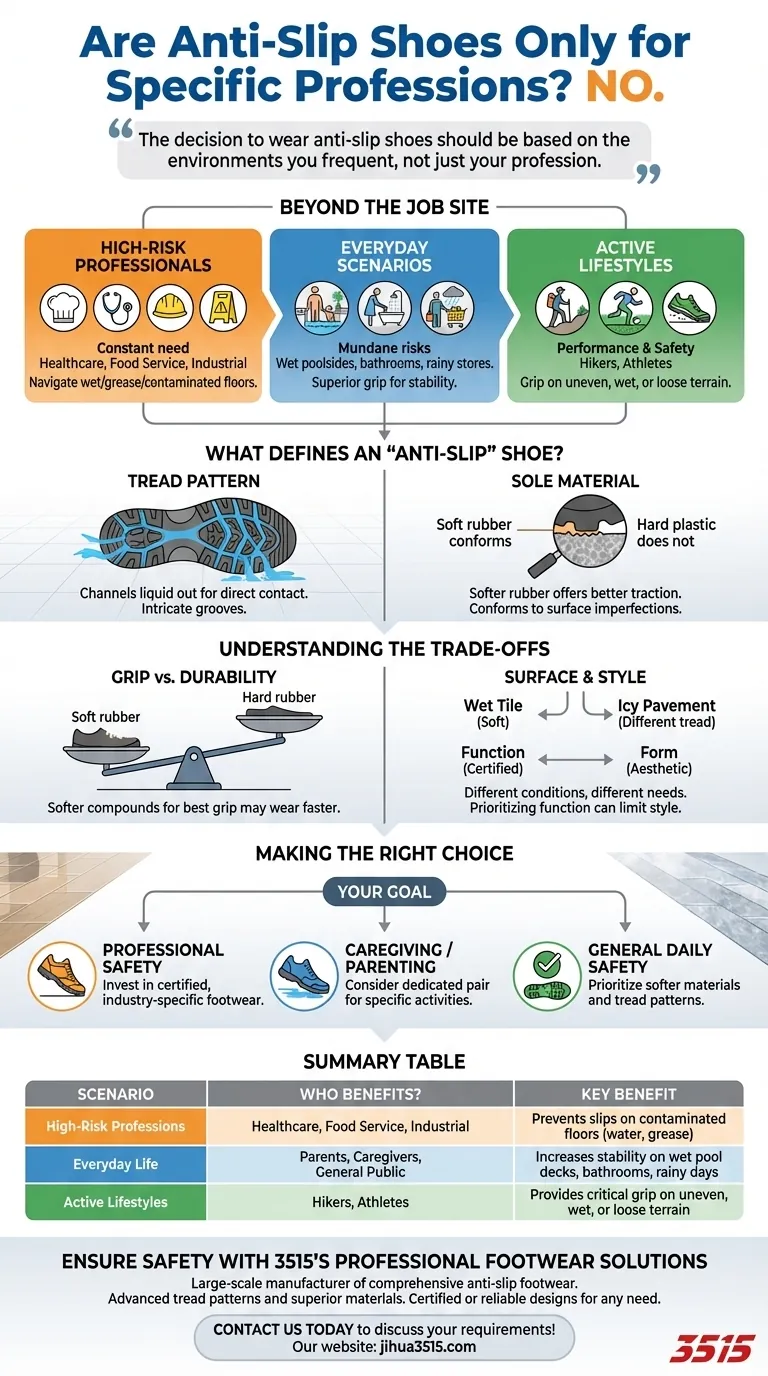
No, anti-slip shoes are not exclusively for specific professions. While they are essential safety equipment in industries like healthcare, food service, and construction, their benefits extend to anyone who encounters potentially slippery surfaces in their daily life. The need for enhanced traction is determined by your environment, not just your job title.
The decision to wear anti-slip shoes should be based on the environments you frequent, not your profession. Anyone regularly walking on wet, oily, or smooth polished floors can significantly reduce their risk of a fall with the right footwear.
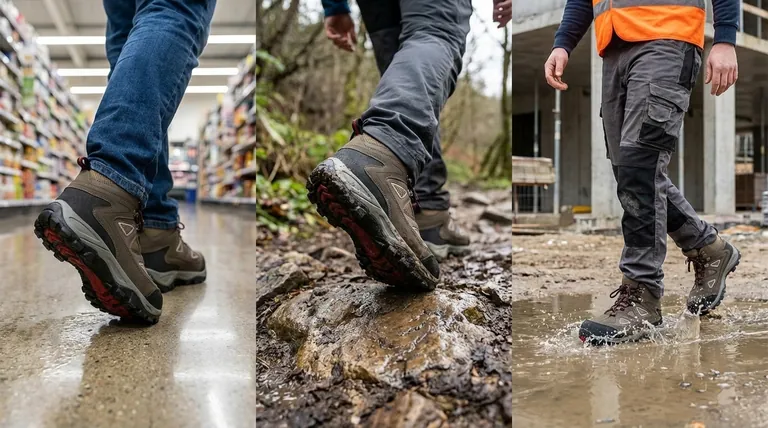
Beyond the Job Site: Who Benefits from Anti-Slip Shoes?
Many people mistakenly believe that specialized footwear is only for those on a factory floor or in a commercial kitchen. In reality, the technology that prevents workplace accidents is just as effective at preventing everyday slips and falls.
The Obvious High-Risk Professionals
It is true that certain professions have a clear and constant need for slip-resistant footwear. Workers in food service, healthcare, and industrial settings are mandated to wear them for a reason—they constantly navigate floors contaminated with water, grease, and other liquids.
The Overlooked Everyday Scenarios
The most common slip-and-fall risks occur in mundane situations. Think of a parent navigating a wet poolside or splash pad, a caregiver assisting someone in a bathroom, or anyone walking through a grocery store on a rainy day. In these moments, the superior grip of an anti-slip sole provides critical stability.
Active and Outdoor Lifestyles
The principle of slip resistance is also central to performance and safety for active individuals. Hikers rely on heavily lugged, grippy outsoles to maintain footing on uneven, wet, or loose terrain. Many athletes use specialized shoes designed for optimal traction on courts or turf.
What Defines an "Anti-Slip" Shoe?
Understanding what makes a shoe effective at preventing slips allows you to make more informed choices, even when a shoe isn't explicitly marketed as "anti-slip."
The Importance of Tread Pattern
The design of the outsole is critical. Effective anti-slip shoes have intricate tread patterns with many small grooves, or siping. These patterns are designed to channel water and other liquids out from under the shoe, allowing the sole to make direct contact with the floor surface for maximum grip.
The Role of Sole Material
The material itself plays a huge part. Softer rubber compounds tend to offer better traction than hard, rigid plastics. This is because a softer material can better conform to microscopic imperfections in the floor surface, increasing the total surface area for contact and friction.
Understanding the Trade-offs
While highly beneficial, it's important to recognize that anti-slip footwear involves certain compromises. No single shoe is perfect for every possible situation.
Not All Slippery Surfaces Are the Same
A shoe designed with soft rubber for exceptional grip on a wet kitchen tile might not be the best choice for icy pavement. Different conditions require different tread designs and material compounds for optimal performance.
Durability vs. Grip
Often, there is a trade-off between maximum grip and long-term durability. The softer rubber compounds that provide the best traction can sometimes wear down more quickly than harder, more durable materials that offer less friction.
Style and Specialization
While the market has expanded, many of the highest-rated, certified slip-resistant shoes prioritize function over form. Finding a shoe that meets stringent safety standards while also fitting a specific aesthetic can sometimes be a challenge.
Making the Right Choice for Your Goal
Your personal need for slip-resistant footwear depends entirely on your daily activities and the environments you encounter.
- If your primary focus is professional safety: Invest in certified, industry-specific anti-slip footwear as a non-negotiable part of your work equipment.
- If your primary focus is caregiving or parenting: Consider owning a dedicated pair of shoes with excellent wet-surface grip for specific activities like bath time or pool days.
- If your primary focus is general daily safety: Pay closer attention to the outsole when buying any shoe, prioritizing those with softer materials and detailed tread patterns, especially if you live in a rainy climate.
Ultimately, choosing footwear with better traction is a simple and proactive way to ensure your stability and safety, no matter where you are.
Summary Table:
| Scenario | Who Benefits? | Key Benefit |
|---|---|---|
| High-Risk Professions | Healthcare, Food Service, Industrial Workers | Prevents slips on contaminated floors (water, grease) |
| Everyday Life | Parents, Caregivers, General Public | Increases stability on wet pool decks, bathrooms, rainy days |
| Active Lifestyles | Hikers, Athletes | Provides critical grip on uneven, wet, or loose terrain |
Ensure Safety and Stability with 3515's Professional Footwear Solutions
As a large-scale manufacturer, 3515 produces a comprehensive range of anti-slip footwear for distributors, brand owners, and bulk clients. Our production capabilities encompass all types of safety shoes and boots, designed with advanced tread patterns and superior sole materials to provide maximum grip in any environment.
Whether you need certified safety shoes for your workforce or reliable anti-slip designs for everyday use, we can deliver high-quality, durable footwear tailored to your needs.
Contact us today to discuss your anti-slip footwear requirements and benefit from our manufacturing expertise!
Visual Guide
Related Products
- Advanced KPU Athletic Safety Shoe with Steel Toe Cap Anti-Slip Rotary Lacing System
- Premium Suede Sport Safety Shoes for Wholesale & Bulk Orders
- Heavy-Duty Waterproof Nubuck Safety Boots Safety Shoes for Bulk Supply
- Customizable Slip-On Safety Shoes Direct from the Factory for Wholesale
- Durable High-Traction Canvas Sneakers Wholesale & Custom Manufacturing
People Also Ask
- What are the key differences between steel toe and composite toe caps? Choose the Right Safety for Your Job
- What impact do steel toe caps have on toe skin health? Prevent Friction and Pressure in Your Safety Shoes
- What are the primary protective functions of safety shoes with steel toes in the automotive repair industry?
- What type of safety shoe is recommended for workers exposed to heavy machinery? Steel Toe Boots for Ultimate Protection
- How does defining specific friction interface models in FEA assist in predicting safety shoe toe cap failure modes?



















