The Psychology of a Winter Workplace
Imagine a utility worker restoring power after a snowstorm. The visible enemy is the biting cold. It’s what he feels, what he complains about, and what his gear is obviously designed to fight.
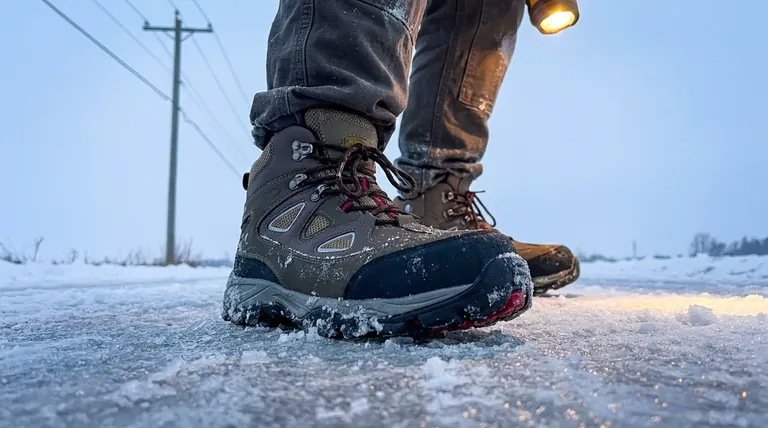
But the most lethal threats are often silent. A downed power line, partially hidden in slush. A patch of black ice, concealed beneath a dusting of fresh snow.
Our brains are wired to focus on the immediate, tangible threat—the cold. We often overlook the less obvious but statistically more dangerous risks: electrical shock and falls. This is a cognitive blind spot. Quality safety equipment is designed to correct for it. An insulated boot is not just a tool for warmth; it's an engineered system that quietly manages the dangers you aren't thinking about.
An Accidental Electrical Shield
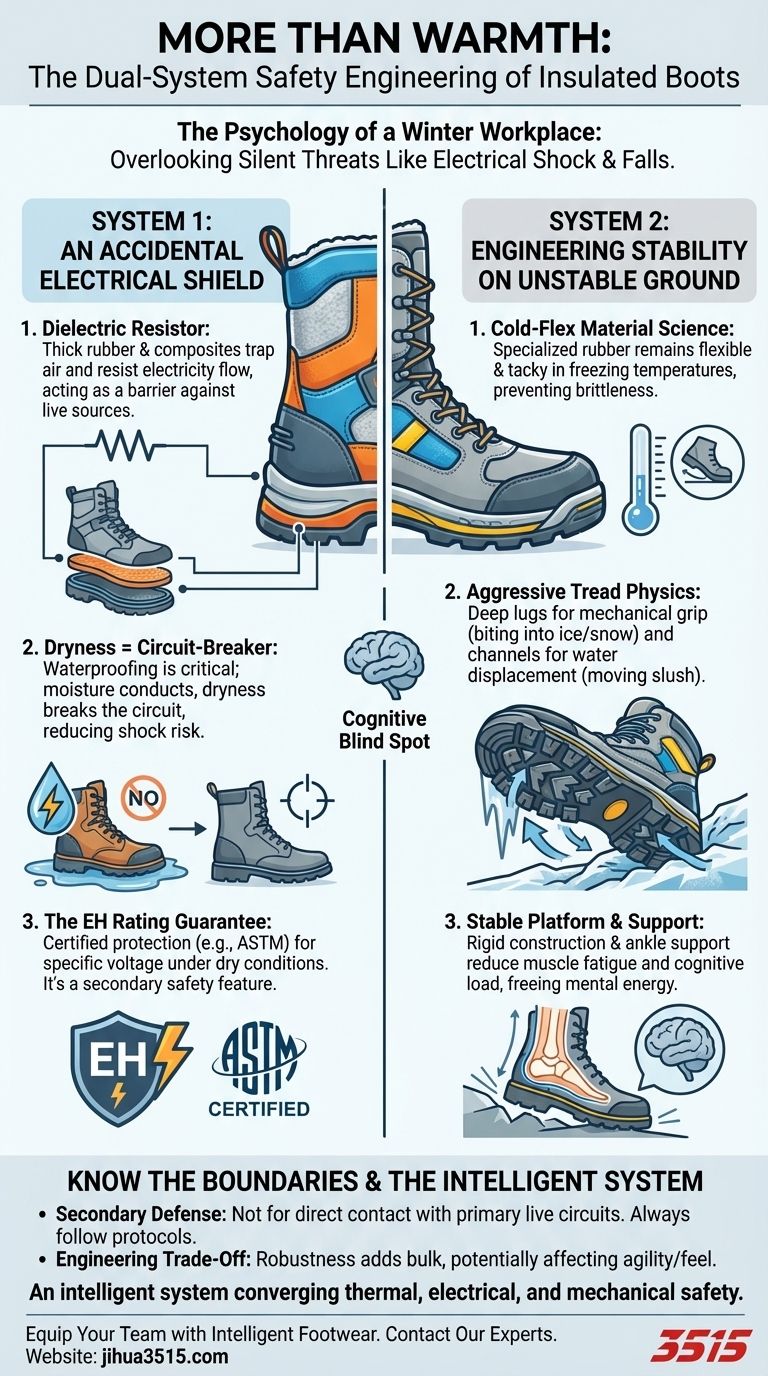
The primary job of insulation is to trap air and prevent heat transfer. But the materials that excel at this—thick rubber and modern composites—happen to share another crucial property: they are terrible conductors of electricity.
This "accidental" benefit is one of the most misunderstood aspects of insulated footwear.
Why Your Boot is a Resistor
Materials that resist the flow of electricity are called dielectrics. When you wear a boot made of thick, non-conductive rubber and composite materials, you are effectively placing a large resistor between your body and the ground.
Should you accidentally contact a live electrical source, this dielectric barrier can be the difference between a minor jolt and a fatal current passing through your body.
Dryness is a Critical Circuit-Breaker
Water is an excellent conductor of electricity. This is why most high-quality insulated boots are also waterproof.
Keeping your feet dry is not merely a matter of comfort. It is a critical component of the boot's electrical safety system. Moisture creates a conductive path for electricity. By ensuring your feet stay dry, a waterproof boot keeps that circuit broken, dramatically reducing the risk of shock in damp or snowy conditions.
The Engineer's Guarantee: The "EH" Rating
To move this protection from an accidental benefit to a reliable feature, engineers test and certify it. Look for boots with an Electrical Hazard (EH) rating.
This label, certified by standards like those from ASTM International, confirms the footwear has been tested to withstand a specific voltage under dry conditions. It is a formal acknowledgment that your boot is designed as a piece of secondary electrical protection equipment.
Engineering Stability on Unstable Ground
Slips, trips, and falls are the most common cause of workplace injuries, and their frequency skyrockets on ice and snow. Insulated boots are engineered from the ground up to counteract the physics of a slippery surface.
Material Science for the Cold
Standard rubber becomes hard and brittle in freezing temperatures, losing its ability to grip. The outsoles of insulated boots, however, use specialized rubber compounds formulated to remain flexible and tacky even when the temperature plummets.
This material science is the first line of defense against a fall.
The Physics of an Aggressive Tread
A boot's grip is not just about its material; it's about its geometry. Insulated boots feature deep, aggressive lugs and complex tread patterns.
This design serves two purposes:
- Mechanical Grip: The sharp edges bite into snow and ice, creating physical anchor points.
- Water Displacement: The deep channels efficiently move water and slush away from the sole's contact points, maximizing the surface area that is actually gripping the ground.
A Stable Platform Reduces Cognitive Load
Walking on uneven, icy ground requires constant micro-adjustments from the muscles in your feet and ankles. It's mentally taxing.
The rigid construction and robust ankle support in a well-made insulated boot create a firm, stable platform. This reduces physical fatigue and, just as importantly, it frees up your mental energy. Instead of focusing on every footstep, you can focus on the task at hand.
Know the Boundaries of the System
Like any piece of high-performance equipment, understanding a boot's limitations is key to using it safely.
- It's a Secondary Defense: EH-rated boots are a secondary source of electrical protection. They are not for direct contact with live circuits, like a lineman's primary gear. Always follow all established electrical safety protocols.
- The Cost of Protection: The robust construction that provides warmth, stability, and protection also adds bulk and weight. This can slightly reduce agility or the tactile feel needed for operating machinery pedals.
This isn't a flaw; it's an engineering trade-off. The key is choosing the right balance for your specific environment.
An Intelligent System for Your Feet
The decision to wear an insulated boot is often driven by a single factor: warmth. Yet, the real value lies in the integrated safety system it provides. It is a piece of equipment designed to protect you from the obvious danger you feel and the hidden ones you don't.
This convergence of thermal, electrical, and mechanical safety is the hallmark of expert footwear manufacturing. Equipping teams with footwear that addresses this full spectrum of risk is a fundamental responsibility. As a large-scale producer of all types of footwear, we specialize in building these complex safety systems for distributors, brand owners, and bulk clients.
Ensuring your team's footwear is intelligently designed for all the hazards they face is not just a matter of compliance; it's a matter of foresight. Contact Our Experts
Visual Guide
Related Products
- Premium Insulated Safety Boots and Shoes for Wholesale & Bulk Orders
- High Performance Fire-Retardant Waterproof Safety Boots
- Premium Wholesale Waterproof Safety Boots High Performance Protection for Industrial Markets
- Puncture-Resistant Velcro Safety Boots for Wholesale & Custom Manufacturing
- Premium High-Cut Waterproof Safety Boots Manufacturing & Wholesale Solutions
Related Articles
- How to Choose Cold-Weather Safety Boots: Material Science Meets Sub-Zero Performance
- How to Choose Snow Boot Insulation for Any Weather and Activity
- How to Choose Snow Boot Insulation for Your Climate and Activities
- How to Choose Winter Boots That Actually Work for Your Climate and Lifestyle
- How to Choose Winter Boots That Actually Work for Your Needs