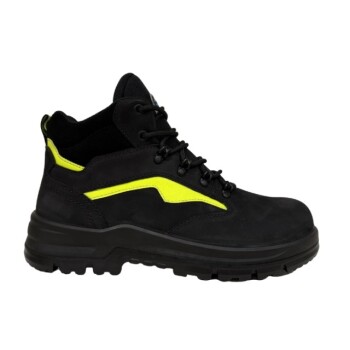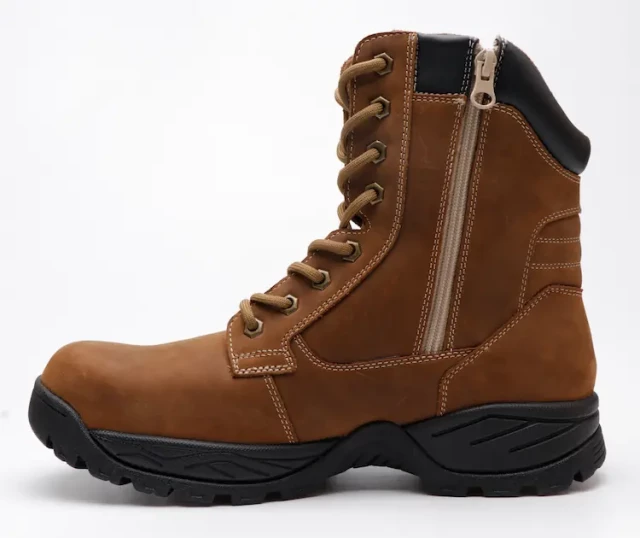
Selecting the right work boots isn't about finding the toughest-looking pair—it's about aligning safety features and comfort with the specific physical risks of your job. From electrical hazards to slippery surfaces, your footwear should act as a silent guardian against workplace dangers while supporting all-day productivity.
Work Boot Selection: Beyond Basic Features
How Your Job’s Physical Risks Dictate Boot Requirements
Every occupation carries unique hazards that demand tailored protection:
- Electricians/Linemen: Need EH-rated boots (ASTM F2413/F2892) with non-conductive materials to block up to 18,000 volts. Metal-free shanks and outsoles prevent electrical currents from reaching the foot.
- Construction/Warehouse Workers: Require slip-resistant soles (like Vibram Arctic Grip) that maintain traction even on greasy or wet surfaces. Independent tests show such outsoles exceed safety thresholds for friction.
- Manufacturing/Logistics: Benefit from impact-resistant toes (steel or composite) and puncture-proof midsoles to shield against falling objects or sharp debris.
Key Insight: Safety standards (e.g., ASTM) exist for a reason—ignore them, and you’re gambling with preventable injuries.
Decoding Safety Standards for High-Risk Occupations
ASTM ratings aren’t just acronyms; they’re your blueprint for survival:
| Hazard Type | Standard | Real-World Application |
|---|---|---|
| Electrical | ASTM F2413 EH | Prevents fatal shocks near live wires |
| Slips | ASTM F2913 | Keeps you upright on oil-slicked floors |
| Punctures | ASTM F2413 PR | Blocks nails or glass from piercing soles |
Pro Tip: Check for labels certifying compliance—generic "slip-resistant" claims lack rigorous testing.
Ergonomic Design for All-Day Productivity
Balancing Protection and Mobility in Active Roles
Jobs requiring constant movement (e.g., roofing, landscaping) need boots that marry stability with flexibility:
- Thermoplastic Midsoles: Lighter than steel shanks, reducing leg fatigue during 10+ hour shifts.
- Rocker Soles: Curved designs ease forward motion, ideal for workers with plantar fasciitis.
- Flex Zones: Articulated treads mimic natural foot flexion, preventing stiffness.
Case in Point: A roofer’s boot must grip steep pitches and allow ankle articulation—rigid designs increase fall risks.
Fit Customization for Foot Health in Static Positions
Standing for hours (e.g., factory lines, security) demands different ergonomics:
- Arch Support: Reduces pressure on the plantar fascia, combating heel pain.
- Wide Toe Boxes: Prevent bunions and numbness during prolonged standing.
- Cushioned Collars: Minimize Achilles tendon strain from stationary postures.
Research Note: Workers in static roles report 30% fewer foot complaints when using boots with memory foam insoles.
Why This Matters: Ill-fitting boots don’t just hurt—they slash productivity. A 3515 partner study found that workers with job-matched footwear took 40% fewer unscheduled breaks due to discomfort.
Ready to Equip Your Team? 3515 manufactures OSHA-compliant boots tailored to your industry’s risks—from electrical hazard designs to ergonomic soles. Let’s build footwear that protects and performs. [Contact 3515] to discuss bulk solutions for your workforce.
Related Products
- Durable Leather Work Boots for Wholesale & Custom Manufacturing
- Durable Leather Work Boots for Wholesale & Custom OEM Manufacturing
- Durable Leather Work Boots Wholesale Manufacturer & Custom Factory
- Durable Leather Moc Toe Work Boots for Wholesale & Custom Manufacturing
- Wholesale Durable 6-Inch Work Boots | Custom & Private Label Manufacturer
Related Articles
- How Job-Specific Work Boot Designs Enhance Safety and Efficiency
- How Work Boots Engineer Safety: The Science Behind Impact and Compression Protection
- The Unseen Physics of Failure: Why Work Boots Are Your Most Critical PPE
- How to Extend Work Boot Lifespan: Science-Backed Care for Safety & Savings
- How Work Boots Became Everyday Heroes: Comfort, Health & Style Combined