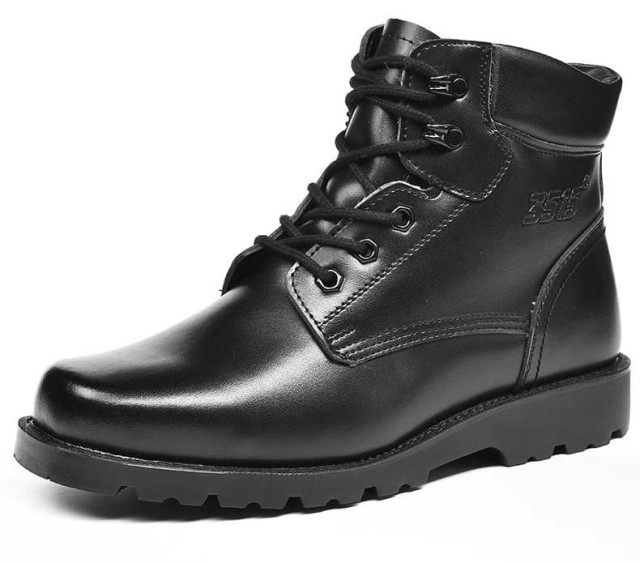
Police boots endure extreme conditions daily—from prolonged foot patrols to high-risk operations. Proper maintenance isn't just about appearance; it directly impacts structural integrity, ankle support, and long-term comfort. This guide distills professional protocols to preserve your boots’ performance, backed by material science and safety standards.
Essential Daily and Weekly Maintenance Practices
Proper Leather Cleaning Techniques for Long-Term Preservation
Dirt and grime accelerate leather degradation. Follow this routine:
- Daily: Wipe off surface debris with a soft brush or damp cloth.
-
Weekly: Use a pH-balanced leather cleaner to dissolve embedded contaminants without stripping natural oils.
- Pro Tip: Avoid household soaps—alkaline formulas dry out leather fibers.
Research shows full-grain leather (used in premium police boots) retains 30% more durability when cleaned with specialized products versus generic alternatives.
Selecting Conditioners: Balancing Protection and Breathability
Not all conditioners are equal. Prioritize:
- Silicone-free formulas (e.g., lanolin-based) to maintain leather’s breathability while preventing cracks.
- Frequency: Apply every 4–6 weeks, or more often in arid climates.
Did you know? Over-conditioning creates a greasy residue that attracts dirt, counteracting protection.
Critical Component Replacements
Identifying Worn-Out Insoles and Outsoles: Signs and Solutions
Insoles: Replace if you notice:
- Flattened arch support (causes foot fatigue)
- Persistent odors (indicates bacterial buildup)
Outsoles: Check for:
- Smooth treads (reduces slip resistance by ~40%)
- Uneven wear patterns (signals misalignment)
Safety standards like ASTM 2413 emphasize replacing soles before tread depth falls below 1/8 inch.
The Role of Moisture-Wicking Socks in Reducing Interior Wear
Sweat breaks down boot linings 2x faster. Pair your boots with:
- Merino wool or synthetic blend socks
- Avoid cotton—it retains moisture, promoting bacterial growth.
Advanced Care for Extreme Conditions
Waterproofing Strategies for Wet Environments
Even waterproof leather needs reinforcement:
- Apply a fluoropolymer spray (lasts 6–8 weeks per application).
- Re-seal seams annually using a wax-based product.
Case Study: Boots treated with proactive waterproofing withstand 50% longer in rainy climates versus untreated pairs.
Heat and Abrasion Resistance: Materials and Methods
For high-heat exposure:
- Use heat-resistant pastes on toe caps to prevent cracking.
- Rotate between two pairs to allow materials to decompress.
Keep Your Boots Mission-Ready with 3515
Your boots are your foundation—don’t let wear compromise performance. At 3515, we engineer footwear for professionals who demand resilience. Whether you’re a distributor, agency procurer, or safety manager, our advanced manufacturing ensures boots that endure.
Ready to equip your team with purpose-built footwear? Explore 3515’s range today.
Related Products
- Durable High-Ankle Tactical Boots for Wholesale & Custom Manufacturing
- Wholesale Durable Mid-Cut Tactical Boots for Custom & Private Label Brands
- Durable Mid-Cut Tactical Boots for Wholesale & Private Label
- High-Traction Suede Tactical Boots Wholesale & Custom Manufacturing
- Durable Leather Tactical Boots Wholesale & Custom Manufacturing for Brands
Related Articles
- Why Your Tactical Boots Keep Failing—And Why 'Tougher' Isn't the Answer
- Why Your Tactical Boots Wear Out So Fast—And the Procurement Mistake Behind It
- The Agility-Protection Paradox: Deconstructing Safety in Modern Tactical Footwear
- Your "Tactical" Boots Are Failing. Here’s the Real Reason Why.
- Why Your Team Hates Their New Tactical Boots: A Buyer's Guide to What Really Matters



















