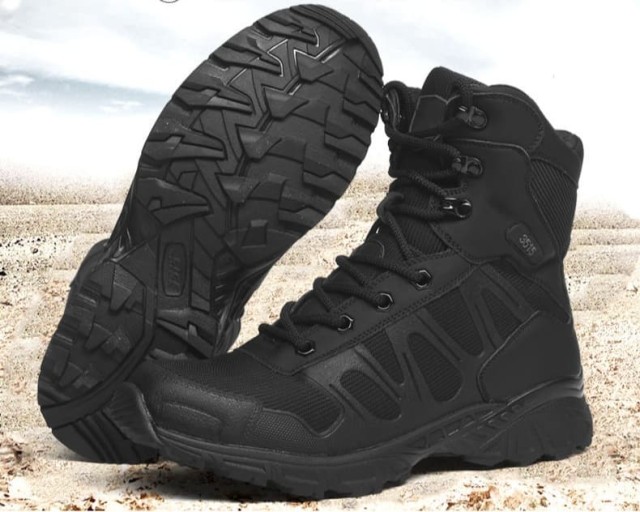
When lives depend on split-second decisions, every piece of gear must perform flawlessly—especially footwear. Police boots aren’t just rugged shoes; they’re precision tools designed to protect, support, and adapt under extreme pressure. This article breaks down the engineering behind tactical boots and why they outperform ordinary footwear in high-stakes scenarios.
What Makes Police Boots Critical for Tactical Professionals
Anatomy of Durability: Materials and Construction Techniques
Police boots prioritize longevity without sacrificing mobility. Modern designs use advanced synthetics like nylon-reinforced microfiber and thermoplastic polyurethane (TPU) to reduce weight (often under 25 ounces per boot) while maintaining structural integrity. Key features include:
- Triple-stitched seams to withstand abrasion from urban debris or rough terrain
- Reinforced heel counters for stability during pursuits or prolonged standing
- Abrasion-resistant toe caps, often composite rather than steel, to avoid metal detectors
Safety Beyond Steel Toes: Certifications and Protective Technologies
Compliance with ASTM F2413 and EN ISO 20345 standards ensures boots meet rigorous safety benchmarks. Protection levels include:
- S1P: Anti-static properties, fuel resistance, and puncture-proof soles
- S3: Water resistance plus penetration protection for wet environments
- Electric shock-resistant soles (ESR) for officers near live wires
These certifications address risks like chemical exposure, sharp objects, and electrical hazards—common in police work.
Comfort Science: Ergonomic Design for 12-Hour Shifts
Tactical boots integrate biomechanics research to reduce fatigue:
- Arch support systems distribute weight evenly, reducing plantar strain
- Memory foam collars prevent ankle chafing during long patrols
- Ventilation channels wick moisture, minimizing blisters
How Police Boots Overcome Extreme Environmental Challenges
Waterproof vs. Breathable: Adapting to Weather Extremes
Boots like those with GORE-TEX membranes repel rain while allowing sweat vapor to escape—critical for officers alternating between indoor and outdoor shifts. In contrast, breathable mesh linings suit arid climates but may lack submersion resistance.
Traction Mastery: Sole Engineering for Slippery Terrains
Vibram® or similar outsoles use multi-directional lugs to grip:
- Ice: Micro-pores increase surface contact on black ice
- Oil slicks: Oil-resistant rubber compounds maintain friction
- Uneven terrain: Deep treads self-clear mud and debris
Real-World Proof: Case Studies from Law Enforcement and Military
Field reports highlight how tactical boots prevent injuries:
- Urban patrol officers: Reduced ankle sprains by ~40% after switching to 8-inch support boots
- K9 units: Non-marking soles preserved evidence integrity during searches
- Riot control teams: Heat-resistant midsoles protected against hot pavement
Step Into Superior Protection with 3515
For distributors and bulk buyers seeking mission-ready footwear, 3515 delivers rigorously tested boots combining ASTM-certified safety, ergonomic comfort, and environmental adaptability. Equip your clients with gear that stands up to real-world demands—contact us to explore OEM solutions tailored to tactical needs.
Related Products
- Durable High-Ankle Tactical Boots for Wholesale & Custom Manufacturing
- Wholesale Durable Mid-Cut Tactical Boots for Custom & Private Label Brands
- Durable Mid-Cut Tactical Boots for Wholesale & Private Label
- High-Traction Suede Tactical Boots Wholesale & Custom Manufacturing
- Durable Leather Tactical Boots Wholesale & Custom Manufacturing for Brands
Related Articles
- Why Your Tactical Boots Keep Failing—And Why 'Tougher' Isn't the Answer
- Why Your Tactical Boots Wear Out So Fast—And the Procurement Mistake Behind It
- The Agility-Protection Paradox: Deconstructing Safety in Modern Tactical Footwear
- Your "Tactical" Boots Are Failing. Here’s the Real Reason Why.
- Why Your Team Hates Their New Tactical Boots: A Buyer's Guide to What Really Matters



















