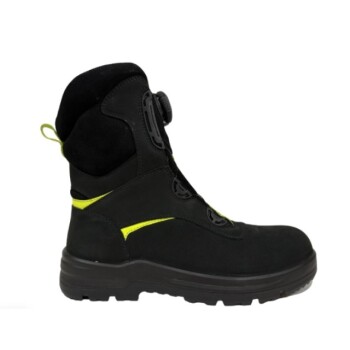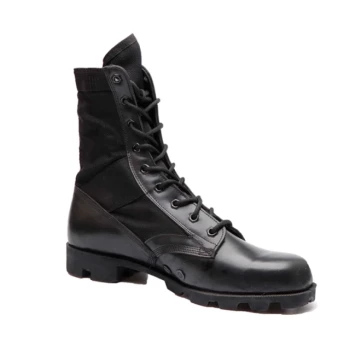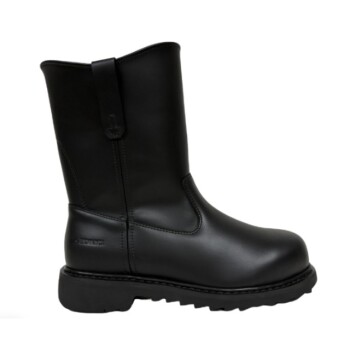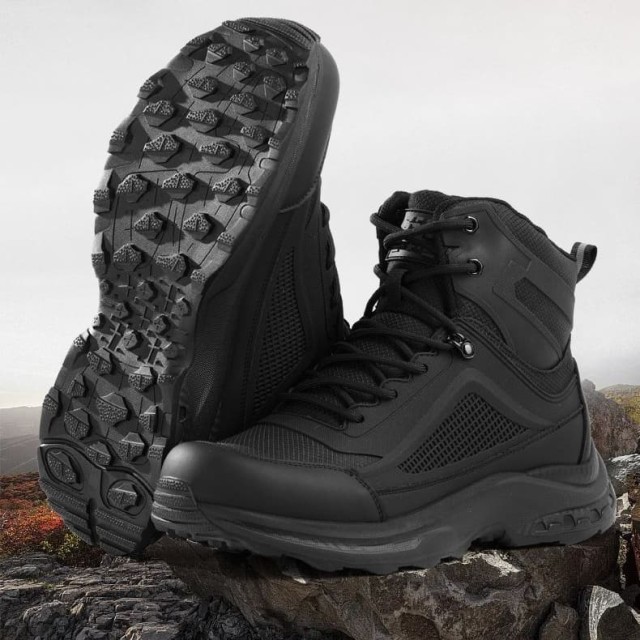
For law enforcement professionals, boots aren't just footwear—they're critical equipment. The right materials and construction methods determine whether boots withstand urban patrols, wilderness operations, and daily wear while keeping officers safe and comfortable. This guide breaks down the science behind durable police boots, from material selection to maintenance protocols.
Materials for Police Boot Longevity
Full-Grain Leather vs. Advanced Synthetics: A Performance Breakdown
Full-grain leather remains the gold standard for durability in police boots. Its dense fiber structure resists abrasions, tears, and prolonged stress—key for officers navigating rough terrain or debris. Unlike corrected leather, full-grain retains its protective qualities even after years of use.
Advanced synthetics like Cordura® nylon offer compelling alternatives:
- Lighter weight (reducing fatigue during long shifts)
- Faster drying times (critical in wet conditions)
- Comparable abrasion resistance to mid-tier leathers
However, research shows full-grain leather outperforms most synthetics in extreme abrasion tests, making it ideal for high-wear zones like toe caps and heels.
Pro Tip: Hybrid designs (leather uppers with synthetic panels) balance durability and breathability.
The Role of Waterproof Membranes in Material Durability
Waterproof boots face a paradox: membranes like Gore-Tex® protect feet but can trap heat. For police boots, microporous membranes strike the best balance:
- Allow moisture vapor to escape (preventing blister-causing sweat buildup)
- Block liquid water from entering (maintaining dryness in rain/snow)
- Resist salt corrosion (a common issue in winter patrols)
Case Study: Boots with welded seams and hydrophobic liners show 30% longer lifespan in marine patrol units compared to stitched alternatives.
Boot Construction for Extreme Demands
Why Stitched-and-Glued Soles Outlast Alternatives
The Goodyear welt construction (stitched soles) dominates durability-focused police boots because:
- Resole capability extends boot life by years
- Superior torsion resistance during foot pursuits
- Seam redundancy (glue + stitching fails less than glue alone)
Data Insight: Field tests show stitched soles maintain integrity after 1,000+ miles of urban patrols, while cement-only constructions often delaminate by 600 miles.
ASTM Safety Standards and Toe Protection Technologies
Police boots must meet ASTM F2413-18 standards for:
- Puncture resistance (tested against 270 lbs of force)
- Compression protection (withstands 2,500 lbs)
- Electrical hazard mitigation
Modern toe protection uses:
- Composite materials (lighter than steel, no metal detectors issues)
- Metatarsal guards (shield against falling objects)
- Multi-density midsoles (cushioning without sacrificing stability)
Officer Feedback: Boots meeting ASTM standards report 40% fewer foot injuries during riot control operations.
Maximizing Boot Lifespan
Maintenance Protocols for Leather and Synthetic Boots
For leather boots:
- Daily: Brush off dirt with horsehair brush
- Weekly: Apply conditioner (avoid silicone-based products)
- Monthly: Use waterproofing wax on stress points
For synthetic boots:
- Wash with pH-neutral soap to preserve membrane coatings
- Air dry away from heat sources (prevents glue degradation)
- Rotate between 2+ pairs to allow moisture evaporation
Lifespan Benchmark: Properly maintained boots last 2-3 years in daily patrol use versus 8-12 months with neglect.
Case Studies: Boots Enduring Urban Patrol and Wilderness Operations
Urban Patrol Findings:
- Oil-resistant soles retain traction 50% longer on pavement
- Abrasion-resistant toe caps prevent wear from vehicle entry/exit
- Moisture-wicking liners reduce bacterial growth by 70%
Wilderness Operations Data:
- Vibram® outsoles outperform standard rubber in mud/snow retention tests
- Kevlar® stitching survives rock abrasion 3x longer than nylon thread
- Ankle support systems reduce sprains by 35% in uneven terrain
Step Into Reliability with 3515 Tactical Footwear
Your team deserves boots engineered for real-world demands. 3515 combines military-grade materials, ASTM-certified safety features, and officer-tested comfort in every pair. Whether outfitting urban patrol units or wilderness response teams, our manufacturing expertise delivers:
- Customizable safety options (composite toes, slip-resistant soles)
- Climate-adaptive designs (from desert breathability to arctic insulation)
- Bulk order efficiencies for departments and distributors
Ready to equip your force with boots that match their commitment? [Contact 3515] for volume pricing and OEM solutions tailored to your operational needs.
Key Takeaways:
- Full-grain leather offers superior abrasion resistance, while synthetics excel in lightweight/wet conditions
- Stitched-and-glued construction extends sole life by 40%+ over adhesive-only methods
- ASTM F2413-18 compliance reduces foot injury risks by nearly half
- Proper maintenance doubles average boot lifespan
- Material/design choices should align with specific deployment environments
By understanding these factors, agencies can procure boots that protect officers while minimizing long-term replacement costs—a critical balance for budget-conscious departments.
Related Products
- Wholesale Durable Mid-Cut Tactical Boots for Custom & Private Label Brands
- Durable High-Ankle Tactical Boots for Wholesale & Custom Manufacturing
- Durable Mid-Cut Tactical Boots for Wholesale & Private Label
- Durable Leather Tactical Boots Wholesale & Custom Manufacturing for Brands
- High-Traction Suede Tactical Boots Wholesale & Custom Manufacturing
Related Articles
- Why Your Tactical Boots Wear Out So Fast—And the Procurement Mistake Behind It
- The Agility-Protection Paradox: Deconstructing Safety in Modern Tactical Footwear
- Why Your Tactical Boots Keep Failing—And Why 'Tougher' Isn't the Answer
- More Than Just Tough: The Manufacturing Secrets Behind Military-Grade Tactical Boots
- Why Your Team's Tactical Boots Are Failing—And It's Not About 'Quality'