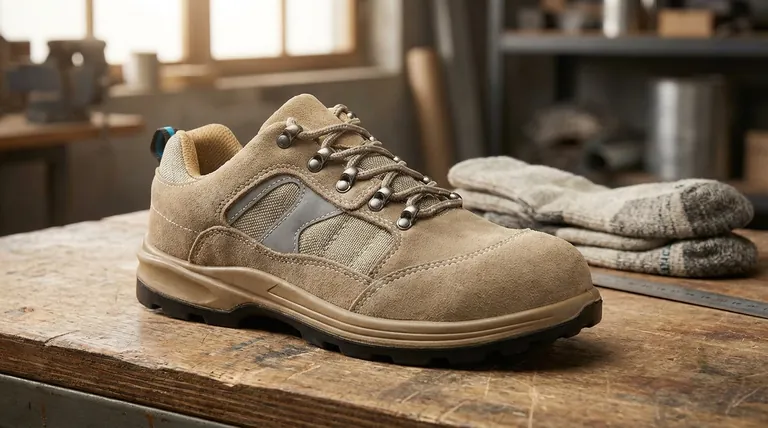
The Anatomy of a Mistake
We've all been there. It’s the end of a long shift, a grueling hike, or just a busy day on your feet. A dull ache blossoms into a sharp pain. A hot spot you ignored has become a full-blown blister.
Our immediate instinct is to blame the shoe. It’s a faulty product, a poor design. But this is a fundamental psychological error. We see the shoe as a single, isolated solution to a problem. The reality is far more intricate.
True foot safety and comfort don’t come from the shoe alone. They emerge from a simple, elegant system: the dynamic interaction between your foot, your sock, and your shoe. Mastering this system is the key, and it begins with confronting the most common point of failure.
The Foundation: The Tyranny of the Wrong Size
The most critical input in this system is fit, yet our intuition about it is often wrong. We trust memory over measurement, convenience over precision.
The Asymmetry We Ignore
Our minds love symmetry, but our bodies are rarely perfect. Almost everyone has one foot that is slightly larger than the other. To buy shoes based on the smaller foot is to sentence the larger one to constant compression and friction.
- The Rule: Always measure both feet.
- The Action: Fit your new footwear to your larger foot. This simple act of acknowledging biological reality prevents countless issues.
Fighting Physics: Why Time of Day Matters
Feet naturally swell throughout the day due to gravity and activity. Trying on shoes in the morning is like designing a bridge without accounting for thermal expansion—it’s destined for stress failure.
By shopping in the late afternoon or evening, you are measuring for the foot’s maximum state, ensuring comfort doesn’t fade as the day wears on. You should have a thumb's width of space between your longest toe and the shoe's end, giving your foot room to function.
The Unsung Hero: The Sock as a Critical Interface
If the shoe is the chassis, the sock is the suspension. It’s the interface that manages moisture, heat, and friction between your body and the hardware. Choosing the wrong one is like putting cheap tires on a performance car.
Material Is a Technical Choice
Cotton is a comfortable fabric, but in a footwear system, it’s a liability. It absorbs moisture and holds it against the skin, creating a perfect environment for blisters.
- Moisture-Wicking Fabrics: Wool or synthetic blends are an engineering solution. They pull sweat away from the skin, keeping the foot dry and drastically reducing friction.
- System Integrity: Always try on new footwear with the exact socks you intend to wear. A thick hiking sock versus a thin dress sock can completely alter the volume and fit, turning a perfect shoe into a poor one.
Mastering Tension: The Art and Science of Lacing
Lacing isn't just about keeping the shoe on your foot; it's about securing your foot within the shoe. The goal is to eliminate internal movement—especially heel slip—without creating pressure points.
Think of a truck driver securing a load. A loose strap means the cargo will shift, causing damage. A loose lacing pattern allows your foot to slide forward on declines or slip upwards with every step. This micro-motion is the primary cause of blisters on the heel.
The Heel Lock: A Simple, Elegant Solution
Most quality boots and athletic shoes feature an extra, often-ignored eyelet at the top. This is not for decoration. It allows for a "heel lock" or "runner's loop," a lacing technique that anchors your heel firmly in the back of the shoe. It is the single most effective way to eliminate heel slippage.
The Commissioning Phase: Breaking In Is Non-Negotiable
You wouldn't run a new engine at its redline immediately. You allow for a break-in period where the components settle and adapt. The materials in a new boot—especially leather or stiff synthetics—require the same respect.
This commissioning phase allows the shoe's materials to soften and crease in harmony with your foot's unique biomechanics. It gradually accustoms your skin to new friction points. Rushing this process is an act of impatience that the system will punish with pain.
- Step 1: Wear the new shoes around the house for an hour or two.
- Step 2: Progress to short walks or light duties.
- Step 3: Gradually increase duration and intensity over several days.
Systemic Failure: Common Cognitive Traps
Understanding the components is one thing; consistently applying the knowledge is another. We often fall into predictable cognitive traps that undermine the entire system.
| Habit | Key Action | Primary Benefit |
|---|---|---|
| Perfect Fit | Measure both feet in the afternoon; use the thumb's width rule. | Prevents blisters, black toenails, and instability. |
| Sock Selection | Wear intended socks when trying on; choose moisture-wicking materials. | Reduces friction and keeps feet dry. |
| Lacing | Use a heel lock to secure the ankle and prevent slippage. | Eliminates heel blisters and improves stability. |
| Break-In | Wear new shoes for short, gradually increasing periods. | Allows materials to conform to your foot's shape. |
For distributors, brand owners, and organizations responsible for outfitting teams, understanding this system is paramount. The quality of the shoe itself is the foundation upon which all these habits are built. A well-engineered boot or shoe makes achieving a perfect fit possible, is constructed from materials that work with a proper sock, and includes the lacing hardware to secure the foot properly.
As a large-scale manufacturer, 3515 produces a comprehensive range of footwear where this systemic thinking is embedded in our design and production. Our capabilities cover all types of boots and shoes, ensuring that for any occupation or activity, you are starting with a superior foundational component.
We build the hardware so you and your customers can build the system. To explore how our manufacturing capabilities can provide the right foundation for your needs, Contact Our Experts.
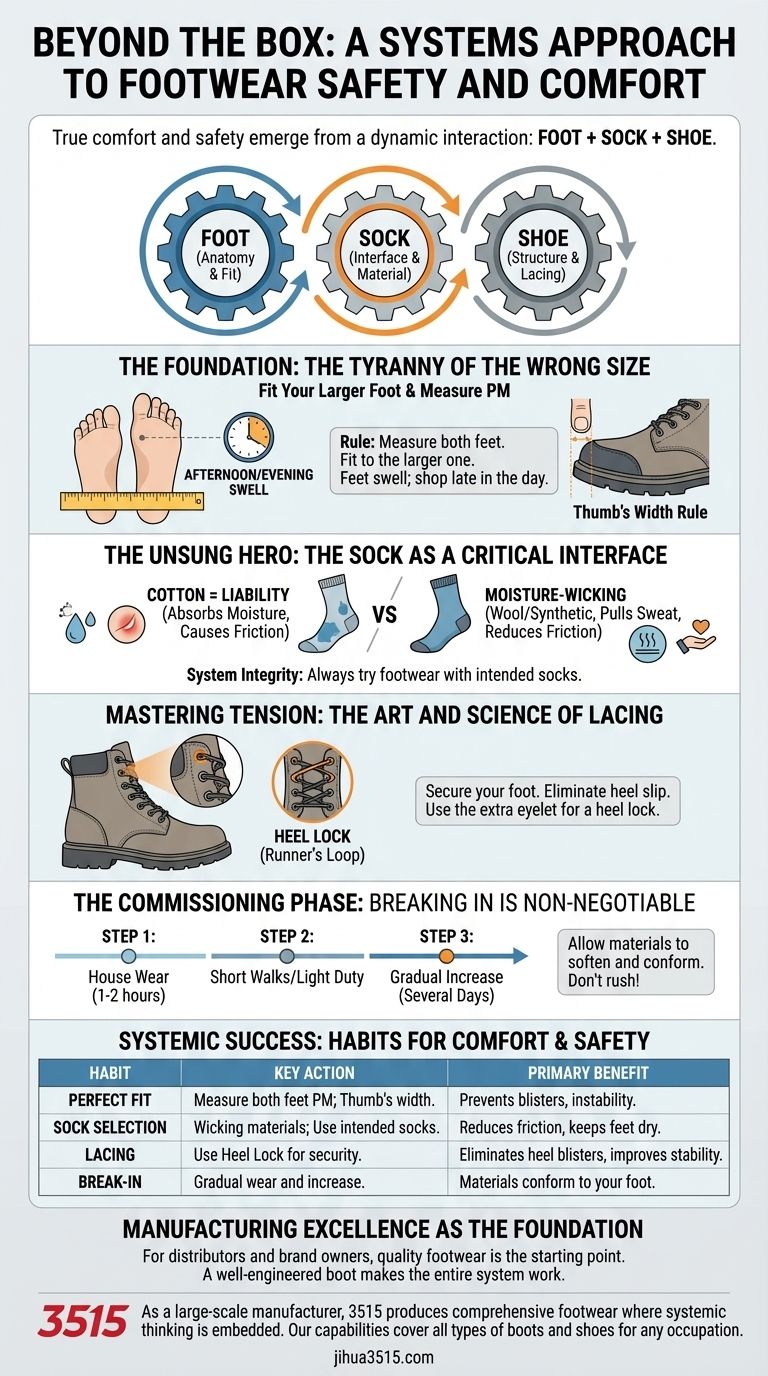
Visual Guide
Related Products
- Wholesale Durable Camouflage Canvas Shoes with High-Traction Cleated Rubber Sole
- Lightweight Breathable Training Shoes for Wholesale & Custom OEM Manufacturing
- Wholesale Breathable Training Shoes Custom Athletic Footwear Manufacturer
- Durable Leather High-Ankle Tactical Boots for Wholesale & Custom Manufacturing
- Durable Waterproof Rain Boots | Custom Manufacturer for Wholesale & Brands
Related Articles
- How Shoe Flexibility Shapes Foot Health and Walking Performance
- Cupsole vs. Vulcanized Shoes: How Construction Impacts Performance
- How Camouflage Patterns Became Sneaker Culture’s Most Powerful Marketing Tool
- How Rubber-Soled Shoes Master All Seasons: The Science of Traction and Adaptability
- How Camouflage Evolved: From Battlefield Survival to Fashion Statement


















