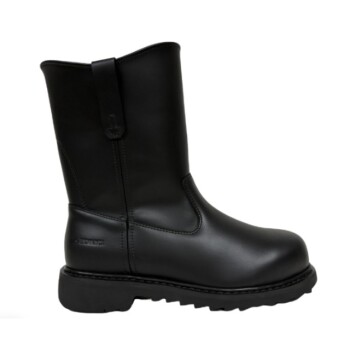
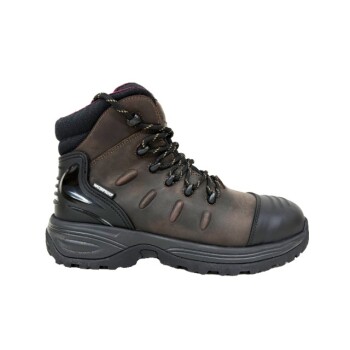
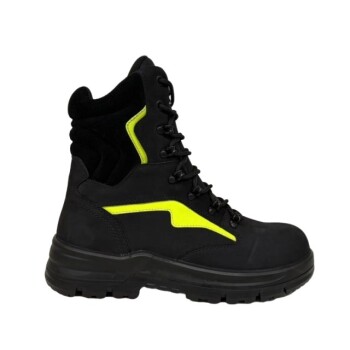
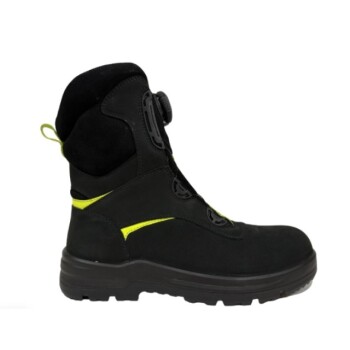
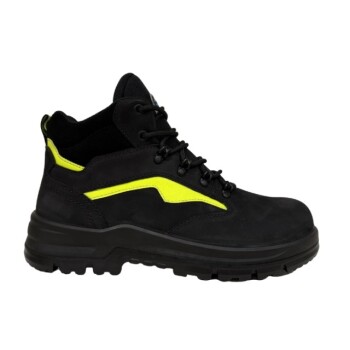
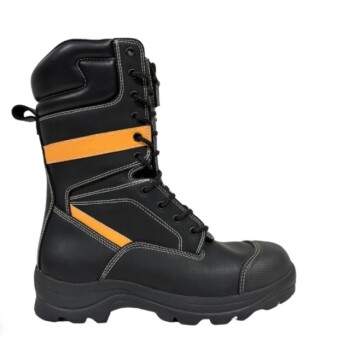
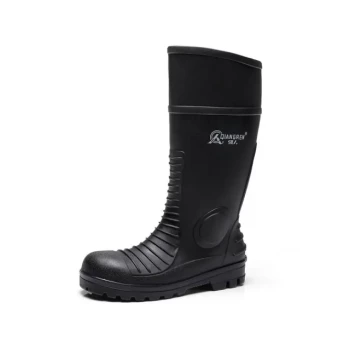
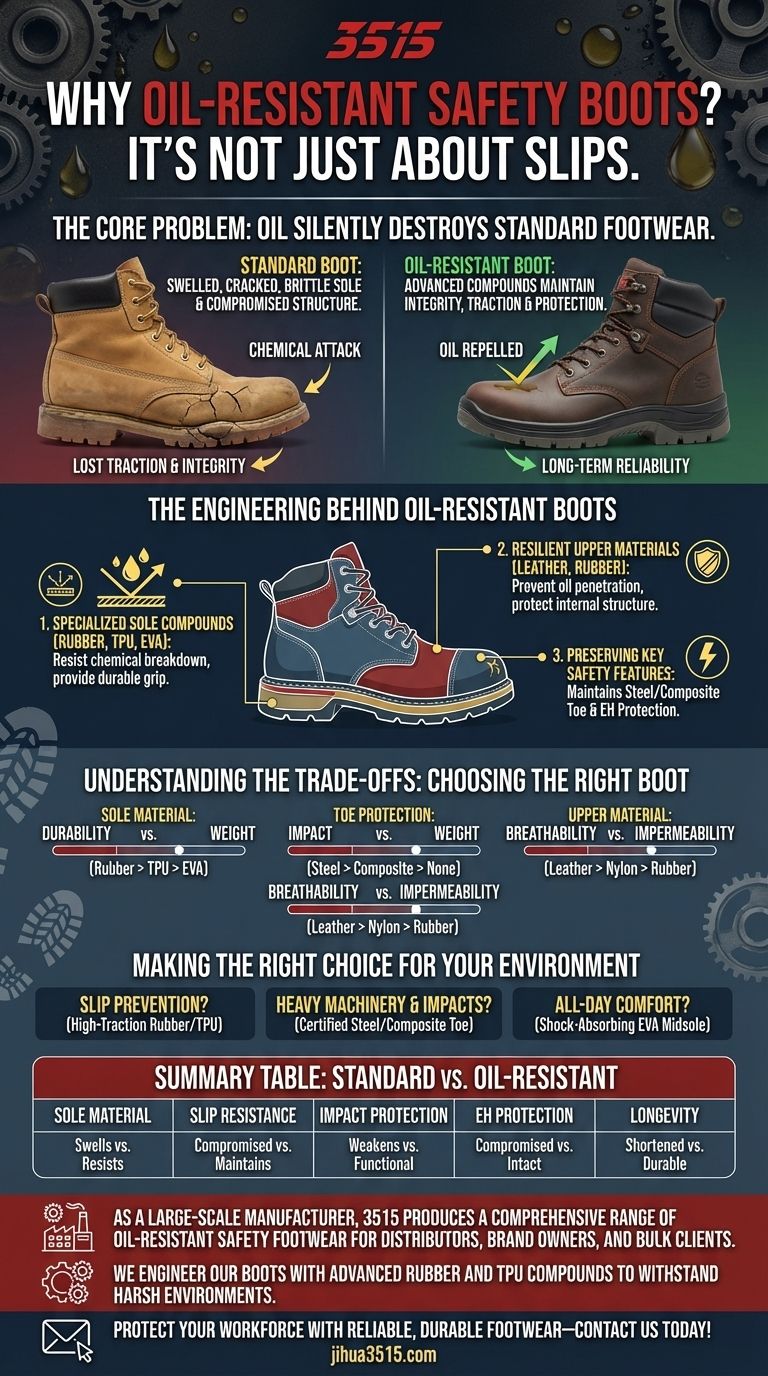
At its core, you should wear oil-resistant safety boots because oil degrades standard footwear, destroying its ability to provide slip resistance and compromising its other protective features. These specialized boots use materials engineered to withstand oil exposure, ensuring their core safety functions—from traction to impact protection—remain fully intact in hazardous environments.
The true purpose of an oil-resistant rating is not just about repelling oil; it's about preventing oil from silently undermining the entire safety structure of your boot, ensuring it protects you reliably day after day.
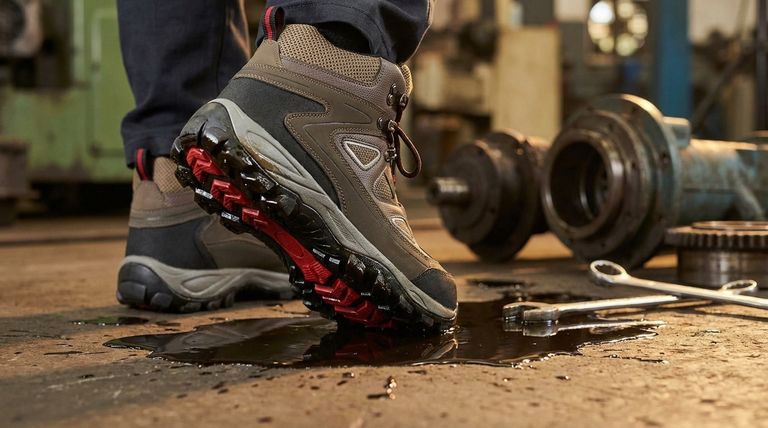
The Core Problem: How Oil Undermines Standard Footwear
Many professionals underestimate how destructive oil can be to a standard work boot. The danger isn't just the immediate slickness but the long-term chemical attack on the boot's materials.
Degrading the Sole
Oil and other petroleum-based chemicals act as solvents. They can cause the materials in a standard sole to swell, soften, or become brittle and crack over time.
Compromising Slip Resistance
Once a sole's material is chemically damaged, its designed traction pattern and grip characteristics are compromised. This means it can fail to grip a surface effectively, even one that isn't visibly oily.
Destroying Structural Integrity
This degradation isn't limited to the sole. Oil can weaken the adhesives and stitching that hold the boot together, reducing its ability to protect you from impacts, crushing, and other physical hazards.
The Engineering Behind Oil-Resistant Boots
Oil-resistant boots are not merely coated; they are built from the ground up with materials specifically chosen to resist chemical breakdown from hydrocarbons.
Specialized Sole Compounds
The outsole is the first line of defense. These boots utilize advanced compounds and elastomers that maintain their integrity and function when exposed to oil, even at elevated temperatures.
- Rubber: Offers excellent resistance to oil and abrasion, providing durable traction.
- Thermo-Polyurethane (TPU): A lighter alternative to rubber that is highly durable and resistant to oil and chemicals.
- Ethylene-Vinyl Acetate (EVA): Often used in the midsole for its lightweight comfort and stability, it is protected by the durable TPU or rubber outsole.
Resilient Upper Materials
The boot's upper is also crucial. Materials like specially treated leather or high-grade rubber are used to prevent oil from seeping into the boot, protecting both your foot and the boot's internal structure.
Preserving Key Safety Features
By resisting oil's damaging effects, the boot ensures its other critical safety features function as intended.
- Impact Protection: The integrity of the steel or composite toe cap is maintained because the surrounding boot structure remains strong.
- Electrical Hazard (EH) Protection: The sole's ability to insulate against electrical shock is preserved, as oil cannot penetrate and compromise the material.
- All-Day Support: A non-degraded midsole and footbed continue to provide the necessary shock absorption and support, reducing worker fatigue.
Understanding the Trade-offs
Choosing the right boot involves balancing different material properties against the demands of your specific work environment. There is no single "best" material, only the best material for the job.
Sole Material: Durability vs. Weight
A thick rubber sole may offer the highest level of durability and resistance but at the cost of increased weight. TPU offers a great balance, while EVA midsoles prioritize lightweight comfort.
Toe Protection: Steel vs. Composite
Steel toes offer maximum impact protection but are heavier and conduct heat and cold. Composite toes are much lighter and don't conduct temperature, but they can be slightly bulkier to achieve the same safety rating.
Upper Material: Breathability vs. Impermeability
Leather uppers provide excellent durability and breathability for comfort over a long day. Synthetic materials like nylon can be lighter, while a full rubber upper offers maximum water and chemical resistance but with minimal breathability.
Making the Right Choice for Your Environment
Your choice should be guided by the primary hazards you face daily.
- If your primary focus is preventing slips in oily workshops or kitchens: Prioritize a boot with a high-traction rubber or TPU sole specifically rated for oil resistance.
- If your primary focus is protection from heavy machinery and impacts: Ensure the boot has a certified steel or composite toe, recognizing that oil resistance is what guarantees its long-term structural integrity.
- If your primary focus is all-day comfort for standing work: Look for a boot that combines an oil-resistant outsole with a shock-absorbing EVA midsole and a supportive footbed.
Investing in the correct oil-resistant boot is an investment in a stable, secure, and protected foundation for every task you perform.
Summary Table:
| Key Feature | Standard Boot (Degrades with Oil) | Oil-Resistant Boot (Maintains Integrity) |
|---|---|---|
| Sole Material | Swells, softens, or cracks | Advanced rubber/TPU compounds resist breakdown |
| Slip Resistance | Compromised as sole degrades | Maintains grip on oily surfaces |
| Impact Protection | Structural integrity weakens | Steel/composite toe cap remains fully functional |
| Electrical Hazard (EH) Protection | Insulation can be compromised | Protection remains intact |
| Longevity | Shortened lifespan due to oil damage | Durable materials ensure long-term reliability |
As a large-scale manufacturer, 3515 produces a comprehensive range of oil-resistant safety footwear for distributors, brand owners, and bulk clients. We engineer our boots with advanced rubber and TPU compounds to withstand harsh environments, ensuring lasting slip resistance, impact protection, and structural integrity. Our production capabilities cover all types of safety shoes and boots tailored to your specific needs. Protect your workforce with reliable, durable footwear—contact us today for a quote!
Visual Guide
Related Products
- Heavy-Duty Goodyear Welted Pull-On Safety Rigger Boot
- Premium Oil Wax Leather Safety Boots for Bulk Purchase
- Premium Wholesale Waterproof Safety Boots High Performance Protection for Industrial Markets
- Premium Waterproof Nubuck Safety Boots for Wholesale
- Premium Waterproof High-Cut Industrial Safety Boots for Wholesale and Bulk Orders
People Also Ask
- What are the key elements of quality boot construction? Ensure Longevity & Performance
- Are Goodyear welted boots worth it? The Ultimate Guide to Lifelong Footwear
- What is a Goodyear welt on a boot? The Secret to Durable, Repairable Footwear
- What makes Goodyear Welt boots suitable for harsh environments? Unmatched Durability & Repairability
- What additional high-quality materials are used in Goodyear Welt boots? A Guide to Advanced Components