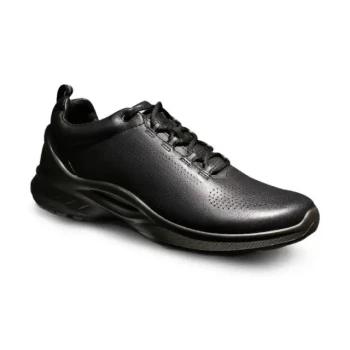
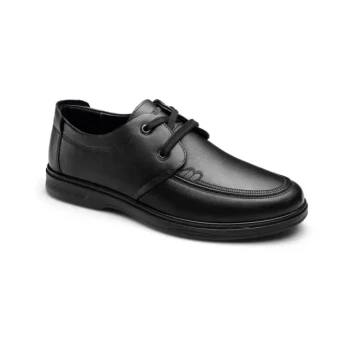
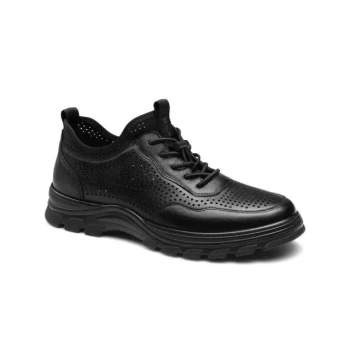
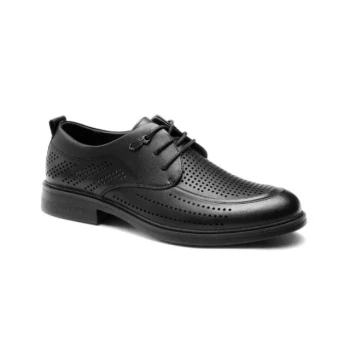
In the world of footwear, construction is destiny. A person might prefer a cemented shoe over a Goodyear welted one primarily for its lower initial cost, greater out-of-the-box flexibility, and lighter weight. This construction method also allows for sleeker, more modern designs with thinner soles that are often impossible to achieve with the more traditional and robust welting process.
The choice between cemented and Goodyear welted footwear is not about which method is objectively superior, but about which set of priorities—affordability and style versus longevity and repairability—best aligns with your specific needs at the moment of purchase.
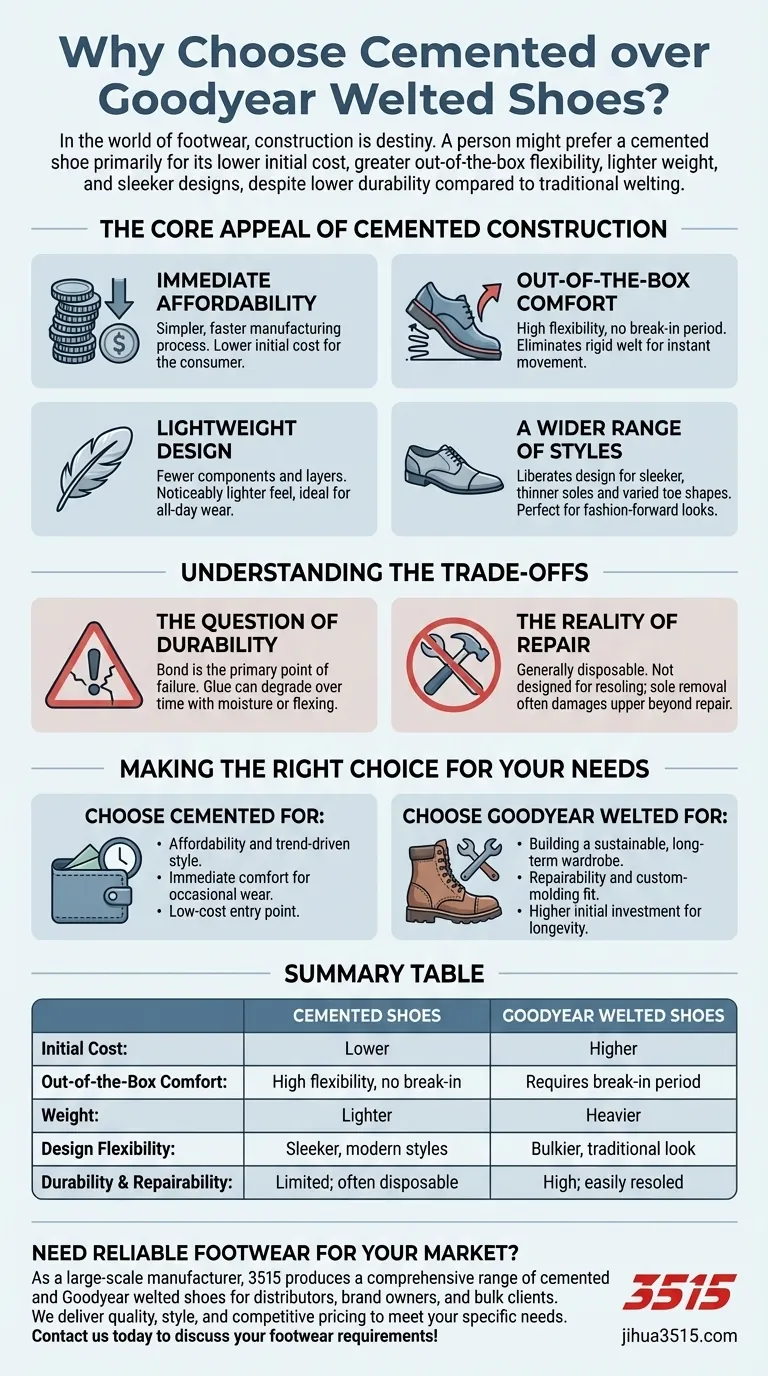
The Core Appeal of Cemented Construction
Understanding why cemented shoes have a strong place in the market requires looking past traditional metrics of quality and focusing on a different set of user benefits. These shoes excel in areas where more complex constructions often fall short.
Immediate Affordability
The manufacturing process for a cemented shoe is significantly simpler and faster than that of a Goodyear welt. The upper is attached to the sole using a strong adhesive, which is a less labor-intensive and costly process. This efficiency directly translates to a more accessible price point for the consumer.
Out-of-the-Box Comfort
Cemented shoes are famously flexible from the very first wear. By eliminating the rigid welt and multiple layers of a welted shoe, the sole can bend and move more freely with your foot, removing the need for a "break-in" period.
Lightweight Design
Fewer components and layers mean less weight. For individuals who spend all day on their feet or simply prefer a less substantial shoe, the noticeably lighter feel of a cemented shoe can be a decisive comfort factor.
A Wider Range of Styles
Cementing liberates shoe design. This method makes it possible to create shoes with very thin, sleek soles and a wide variety of toe shapes. It is the preferred construction for many modern, minimalist, or fashion-forward designs where the bulk of a welt would be aesthetically undesirable.
Understanding the Trade-offs
To choose wisely, you must understand what is sacrificed to gain the benefits of cemented construction. The primary trade-offs relate to long-term durability and the shoe's life cycle.
The Question of Durability
While modern adhesives are incredibly strong, the bond in a cemented shoe is its primary point of failure. Over time, and with exposure to moisture or flexing, the glue can degrade, potentially leading to the sole separating from the upper.
The Reality of Repair
Cemented shoes are generally considered disposable. They are not designed to be resoled, as the process of removing the glued-on sole often damages the upper material beyond repair. When the sole wears out, the shoe's useful life is over.
Break-in vs. Break-down
A Goodyear welted shoe has a break-in period where a cork footbed molds to your foot, creating a custom fit. A cemented shoe, in contrast, tends to "break down" over time; its initial comfort comes from materials that compress and wear out, without the benefit of molding to your foot for lasting support.
Making the Right Choice for Your Needs
Your goal should dictate your choice of footwear construction. There is no single "best" method, only the right tool for the job.
- If your primary focus is affordability and trend-driven style: Cemented shoes offer a low-cost entry point and the design flexibility to match current fashions without a major investment.
- If your primary focus is immediate comfort for occasional wear: The flexibility and lack of a break-in period make a cemented shoe an excellent choice for shoes you won't wear daily.
- If your primary focus is building a sustainable, long-term wardrobe: The repairability and custom-molding nature of Goodyear welted shoes better serve this goal, though cemented shoes can still fill specific gaps in your collection.
Ultimately, understanding the purpose behind each construction method empowers you to invest in the footwear that truly serves your needs.
Summary Table:
| Feature | Cemented Shoes | Goodyear Welted Shoes |
|---|---|---|
| Initial Cost | Lower | Higher |
| Out-of-the-Box Comfort | High flexibility, no break-in | Requires break-in period |
| Weight | Lighter | Heavier |
| Design Flexibility | Sleeker, modern styles | Bulkier, traditional look |
| Durability & Repairability | Limited; often disposable | High; easily resoled |
Need reliable footwear for your market? As a large-scale manufacturer, 3515 produces a comprehensive range of cemented and Goodyear welted shoes for distributors, brand owners, and bulk clients. We deliver quality, style, and competitive pricing to meet your specific needs. Contact us today to discuss your footwear requirements!
Visual Guide
Related Products
- Wholesale Durable Camo Canvas Shoes with High-Traction Rubber Soles
- Durable Rubber Sole Outdoor Shoes Wholesale & Custom Manufacturing
- Wholesale Durable Camouflage Canvas Shoes with High-Traction Cleated Rubber Sole
- Premium Lightweight Safety Shoes for Wholesale & Bulk Orders
- Custom Safety Shoe Manufacturer for Wholesale & OEM Brands
People Also Ask
- Can canvas shoes be worn in rainy conditions? The Truth About Water Resistance
- What are the properties of canvas as a shoe material? A Guide to Lightweight Comfort & Style
- Why is the selection of high-strength fabric materials necessary in the production of canvas shoes and training shoes?
- What are the characteristics of canvas as a shoe material? A Guide to Lightweight, Breathable Footwear
- What are the benefits and limitations of using canvas as a primary material for footwear? Key B2B Manufacturing Insights