
Wearing proper construction footwear is non-negotiable because it is your first and most critical line of defense against the most common and severe injuries on a job site. Every physically demanding workday presents a barrage of hazards, and specialized boots are engineered to mitigate the specific risks of impact, puncture, slips, and electrical shock that standard shoes simply cannot handle.
The right footwear isn't just about preventing a single catastrophic accident; it's a foundational tool that reduces daily physical strain, prevents long-term cumulative injuries, and ensures you can perform your job safely and effectively, day after day.
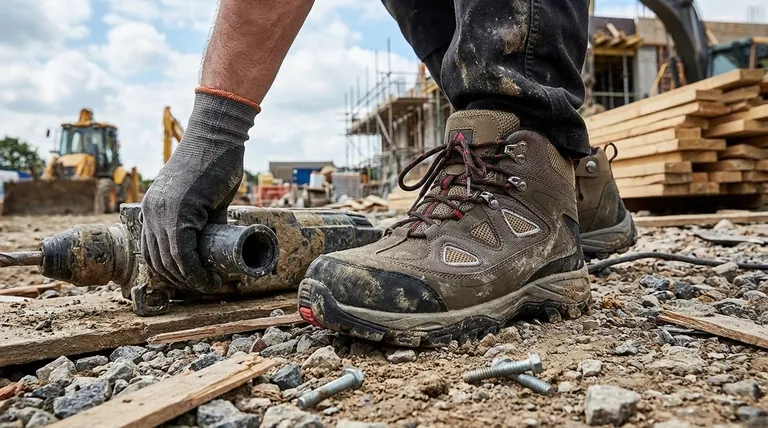
Beyond the Obvious: Analyzing the Core Risks
To truly understand the importance of construction footwear, we must move beyond a general idea of "safety" and analyze the specific, daily threats it is designed to counter. National Safety Council data shows the top causes of preventable workplace deaths are overexertion, contact with equipment, and falls—all of which are directly addressed by proper footwear.
Protection from Impact and Compression
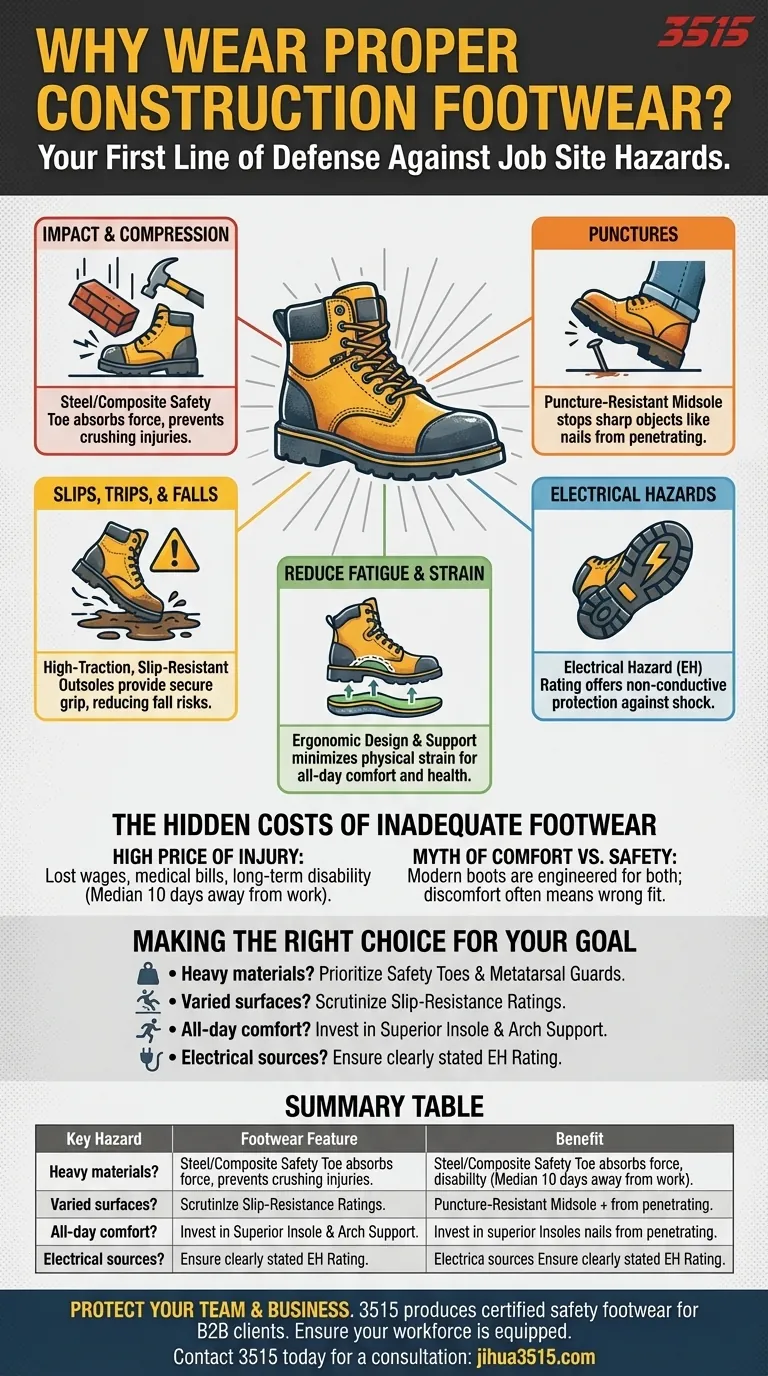
The most recognized feature of a safety boot is the reinforced toe. This is designed to protect your feet from falling tools, dropped construction materials, or even compression injuries from heavy rolling equipment. A steel or composite safety toe absorbs and deflects the force of an impact, preventing fractures and crushing injuries.
Guarding Against Punctures
Construction sites are littered with sharp objects like upturned nails, screws, and rebar scraps. A standard rubber sole offers little to no protection. Puncture-resistant plates, often made of steel or advanced composite fabrics, are integrated into the midsole to stop these hazards from penetrating the boot and causing severe foot injury.
Preventing Slips, Trips, and Falls
Falls are one of the leading causes of injury and death in the construction industry. Job sites often have uneven terrain and slick surfaces from water, mud, or oil. High-traction, slip-resistant outsoles are engineered with specific tread patterns and compounds to provide a secure grip, drastically reducing the risk of a life-altering fall.
Mitigating Electrical Hazards
For those working near potential electrical sources, specialized footwear is critical. Boots with an Electrical Hazard (EH) rating are built with non-conductive soles and heels, providing a secondary source of protection against accidental contact with live electrical circuits.
Reducing Fatigue and Overexertion
A workday in construction is a marathon, not a sprint. Proper footwear provides essential arch support, cushioning, and ankle stability. This ergonomic design reduces the strain on your feet, legs, and back, helping to prevent the cumulative damage and overexertion injuries that build up over time.
The Hidden Costs of Inadequate Footwear
Choosing the wrong footwear—or none at all—is not a neutral choice. It carries significant and often underestimated consequences that extend far beyond simple discomfort.
The High Price of Injury
The statistics are sobering. The U.S. Bureau of Labor Statistics reports millions of nonfatal workplace injuries annually, with a median of 10 days away from work per incident. That translates directly to lost wages, significant medical bills, and potential long-term disability that can impact your entire career and livelihood.
The Myth of "Comfort vs. Safety"
A common mistake is believing that safety and comfort are mutually exclusive. Modern construction boots are engineered to provide both. Discomfort often arises from choosing the wrong boot for the job or an improper fit, not from the safety features themselves. A well-designed boot enhances comfort by reducing physical strain.
Misunderstanding Job-Specific Needs
Not all safety boots are created equal. The needs of a roofer who requires flexibility and grip are vastly different from those of a concrete worker who needs waterproofing and chemical resistance. Wearing a generic "safety boot" without considering your specific daily tasks can leave you exposed to unnecessary risk.
Making the Right Choice for Your Goal
Selecting the correct footwear requires you to assess your primary daily risks and choose the features that directly counter them.
- If your primary focus is protection from heavy materials: Prioritize boots with certified safety toes (steel, composite) and consider adding metatarsal guards for full top-of-foot protection.
- If your primary focus is preventing slips on varied surfaces: Scrutinize the outsole material and tread design, looking for high slip-resistance ratings specifically for water or oil.
- If your primary focus is all-day comfort and reducing fatigue: Invest in a boot with a superior insole, excellent arch support, and proper ankle stability to minimize physical strain.
- If your primary focus is working near electrical sources: Ensure your footwear has a clearly stated Electrical Hazard (EH) rating to protect against shock.
Investing in the right footwear is a direct investment in your health, your career, and your ability to return home safely every single day.
Summary Table:
| Key Hazard | Footwear Feature | Benefit |
|---|---|---|
| Impact & Compression | Steel/Composite Safety Toe | Prevents crushing injuries from heavy objects |
| Punctures | Puncture-Resistant Midsole | Stops sharp objects from penetrating the foot |
| Slips & Falls | Slip-Resistant Outsole | Provides secure grip on slick or uneven surfaces |
| Electrical Shock | Electrical Hazard (EH) Rating | Offers secondary protection against live circuits |
| Fatigue & Strain | Ergonomic Support & Cushioning | Reduces physical strain for all-day comfort |
Protect your team and your business with the right footwear. As a large-scale manufacturer, 3515 produces a comprehensive range of certified safety footwear for distributors, brand owners, and bulk clients. Our production capabilities encompass all types of safety boots and shoes, designed to meet the specific demands of any job site. Ensure your workforce is equipped with durable, comfortable, and compliant footwear. Contact 3515 today for a consultation and discover how our solutions can enhance your safety program.
Visual Guide
Related Products
- Durable Leather Work Boots Wholesale Manufacturer & Custom Factory
- Durable Leather Work Boots for Wholesale & Custom Manufacturing
- Durable Goodyear Welt Leather Work Boots for Wholesale & Private Label
- Durable Leather Moc Toe Work Boots for Wholesale & Custom Manufacturing
- Wholesale Leather Work Boots with Customizable Wedge Sole for Brands
People Also Ask
- What are the common workplace hazards that can be mitigated with the right work boots? Protect Your Workforce
- Which brands are known for high-quality work boots? A Guide to Durable, Safe Footwear
- What are the main differences between 6 inch and 8 inch boots? Support vs. Mobility Explained
- What are the differences between Lace Up, Zip Sided, and Pull On work boots? Find Your Perfect Fit for Safety & Convenience
- What options are available for restoring worn-out work boots? Expert Strategies for Longevity
















