The importance of toe space in a walking shoe is fundamental. It directly impacts foot mechanics, stability, and overall comfort by allowing your foot to function as it was naturally designed to. Lacking this space constricts your foot's movement and fails to accommodate the natural swelling that occurs throughout the day and during activity.
Your footwear should not be a rigid container for your foot, but a platform that enables its natural mechanics. The primary function of adequate toe space is to allow your toes to splay, creating a stable base for movement and accommodating changes in foot size.
The Biomechanics of a Healthy Stride
To understand why toe space is critical, we must first understand how your foot is meant to move. It is not a static block but a complex mechanical structure.
The Critical Role of Toe Splay
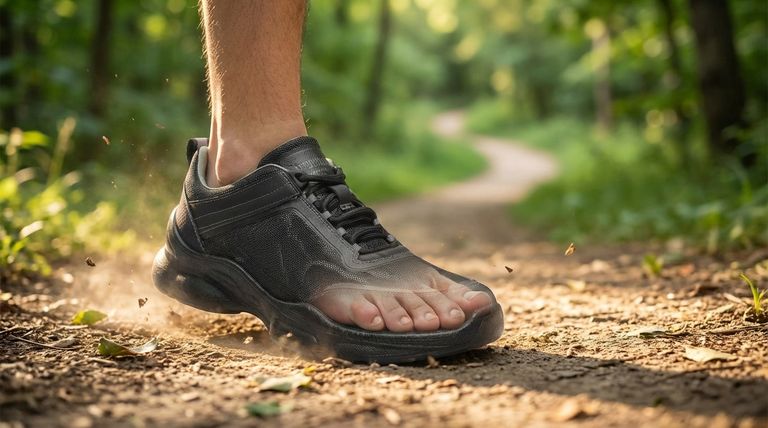
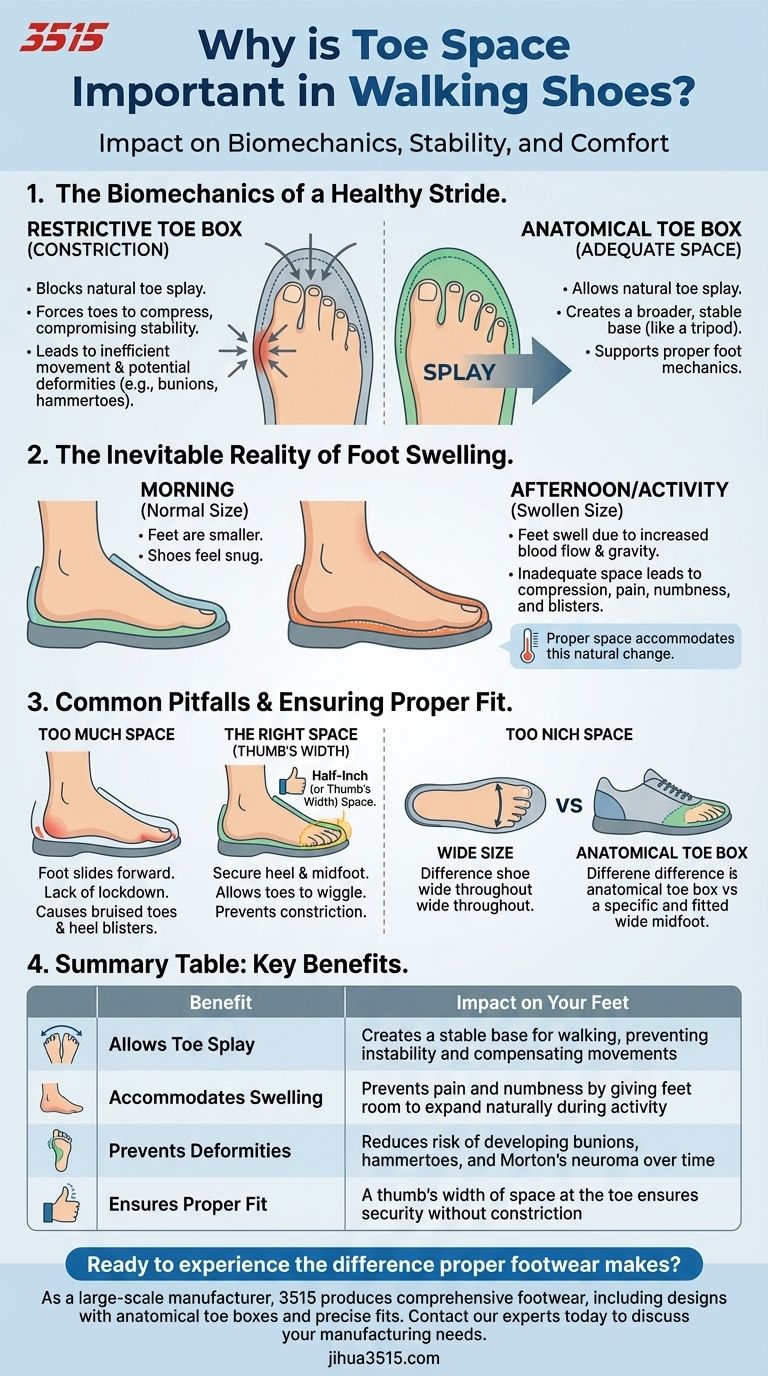
Your toes are designed to spread apart, or splay, when you push off the ground during a step. This action is essential for proper biomechanics.
This splaying motion widens the forefoot, creating a broader and more stable base of support, much like the tripod of a camera.
A restrictive toe box physically blocks this from happening, forcing your toes to remain compressed together.
The Consequence of Constriction
When your toes cannot splay, your stability is compromised with every step. Your body must then compensate for this instability, leading to inefficient movement.
Over time, this constant constriction can contribute to foot deformities like bunions, hammertoes, and nerve issues such as Morton's neuroma.
The Inevitable Reality of Foot Swelling
Your feet do not remain the same size throughout the day. This physiological reality is a major factor in footwear selection.
Why Your Feet Change Size
During physical activity like walking, blood flow to your muscles increases. Combined with gravity, this causes fluid to accumulate in your extremities, most notably your feet.
This swelling is a normal response and can increase your foot's volume significantly, especially over long walks or by the end of the day.
The Impact of Inadequate Space
A shoe that feels snug in the morning can become painfully tight by the afternoon. This compression restricts blood flow and can lead to numbness, tingling, and blisters.
Proper toe space provides the necessary volume to accommodate this natural swelling, ensuring consistent comfort and preventing pain.
Common Pitfalls to Avoid
Achieving the right fit involves more than just buying a larger size. It requires a nuanced understanding of shoe shape and volume.
Too Much Space vs. The Right Space
The goal is not to have your foot swimming in the shoe. Excessive space can cause your foot to slide forward, leading to bruised toes and heel blisters from a lack of lockdown.
The ideal fit provides about a half-inch (or a thumb's width) of space between your longest toe and the end of the shoe while ensuring the heel and midfoot are securely held in place.
Mistaking Overall Width for Toe Box Shape
Many people with wide feet simply buy a "wide" size shoe, but this may not solve the problem. A shoe can be wide overall but still have a tapered, restrictive toe box.
Look for shoes specifically described as having a "wide" or "anatomical" toe box. This design provides room for the toes to splay without making the heel and midfoot too loose.
How to Ensure the Proper Fit
Your choice should be dictated by your primary use case and an honest assessment of your foot's needs.
- If your primary focus is all-day comfort at work or for daily errands: Prioritize enough volume to accommodate foot swelling by trying on shoes at the end of the day when your feet are at their largest.
- If your primary focus is long-distance or fitness walking: Emphasize an anatomical toe box that allows your forefoot to splay fully, maximizing stability and propulsive power.
- If you are prone to conditions like bunions or neuromas: Actively seek out brands known for their foot-shaped designs, as this is a non-negotiable requirement for your foot health.
By respecting your foot's natural shape and function, you empower every step you take.
Summary Table:
| Key Benefit | Impact on Your Feet |
|---|---|
| Allows Toe Splay | Creates a stable base for walking, preventing instability and compensating movements. |
| Accommodates Swelling | Prevents pain and numbness by giving feet room to expand naturally during activity. |
| Prevents Deformities | Reduces risk of developing bunions, hammertoes, and Morton's neuroma over time. |
| Ensures Proper Fit | A thumb's width of space at the toe ensures security without constriction. |
Ready to experience the difference proper footwear makes?
As a large-scale manufacturer, 3515 produces a comprehensive range of footwear for distributors, brand owners, and bulk clients. Our production capabilities encompass all types of shoes and boots, including designs with the anatomical toe boxes and precise fits discussed in this article.
Let us help you provide superior comfort and stability to your customers. Contact our experts today to discuss your manufacturing needs.
Visual Guide
Related Products
- Wholesale Durable Camouflage Canvas Shoes with High-Traction Cleated Rubber Sole
- Durable Rubber Sole Outdoor Shoes Wholesale & Custom Manufacturing
- Premium Suede Sport Safety Shoes for Wholesale & Bulk Orders
- Durable Goodyear Welt Leather Work Boots for Wholesale & Private Label
- Wholesale Comfortable Business Casual Shoes Custom Manufacturing
People Also Ask
- Why is the selection of high-strength fabric materials necessary in the production of canvas shoes and training shoes?
- What are the properties of canvas as a shoe material? A Guide to Lightweight Comfort & Style
- Can canvas shoes be worn in rainy conditions? The Truth About Water Resistance
- What are some examples of vulcanized shoes? Discover the Flexibility and Board Feel of Classic Sneakers
- What are the characteristics of canvas as a shoe material? A Guide to Lightweight, Breathable Footwear