
The importance of the toe box in a walking shoe comes down to one critical factor: enabling the natural movement of your foot. A properly designed toe box provides the necessary space for your toes to spread out as you walk, which is essential for balance, shock absorption, and preventing painful conditions like calluses and blisters.
A properly designed toe box isn't just a comfort feature; it's a functional necessity. It allows your toes to splay naturally upon impact, providing crucial stability and preventing common foot ailments that arise from constriction.
The Biomechanics of a Healthy Stride
To understand why the toe box matters so much, you must first understand how your foot is designed to work. Your foot is a complex mechanical structure that changes shape with every step you take.
The Critical Role of Toe Splay
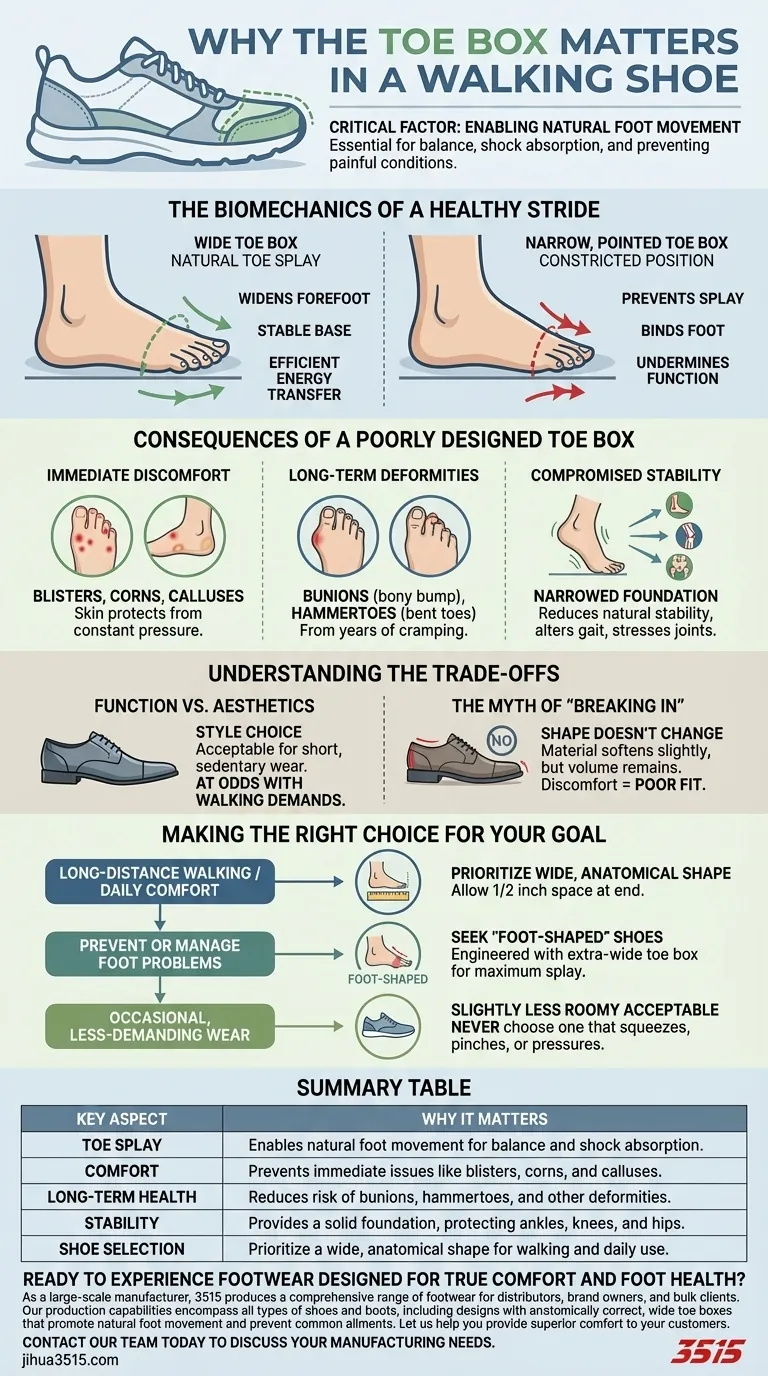
When your foot strikes the ground during a walking motion, your toes naturally spread apart, or "splay." This action widens the forefoot, creating a more stable base to support your body weight and absorb impact.
This splay is fundamental to your balance and to the efficient transfer of energy as you push off for the next step.
How a Shoe Can Interfere
Many shoes, especially those designed for fashion rather than function, feature a narrow, pointed front section. This type of design forces your toes together into an unnatural, compressed position.
A restrictive toe box actively prevents natural toe splay, effectively binding your foot and undermining its core function.
Consequences of a Poorly Designed Toe Box
Wearing shoes with an improperly shaped toe box can lead to a range of issues, from minor discomfort to long-term structural problems.
Immediate Discomfort
The most obvious signs of a constrictive toe box are immediate. You may experience rubbing that leads to blisters, corns, and calluses as your skin tries to protect itself from constant pressure.
Long-Term Foot Deformities
Over years, forcing your toes into a cramped space can contribute to more serious conditions. These include bunions (a bony bump at the base of the big toe) and hammertoes, where toes become permanently bent.
Compromised Stability and Performance
When your toes cannot splay, your foot's foundation is narrowed and weakened. This reduces your natural stability and can alter your gait, potentially leading to stress on other joints like your ankles, knees, and hips.
Understanding the Trade-offs
Not all shoes are built with a wide, functional toe box, and it's important to understand why this discrepancy exists.
Function vs. Aesthetics
Many formal or dress shoes prioritize a sleek, narrow aesthetic over biomechanical function. The tapered toe box is a stylistic choice.
While this may be acceptable for short periods of sedentary wear, it is fundamentally at odds with the physical demands of walking.
The Myth of "Breaking In" a Tight Shoe
A common misconception is that a shoe with a tight toe box just needs to be "broken in." While the material may soften slightly, the fundamental shape and volume of the toe box will not change.
A walking shoe should feel comfortable from the start; discomfort in the toe area is a clear sign of a poor fit, not a shoe that needs conditioning.
Making the Right Choice for Your Goal
Selecting the right toe box depends entirely on how you intend to use the shoe.
- If your primary focus is long-distance walking or daily comfort: Prioritize a shoe with a wide, anatomically shaped toe box that allows a half-inch of space between your longest toe and the end of the shoe.
- If you are trying to prevent or manage foot problems like bunions: Actively seek out brands that design "foot-shaped" shoes specifically engineered with an extra-wide toe box to allow for maximum splay.
- If your primary focus is occasional, less-demanding wear: A slightly less roomy toe box may be acceptable, but you should never choose one that actively squeezes, pinches, or puts pressure on your toes.
Ultimately, choosing the right toe box is about respecting the natural engineering of your feet.
Summary Table:
| Key Aspect | Why It Matters |
|---|---|
| Toe Splay | Enables natural foot movement for balance and shock absorption. |
| Comfort | Prevents immediate issues like blisters, corns, and calluses. |
| Long-Term Health | Reduces risk of bunions, hammertoes, and other deformities. |
| Stability | Provides a solid foundation, protecting ankles, knees, and hips. |
| Shoe Selection | Prioritize a wide, anatomical shape for walking and daily use. |
Ready to experience footwear designed for true comfort and foot health?
As a large-scale manufacturer, 3515 produces a comprehensive range of footwear for distributors, brand owners, and bulk clients. Our production capabilities encompass all types of shoes and boots, including designs with anatomically correct, wide toe boxes that promote natural foot movement and prevent common ailments.
Let us help you provide superior comfort to your customers. Contact our team today to discuss your manufacturing needs.
Visual Guide
Related Products
- Durable Rubber Sole Outdoor Shoes Wholesale & Custom Manufacturing
- Wholesale Durable Camouflage Canvas Shoes with High-Traction Cleated Rubber Sole
- Advanced KPU Athletic Safety Shoe with Steel Toe Cap Anti-Slip Rotary Lacing System
- Premium Suede Sport Safety Shoes for Wholesale & Bulk Orders
- Wholesale Comfortable Business Casual Shoes Custom Manufacturing
People Also Ask
- What is the function of the sole in outdoor shoes? Find the Perfect Grip and Support
- What role do outdoor shoes and sneakers play in navigating external terrains? Engineered Stability for Every Surface
- How is AI utilized in the design of outdoor and safety footwear? Harnessing Big Data for Market-Driven Shoe Innovation
- Why is durability important when selecting outdoor shoes? A Guide to Safety & Long-Term Value
- What are the key components of outdoor shoes that affect comfort and sturdiness? A Guide to Durable, High-Performance Footwear



















