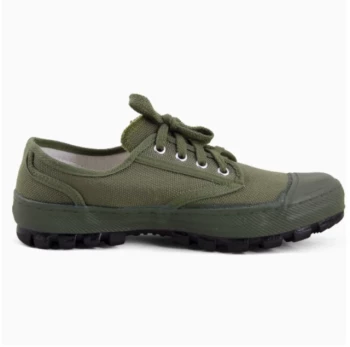
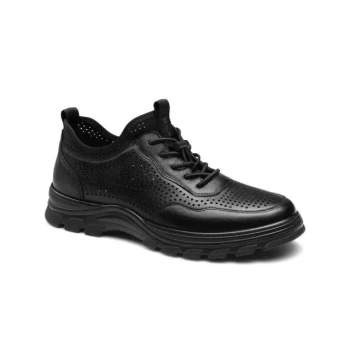
The sole is the foundation of gardening safety and endurance. It serves three critical functions: providing high-traction grip on slippery surfaces, offering structural protection against sharp tools or thorns, and delivering the mechanical flexibility required for repetitive kneeling and bending. Without a specialized sole, a gardener risks acute injury from slips and punctures, as well as long-term joint fatigue.
While the upper material keeps your feet dry, the sole dictates your stability and physical stamina. A proper gardening sole must balance rigid protection against hazards with the pliability needed for ground-level work.
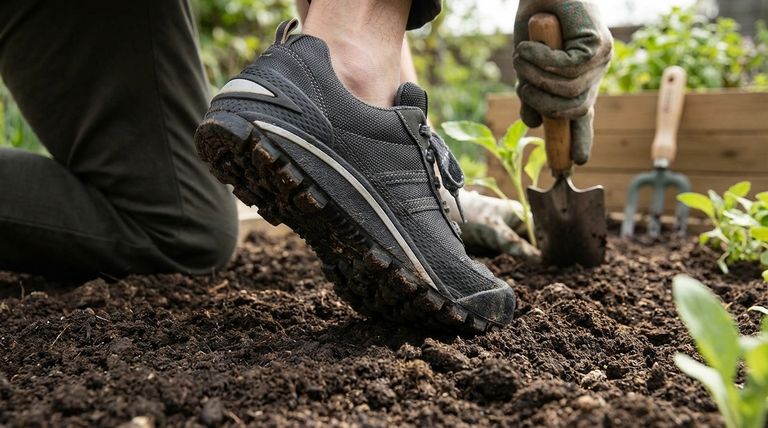
The Mechanics of Safety and Stability
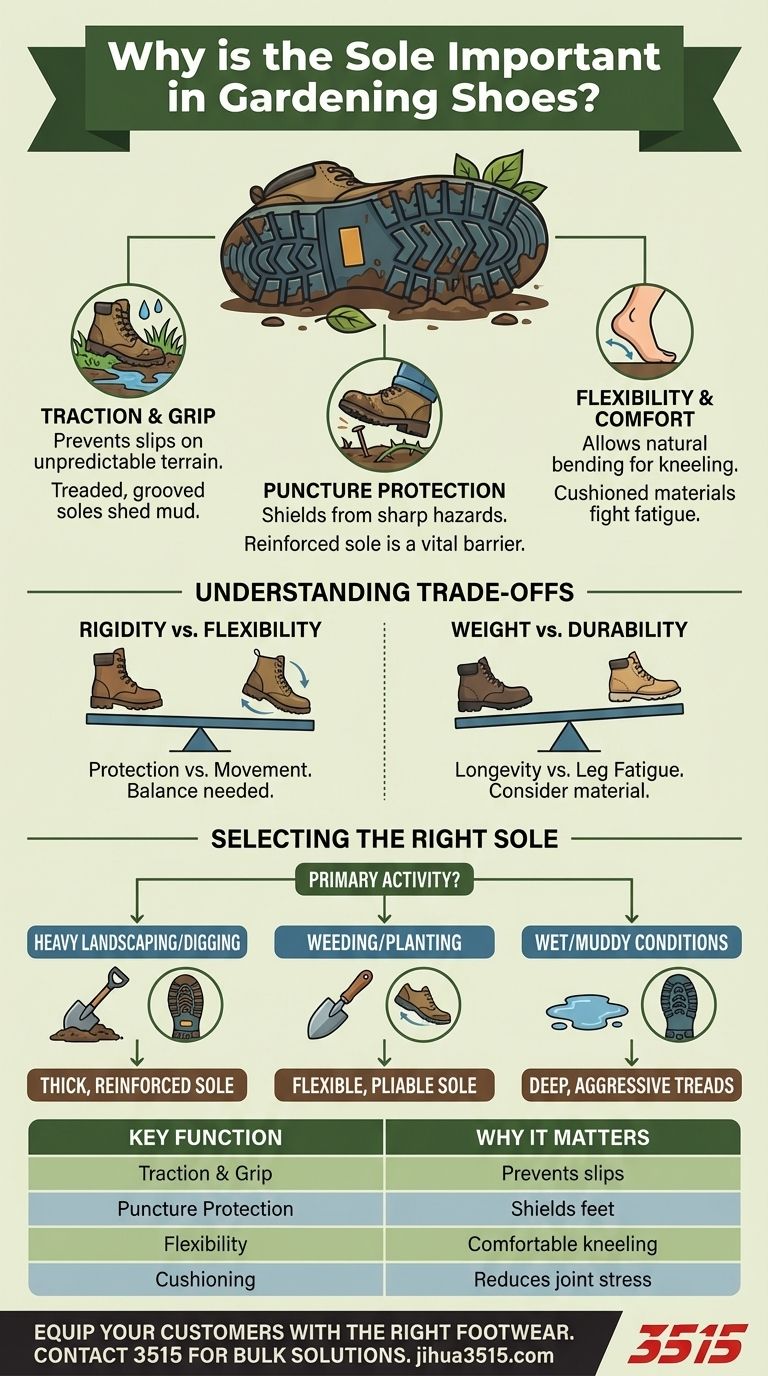
Traction on Unpredictable Terrain
Gardening environments are inherently unstable. You are often transitioning between wet grass, mud, and loose soil.
Treaded and grooved soles are essential to prevent slipping. Unlike standard sneakers, gardening soles are designed to shed mud rather than trap it, ensuring you maintain contact with the ground on uneven topography.
Protection Against Puncture Wounds
The garden is full of sharp hazards, from rusty nails and thorny trimmings to the edge of your own spade.
A reinforced sole acts as a shield. It prevents sharp objects from piercing the bottom of the shoe and entering your foot. This is particularly vital when applying foot pressure to drive a shovel into the ground.
Comfort and Physical Endurance
Flexibility for Kneeling
Gardening biomechanics differ significantly from walking or hiking. Much of the work is done while squatting or kneeling.
A flexible sole allows the foot to bend naturally at the metatarsals. If the sole is too rigid, it fights against your foot’s natural curve, causing strain on the arch and Achilles tendon during prolonged planting or weeding.
Fighting Fatigue with Cushioning
Spending hours on your feet causes cumulative stress on your joints.
Cushioned soles, often made from materials like EVA (Ethylene Vinyl Acetate), absorb shock. This reduces the impact on your knees and lower back, allowing you to work longer periods without debilitating soreness.
Understanding the Trade-offs
Rigidity vs. Flexibility
There is an inherent conflict between protection and movement.
A highly rigid sole offers the best protection for heavy digging but can be uncomfortable for weeding. Conversely, a highly flexible sole is great for mobility but offers less support for heavy tool work.
Weight vs. Durability
Thick, heavy rubber soles last a lifetime and offer maximum waterproof protection.
However, heavy footwear increases leg fatigue. Lighter materials like EVA foam are easier to wear for long durations but may wear down faster on concrete paths or abrasive gravel.
Selecting the Right Sole for Your Garden
To choose the correct footwear, you must match the sole's specific attributes to your primary gardening activities.
- If your primary focus is heavy landscaping or digging: Prioritize a thick, reinforced sole to protect your arches when using spades and shovels.
- If your primary focus is weeding and planting: Look for a flexible sole with high pliability to ensure comfort while kneeling and crouching.
- If your primary focus is working in wet or muddy conditions: Ensure the sole has deep, aggressive treads to maximize grip on slippery surfaces.
The right sole turns a gardening shoe from a simple accessory into a vital tool that protects your body and extends your workday.
Summary Table:
| Key Function | Why It Matters for Gardening |
|---|---|
| Traction & Grip | Prevents slips on wet grass, mud, and loose soil. |
| Puncture Protection | Shields feet from sharp objects like thorns and tools. |
| Flexibility | Allows natural foot bending for comfortable kneeling and crouching. |
| Cushioning | Absorbs shock to reduce joint stress and fight fatigue. |
Ready to equip yourself with the right gardening footwear?
As a large-scale manufacturer, 3515 produces a comprehensive range of durable and comfortable gardening shoes and boots for distributors, brand owners, and bulk clients. Our production capabilities ensure the perfect balance of traction, protection, and flexibility your customers need.
Contact us today to discuss your specific requirements and discover how we can support your business with high-quality footwear solutions.
Visual Guide
Related Products
- Durable Rubber Sole Outdoor Shoes Wholesale & Custom Manufacturing
- Durable Rubber-Soled Utility Shoes for Wholesale & Custom Brand Manufacturing
- Wholesale Durable Camouflage Canvas Shoes with High-Traction Cleated Rubber Sole
- Durable Canvas Work Shoes with Rubber Lug Sole | Wholesale Manufacturer
- Wholesale Breathable Perforated Leather Derby Shoes with Modern Comfort Sole
People Also Ask
- What is the function of the sole in outdoor shoes? Find the Perfect Grip and Support
- What role do outdoor shoes and sneakers play in navigating external terrains? Engineered Stability for Every Surface
- How is AI utilized in the design of outdoor and safety footwear? Harnessing Big Data for Market-Driven Shoe Innovation
- Why is durability important when selecting outdoor shoes? A Guide to Safety & Long-Term Value
- What are the key components of outdoor shoes that affect comfort and sturdiness? A Guide to Durable, High-Performance Footwear