In short, shoe sole production is frequently outsourced because it is a messy, specialized, and capital-intensive manufacturing process. The complex mixing of rubber compounds and the operation of heavy pressing machinery require dedicated facilities and expertise that are distinct from the final shoe assembly. Relying on specialized sole manufacturers allows footwear brands to leverage economies of scale, improve efficiency, and focus on their core competencies like design and marketing.
The core reason for outsourcing is specialization. The process of making a durable, high-performance shoe sole is so different from crafting the shoe's upper and assembling the final product that it's more efficient to treat them as two separate industries.
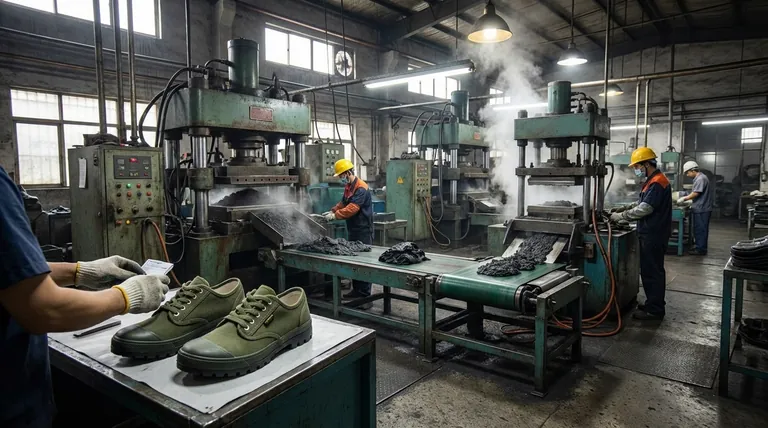
Why Sole Manufacturing Demands Specialization
Creating a shoe sole is far more than just cutting out a piece of rubber. It's a heavy industrial process that shares more in common with tire manufacturing than with the cutting and stitching of leather or textiles.
The Messy Reality of Rubber Compounding
The foundation of a shoe sole is its material compound. This process involves mixing raw rubber with a variety of chemicals and additives under precise conditions.
This operation is inherently messy, involving large, powerful mixing machines and handling various powders and liquids. It requires significant investment in specialized equipment designed for this purpose alone.
The Complexity of Pressing and Molding
Once the rubber is compounded, it must be formed into soles. This is typically done through high-pressure and high-temperature molding presses.
These operations have numerous moving parts and generate a significant amount of excess material (known as "flash") that must be trimmed and managed. The machinery is large, expensive, and requires skilled operators and maintenance crews.
The Economic Case for Outsourcing
For a shoe brand, integrating this type of heavy manufacturing into their primary assembly line is economically inefficient. The benefits of outsourcing are driven by volume and focus.
The Power of High-Volume Production
Specialized sole factories produce millions of units for multiple brands. This massive scale allows them to optimize their processes, purchase raw materials in bulk at lower costs, and invest in the most efficient machinery.
A single shoe brand, even a large one, would struggle to match the per-unit cost efficiency of a dedicated sole manufacturer.
Focusing on Core Business Strengths
By outsourcing sole production, shoe companies can concentrate their resources on design, brand development, marketing, and the final assembly of the shoe.
This "fabless" model allows them to be more agile, innovative, and responsive to market trends without being weighed down by the capital expense and operational complexity of a rubber factory.
Understanding the Trade-offs
While outsourcing is the dominant model, it is not without its challenges. It introduces dependencies and can create new complexities for a brand to manage.
Supply Chain Dependencies
Relying on an external supplier creates a critical dependency. Any disruption at the sole factory—whether from labor issues, quality control problems, or regional instability—can bring a shoe brand's entire production to a halt.
Quality Control and Consistency
Maintaining consistent quality across millions of units produced by a third party requires rigorous oversight. Shoe brands must invest in quality assurance teams to audit their suppliers and ensure every sole meets their performance and durability standards.
Intellectual Property Risks
Design and material innovations are a key competitive advantage. When sharing proprietary sole designs or unique compound formulas with a third-party manufacturer, there is always a risk of intellectual property theft or leakage to competitors.
Making the Right Choice for Production
The decision to outsource is a strategic calculation based on a company's scale, business model, and priorities.
- If your primary focus is brand and design: Outsourcing is almost always the correct path, allowing you to focus capital and talent on creating desirable products and compelling marketing.
- If your primary focus is manufacturing innovation: Keeping production in-house may be justified if you are developing a revolutionary sole technology that requires tight integration and secrecy.
- If your primary focus is cost efficiency at scale: Partnering with a large, established sole manufacturer is the most effective way to leverage global economies of scale.
Ultimately, outsourcing sole production allows shoe brands to do what they do best, while leaving the heavy industrial work to specialists who can do it better, faster, and cheaper.
Summary Table:
| Aspect | Why Outsourcing is Common |
|---|---|
| Process | Messy, specialized rubber compounding and molding |
| Cost | Leverages economies of scale from dedicated factories |
| Focus | Allows brands to concentrate on design and marketing |
| Trade-offs | Supply chain dependencies and quality control needs |
Looking for a reliable shoe manufacturing partner? As a large-scale manufacturer, 3515 produces a comprehensive range of footwear for distributors, brand owners, and bulk clients. Our production capabilities encompass all types of shoes and boots, ensuring quality and efficiency. Contact us today to discuss your footwear needs and leverage our expertise for your brand's success!
Visual Guide

Related Products
- Durable Rubber Sole Outdoor Shoes Wholesale & Custom Manufacturing
- Durable Rubber-Soled Utility Shoes for Wholesale & Custom Brand Manufacturing
- Wholesale Breathable Training Shoes Custom Athletic Footwear Manufacturer
- Durable Canvas Work Shoes with Rubber Lug Sole | Wholesale Manufacturer
- Durable High-Traction Canvas Sneakers Wholesale & Custom Manufacturing
People Also Ask
- What is the function of the sole in outdoor shoes? Find the Perfect Grip and Support
- What role do outdoor shoes and sneakers play in navigating external terrains? Engineered Stability for Every Surface
- How is AI utilized in the design of outdoor and safety footwear? Harnessing Big Data for Market-Driven Shoe Innovation
- Why is durability important when selecting outdoor shoes? A Guide to Safety & Long-Term Value
- What are the key components of outdoor shoes that affect comfort and sturdiness? A Guide to Durable, High-Performance Footwear