In short, crepe rubber is versatile because it is naturally lightweight, exceptionally flexible, and surprisingly durable. These core characteristics make it suitable for a wide range of footwear styles and uses, from casual shoes to rugged boots, offering a distinct combination of comfort and resilience.
The versatility of crepe rubber isn't just about its physical properties; it's about the unique wearing experience it provides. Its signature softness and grip offer a level of comfort that rigid, synthetic soles often cannot match, making it a deliberate choice for both style and function.
The Anatomy of Crepe Rubber
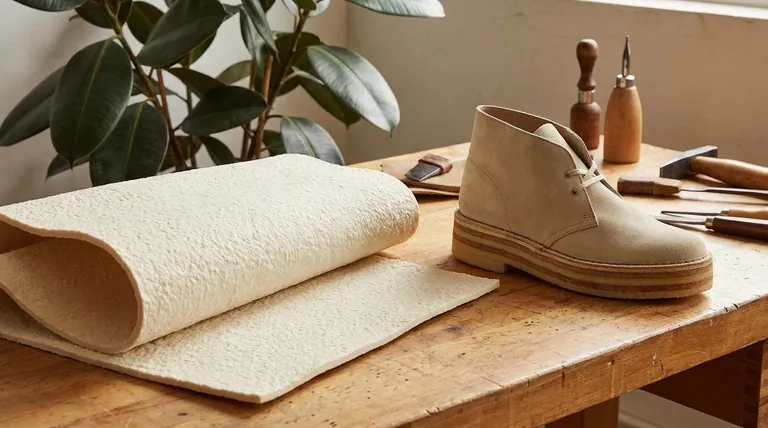
Crepe rubber is a natural material derived directly from the latex of the rubber tree. Understanding its origin and processing is key to appreciating its unique qualities.
How It's Made
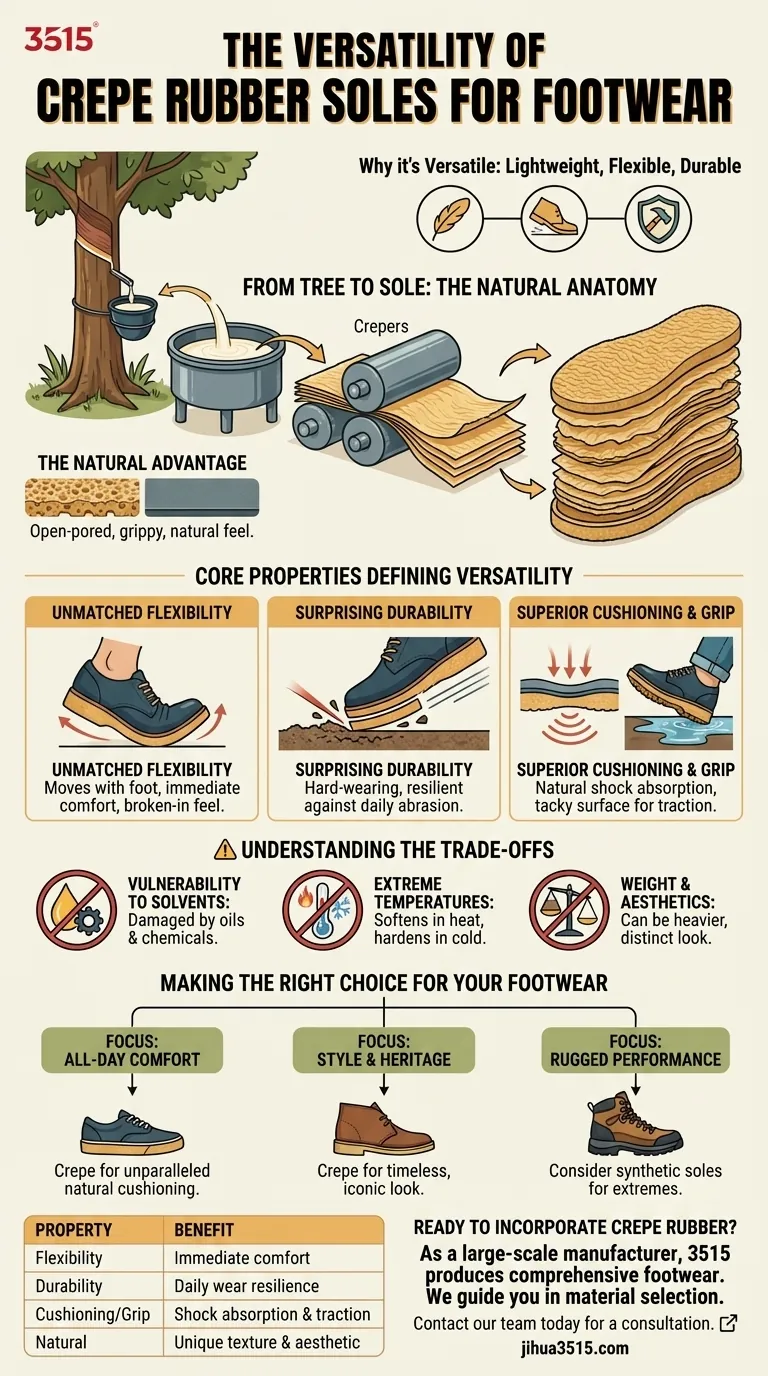
The process begins by tapping a rubber tree for its raw liquid latex. This latex is then coagulated into a soft, semi-solid mass.
This mass is then passed through heavy rollers, known as "crepers," which press out water and form thin, crinkled sheets. These sheets are then dried and stacked to create the final sole.
The Natural Advantage
Unlike synthetic rubbers, which are petroleum-based, crepe rubber retains many of its natural properties. This results in a material with an open-pored, grippy texture and a distinctive, slightly tacky feel.
Core Properties Defining Its Versatility
The reputation of crepe rubber hinges on three primary characteristics that work in concert.
Unmatched Flexibility
Crepe soles are incredibly pliable, moving and flexing with the natural motion of your foot. This provides an immediate "broken-in" feeling that is rare in new footwear.
This flexibility significantly enhances comfort during long periods of walking or standing.
Surprising Durability
Despite its soft appearance, crepe rubber is a hard-wearing material. The stacked layers of latex are resilient and can withstand significant abrasion over time.
This makes it a reliable choice for daily wear, capable of handling urban environments and light outdoor use with ease.
Superior Cushioning and Grip
The natural softness of crepe acts as an excellent shock absorber, cushioning every step and reducing fatigue. Its slightly sticky, textured surface provides outstanding traction on many surfaces.
Understanding the Trade-offs
No material is perfect. Acknowledging the limitations of crepe rubber is crucial for making an informed decision.
Vulnerability to Solvents
Crepe rubber is highly susceptible to damage from oils, greases, and solvents. These substances can cause the rubber to break down, becoming sticky and losing its structural integrity.
This makes crepe-soled footwear a poor choice for environments like automotive shops or commercial kitchens.
Performance in Extreme Temperatures
In very high heat, crepe can soften and become gummy. Conversely, in extreme cold, it can harden and lose some of its signature flexibility and grip.
Weight and Aesthetics
While often described as lightweight, a thick crepe sole can add noticeable heft to a shoe compared to modern foam composites. Its distinctive, off-white or amber appearance is also a specific aesthetic that may not suit every footwear design.
Making the Right Choice for Your Footwear
Ultimately, the decision to choose a crepe sole depends entirely on your intended use and priorities.
- If your primary focus is all-day walking comfort: The natural cushioning and flexibility of crepe are nearly unparalleled for casual and business-casual footwear.
- If your primary focus is style and heritage: Crepe soles are an iconic feature on classic footwear like desert boots and chukkas, offering a timeless look.
- If your primary focus is rugged, all-weather performance: You may be better served by a harder, synthetic rubber sole designed to withstand extreme conditions and chemical exposure.
Choosing a crepe sole means prioritizing a unique blend of natural comfort, flexibility, and classic style.
Summary Table:
| Property | Benefit for Footwear |
|---|---|
| Unmatched Flexibility | Moves with the foot for immediate comfort and a broken-in feel. |
| Surprising Durability | Resilient against abrasion, suitable for daily urban and light outdoor wear. |
| Superior Cushioning & Grip | Natural shock absorption and a tacky surface provide comfort and traction. |
| Natural & Breathable | Offers a unique, grippy texture and a distinctive, classic aesthetic. |
Ready to incorporate the superior comfort of crepe rubber soles into your footwear line?
As a large-scale manufacturer, 3515 produces a comprehensive range of footwear for distributors, brand owners, and bulk clients. Our production capabilities encompass all types of shoes and boots, and we can expertly guide you in selecting the right materials for your target market.
Let's discuss how crepe rubber soles can add value to your next collection. Contact our team today for a consultation.
Visual Guide
Related Products
- Durable Rubber Sole Outdoor Shoes Wholesale & Custom Manufacturing
- Durable Rubber-Soled Utility Shoes for Wholesale & Custom Brand Manufacturing
- Wholesale Durable Camo Canvas Shoes with High-Traction Rubber Soles
- Wholesale Durable Camouflage Canvas Shoes with High-Traction Cleated Rubber Sole
- Durable High-Traction Canvas Sneakers Wholesale & Custom Manufacturing
People Also Ask
- What is the function of the sole in outdoor shoes? Find the Perfect Grip and Support
- What role do outdoor shoes and sneakers play in navigating external terrains? Engineered Stability for Every Surface
- How is AI utilized in the design of outdoor and safety footwear? Harnessing Big Data for Market-Driven Shoe Innovation
- Why is durability important when selecting outdoor shoes? A Guide to Safety & Long-Term Value
- What are the key components of outdoor shoes that affect comfort and sturdiness? A Guide to Durable, High-Performance Footwear