
To put it simply, traditional wellies are problematic for children with low muscle tone because they offer virtually no structural support. Their loose, flexible design fails to secure the foot or stabilize the ankle, forcing a child's already taxed muscles to do all the work of maintaining balance and alignment.
The core issue is that wellies provide a loose, unstable base for a child who critically needs a firm, supportive one. This forces their muscles to overcompensate, leading to fatigue, an increased risk of falls, and difficulty participating in physical activities.
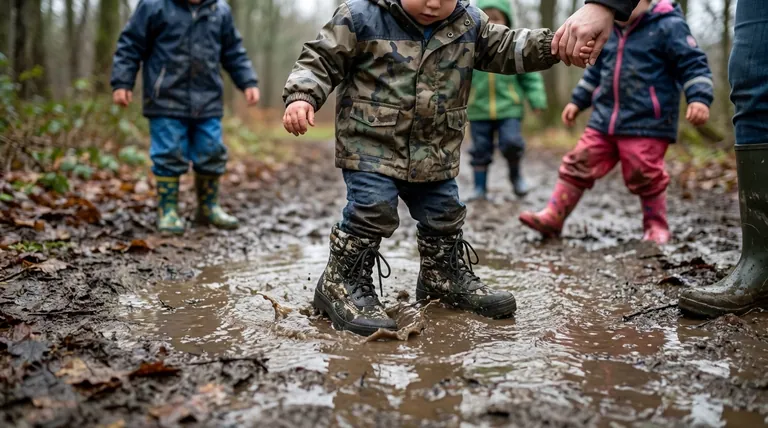
The Core Problem: A Lack of Foundational Support
For a child with low muscle tone (hypotonia) or other mobility challenges, a shoe should function as an external support system. Wellies do the opposite; they create an unstable environment that the child must constantly fight against.
They Don't Secure the Foot
The wide, unstructured shape of a welly allows the foot to slide around inside the boot. This lack of a secure fit means the foot cannot get a stable grip, which is the first step in creating a balanced posture.
No Ankle or Arch Support
Wellies are typically made from a single piece of flexible rubber or plastic with a flat insole. They lack a firm heel counter to cup the back of the foot and provide no support for the arch, which is essential for proper foot alignment and shock absorption.
An Unnatural Walking Pattern (Gait)
Because wellies are heavy, clunky, and don't bend with the foot, children are often forced to walk with a "clomping" or leg-swinging gait. This is an inefficient and tiring way to walk that can exacerbate existing gait issues and lead to faster muscle fatigue.
The Functional Consequences for a Child
This lack of support isn't just a technical issue; it has real-world consequences for a child's safety, endurance, and ability to play.
Increased Risk of Falls
The combination of a loose fit and no ankle support makes a child highly unstable. This dramatically increases the likelihood of tripping, rolling an ankle, and falling, especially on uneven or slippery surfaces where wellies are most often worn.
Muscle Fatigue and Pain
A child with low muscle tone already works harder to maintain posture and move. Forcing them to also stabilize their own foot and ankle inside a heavy, unsupportive boot is exhausting and can lead to leg pain and a reluctance to participate in activities.
Difficulty Keeping Up with Peers
Running, jumping, and climbing are challenging when your footing is unstable. Children in wellies may struggle to keep up with their peers, not because of a lack of desire, but because their footwear is actively hindering their movement and draining their energy.
Understanding the Trade-offs
It's important to acknowledge why wellies are so popular, as this context helps in making a better choice.
The Appeal of Wellies
Wellies are waterproof, durable, and incredibly easy for a child to pull on and off by themselves. They are synonymous with puddle-jumping and outdoor fun, which makes them an appealing and convenient option for many parents.
The Hidden Cost of Convenience
For a child with mobility challenges, this convenience comes at a high cost. The very features that make wellies easy to put on—their wide opening and lack of fastenings—are what create the unstable and unsupportive environment that can be detrimental to their safety and development.
How to Choose Better Footwear
Choosing the right footwear means prioritizing stability and support over convenience, especially for wet conditions.
- If your primary focus is daily support and stability: Opt for shoes with a firm heel, good ankle support (like a high-top sneaker), and secure fastenings such as laces or velcro straps.
- If your primary focus is waterproof play: Look for waterproof walking or hiking boots specifically designed for children, as these offer far greater structure and support than a traditional welly.
- If wellies are absolutely unavoidable for a short time: Ensure they fit as snugly as possible, use thick, well-fitting socks to minimize internal foot movement, and limit their wear to very short durations.
Choosing the right footwear provides the stable foundation your child needs to explore their world safely and confidently.
Summary Table:
| Problem with Wellies | Consequence for Child |
|---|---|
| Loose, Unstructured Fit | Foot slides, causing instability and poor balance |
| No Ankle or Arch Support | Increased risk of falls and ankle rolling |
| Heavy, Clunky Design | Forces an inefficient, tiring walking pattern (gait) |
| Forces Muscles to Overcompensate | Rapid muscle fatigue, pain, and reluctance to play |
Ensure Your Child's Safety and Comfort with Proper Footwear
As a large-scale manufacturer, 3515 produces a comprehensive range of supportive and waterproof footwear for children who need stability. Our production capabilities encompass all types of shoes and boots designed with firm heel counters, secure fastenings, and structured support to provide a safe foundation for play.
Let us help you find the perfect solution. We work with distributors, brand owners, and bulk clients to deliver footwear that promotes confidence and mobility.
Contact our experts today to discuss supportive footwear options for your needs.
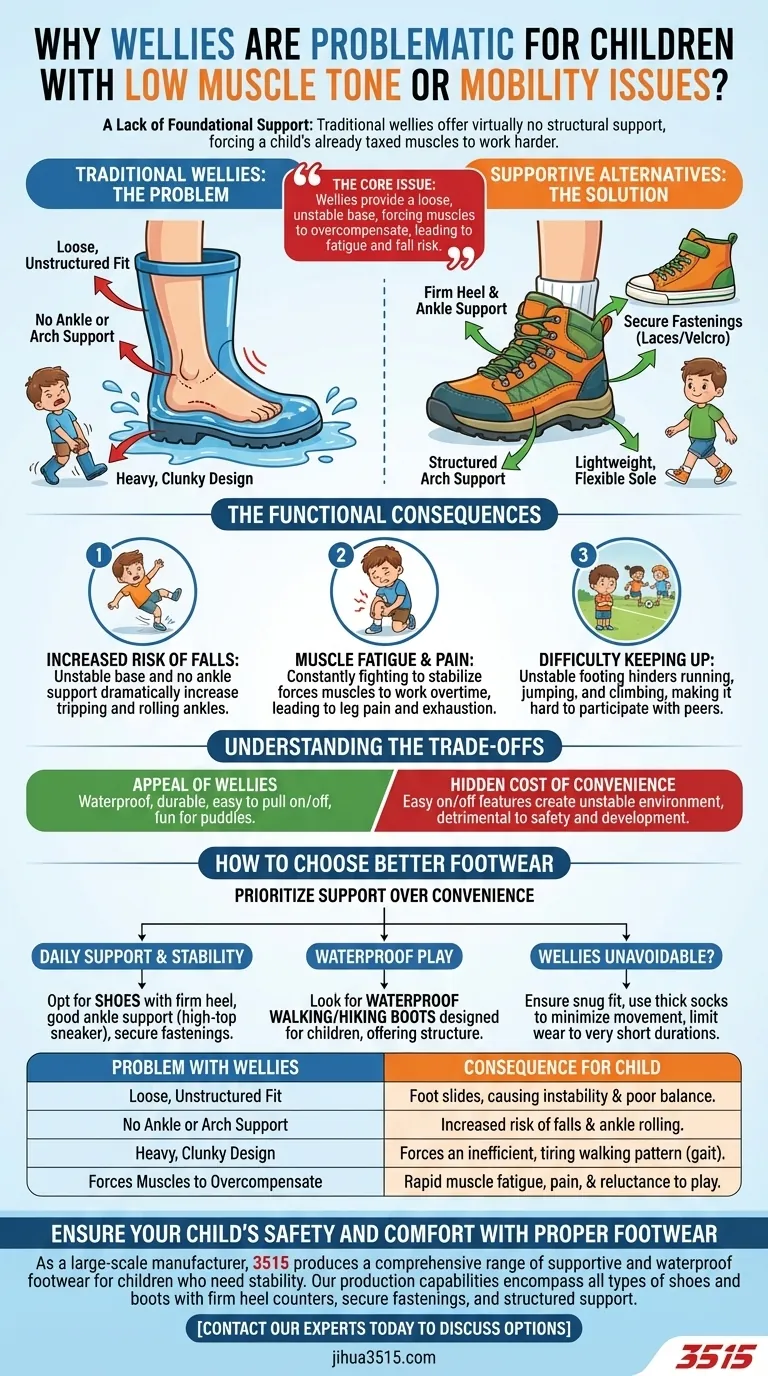
Visual Guide
Related Products
- Durable Waterproof Rain Boots | Custom Manufacturer for Wholesale & Brands
- Lightweight Breathable Sneakers with Wet-Traction Grip for Wholesale & Private Label
- Wholesale Waterproof Tactical Boots Custom Suede & High-Traction Soles
- Heavy-Duty Waterproof Nubuck Safety Boots Safety Shoes for Bulk Supply
- Premium Wholesale Waterproof Safety Boots High Performance Protection for Industrial Markets
People Also Ask
- What are the main materials for waterproof rain boots? Choose the Right Material for Durability & Comfort
- What is the overall recommendation for choosing rain boot materials? A Guide to Rubber vs. PVC
- How does boot height affect waterproofing? Choose the Right Height for Ultimate Protection
- Why are rain boots more flexible and comfortable than snow boots? The Key Differences Explained
- What are the best types of shoes for different gardening conditions? Find Your Perfect Match.









