
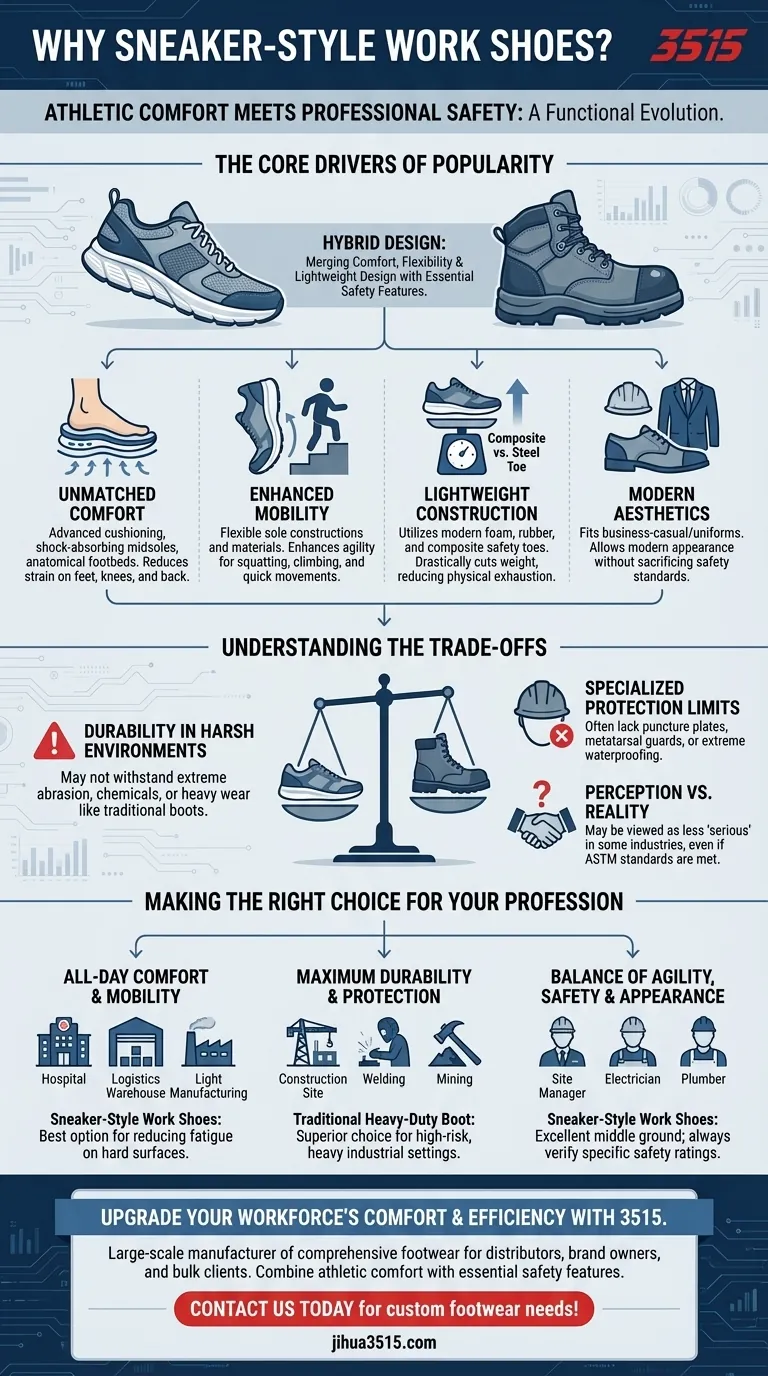
At their core, sneaker-style work shoes have become popular because they merge the athletic-level comfort, flexibility, and lightweight design of a sneaker with the essential safety features required for professional environments. This hybrid approach directly addresses the primary causes of foot fatigue and restricted movement common with traditional work boots.
The rise of sneaker-style work shoes isn't a fashion trend; it's a functional evolution. It acknowledges that for many modern professionals, all-day mobility and relief from fatigue are just as critical to performance as traditional protection.
The Core Drivers of Popularity: A Functional Breakdown
The appeal of these shoes goes far beyond simple aesthetics. It's rooted in tangible benefits that directly impact a worker's energy, comfort, and efficiency throughout the day.
Unmatched All-Day Comfort
Traditional work boots often prioritize ruggedness over ergonomics, leading to fatigue. Sneaker-style shoes incorporate advanced cushioning systems, shock-absorbing midsoles, and anatomically shaped footbeds common in running shoes.
This design significantly reduces the strain on feet, knees, and back during long shifts spent standing or walking on hard surfaces like concrete.
Enhanced Mobility and Flexibility
Heavy, rigid boots can feel restrictive, making tasks that require agility—like squatting, climbing, or quick pivots—cumbersome.
Sneaker-style work shoes use flexible sole constructions and upper materials that move naturally with the foot. This enhances a worker's dexterity and reduces the energy needed to simply walk.
Lightweight Construction
The materials are a key differentiator. By using composite materials for safety toes instead of steel, and employing modern foam and rubber compounds for the soles, these shoes drastically cut down on weight.
Reducing the weight carried on your feet over thousands of steps each day directly translates to less physical exhaustion by the end of a shift.
Modern, Versatile Aesthetics
Workplace dress codes have become more relaxed. Sneaker-style work shoes fit seamlessly into a business-casual or uniform environment.
This versatility means they don't look out of place, allowing professionals to maintain a modern appearance without sacrificing mandated safety features.
Understanding the Trade-offs
While their benefits are clear, sneaker-style work shoes are not a universal solution. Understanding their limitations is critical for making an informed choice.
Durability in Harsh Environments
The lightweight fabrics and bonded construction that make these shoes comfortable may not withstand the extreme abrasion, chemical exposure, or intense wear-and-tear of heavy industrial or outdoor construction sites as well as a thick, Goodyear-welted leather boot.
Specialized Protection Limits
Most sneaker-style work shoes are designed for common hazards like impact (safety toe) and slips. However, they often lack the specialized features of heavy-duty boots, such as puncture-resistant plates, metatarsal guards, or extreme waterproofing needed for specific high-risk jobs.
Perception vs. Reality
In some highly traditional industries, a sneaker-style shoe might be perceived as less professional or "serious," even if it meets or exceeds the required ASTM safety standards. Always confirm that your choice aligns with your company's specific footwear policy.
Making the Right Choice for Your Profession
The ideal work shoe is one that matches its features to the specific demands of your job.
- If your primary focus is all-day comfort and mobility on hard surfaces (e.g., healthcare, logistics, light manufacturing): Sneaker-style work shoes are almost certainly your best option for reducing fatigue.
- If your primary focus is maximum durability and protection in heavy industrial settings (e.g., construction, welding, mining): A traditional, heavy-duty work boot remains the superior and safer choice.
- If you need a balance of agility, safety, and a client-facing appearance (e.g., site management, skilled trades like electricians or plumbers): Sneaker-style work shoes provide an excellent middle ground, but always verify they have the specific safety ratings your job requires.
Ultimately, choosing the right footwear is about aligning its functional design with the physical realities of your workday.
Summary Table:
| Key Feature | Benefit | Ideal For |
|---|---|---|
| All-Day Comfort | Reduces foot, knee, and back strain | Long shifts on hard surfaces |
| Enhanced Mobility | Improves agility for squatting, climbing | Light manufacturing, skilled trades |
| Lightweight Design | Less physical exhaustion over thousands of steps | Logistics, healthcare professionals |
| Modern Aesthetics | Fits business-casual or uniform environments | Client-facing roles, site management |
Upgrade Your Workforce's Comfort and Efficiency with 3515
As a large-scale manufacturer, 3515 produces a comprehensive range of footwear for distributors, brand owners, and bulk clients. Our sneaker-style work shoes combine athletic comfort with essential safety features, reducing fatigue and enhancing productivity for professionals in logistics, healthcare, and skilled trades.
Let us help you equip your team with the perfect balance of mobility, protection, and modern style. Contact us today to discuss your custom footwear needs!
Visual Guide
Related Products
- Durable Canvas Work Shoes with Rubber Lug Sole | Wholesale Manufacturer
- Wholesale Durable & Breathable Training Shoes for Custom Brands
- Durable High-Traction Canvas Sneakers Wholesale & Custom Manufacturing
- Wholesale Breathable Athletic Sneakers - Custom Lightweight Cushioned Footwear Manufacturer
- Wholesale Lightweight Cushioned Athletic Sneakers for Custom Bulk Production
People Also Ask
- What are the properties of canvas as a shoe material? A Guide to Lightweight Comfort & Style
- Why is the selection of high-strength fabric materials necessary in the production of canvas shoes and training shoes?
- What types of jobs are canvas work boots suitable for? Ideal for Light-Duty, High-Mobility Roles
- Can canvas shoes be worn in rainy conditions? The Truth About Water Resistance
- What are the functional advantages of choosing rubber soles over leather soles for work boots? Superior Safety & Durability



















