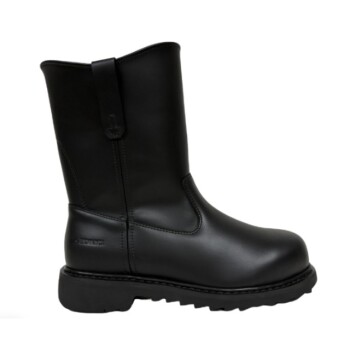
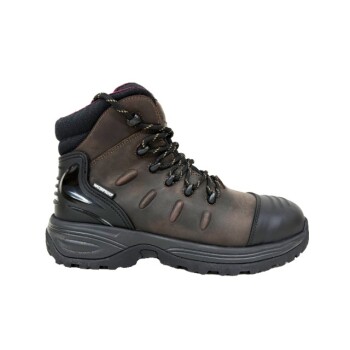
Rubber soles are the primary safety interface between a rider and their machine, providing the high-friction grip necessary to maintain control of footpegs and stability on unpredictable road surfaces. Beyond simple traction, these soles are engineered to resist oil and chemical degradation, ensuring that the boot’s structural integrity and slip-resistance remain constant even in harsh environments.
For professional distributors and brand owners, rubber soles represent more than just grip; they are a critical safety component that determines a boot's compliance with international standards and its long-term reliability in high-volume commercial markets.
Engineering Superior Traction for Rider Control
The Mechanics of Footpeg Stability
Rubber soles provide essential friction on metal footpegs, which is the primary point of contact for maneuvering a motorcycle. This specialized grip allows the rider to execute precise gear shifts and braking maneuvers without the risk of their foot slipping, even in high-vibration environments.
Stability During Stationary Maneuvers
When a rider stops, the sole must provide immediate, reliable traction on diverse surfaces ranging from wet asphalt to gravel. High-quality rubber compounds offer the necessary stability to support the full weight of the motorcycle while stationary, significantly reducing the risk of tip-over accidents.
Shock Absorption and Rider Fatigue
Beyond grip, specialized rubber formulations provide a degree of shock absorption that mitigates engine vibrations and road impact. By reducing the physical strain on the rider’s feet and ankles, the boot helps maintain rider focus and reaction times during long-distance operation.
Chemical Resilience and Material Longevity
The Importance of Oil Resistance
Road surfaces are frequently contaminated with oil, coolant, and fuel, which can cause standard footwear materials to soften or dissolve. Professional-grade motorcycle soles are engineered to be oil-resistant, ensuring they do not lose their tread pattern or structural density when exposed to petroleum products.
Preventing Premature Material Degradation
Oil resistance is not just about grip; it is about the lifespan of the product. Soles that lack this chemical resilience will degrade rapidly, leading to sole separation or "balding," which compromises the safety of the rider and the reputation of the brand.
Performance in Extreme Environments
Utilizing advanced synthetic and natural rubber blends ensures that the sole remains flexible in cold weather while maintaining its shape in high-heat conditions. This thermal stability is a hallmark of premium manufacturing, ensuring the boot performs consistently across different geographic markets.
Manufacturing Excellence and Large-Scale Consistency
Heritage-Driven Rubber Compounding
With a manufacturing heritage dating back to 1951, leading producers utilize decades of data to refine rubber densities for specific riding styles. This deep expertise allows for the creation of compounds that balance the conflicting needs of flexibility for walking and rigidity for riding protection.
State-of-the-Art OEM/ODM Integration
Modern production facilities utilize high-precision equipment to ensure that every sole in a large-volume order meets exact specifications. For B2B partners, this consistency is vital for maintaining brand trust and ensuring that every unit delivered meets rigorous international safety certifications.
Robust Supply Chain and Volume Delivery
A stable supply chain is critical for distributors who require consistent large-volume delivery without fluctuations in material quality. Premium manufacturers provide the scale necessary to support global product launches while ensuring that the rubber quality remains uniform across thousands of units.
Understanding the Trade-offs
Grip vs. Wear Resistance
Softer rubber compounds provide exceptional "tacky" grip but tend to wear down faster when used for walking. Conversely, harder compounds offer extreme durability but may offer less tactile feedback on the footpegs; the ideal professional boot finds a calculated middle ground.
Weight Considerations in Large-Scale Production
High-density rubber provides the best protection and oil resistance but adds weight to the overall boot construction. Manufacturers must use advanced molding techniques to remove unnecessary bulk while maintaining the protective thickness required for safety certification.
How to Apply This to Your Product Selection
If you are a brand owner or distributor evaluating motorcycle footwear for your inventory, prioritize the following criteria:
- If your primary focus is high-performance racing: Prioritize dual-compound rubber soles that offer maximum "feel" on the pegs and high heat resistance for track environments.
- If your primary focus is long-range touring and utility: Select soles with deep lug patterns and high oil resistance to ensure stability in varied weather and terrain.
- If your primary focus is enterprise-level scalability: Partner with manufacturers who offer documented international certifications and a proven track record of consistent high-volume delivery since the mid-20th century.
Selecting a motorcycle boot with a high-performance rubber sole is an investment in rider safety and long-term product viability in the professional market.
Summary Table:
| Key Feature | Safety & Performance Benefit | B2B / Distributor Value |
|---|---|---|
| High Friction Grip | Ensures stability on footpegs and wet asphalt. | Reduces liability and enhances product reputation. |
| Oil & Chemical Resistance | Prevents sole degradation and slip hazards. | Increases product lifespan and reduces return rates. |
| Shock Absorption | Mitigates engine vibration and rider fatigue. | Positions product in the premium/professional tier. |
| Thermal Stability | Maintains flexibility in cold and shape in heat. | Ensures consistent performance across global markets. |
| OEM/ODM Precision | Guaranteed consistency across large batches. | Ensures brand trust through uniform quality control. |
Secure Your Supply Chain with 3515’s Manufacturing Excellence
As a large-scale manufacturer serving distributors and brand owners since 1951, 3515 offers comprehensive production capabilities for all footwear types, anchored by our flagship Safety Shoes series. Our extensive portfolio covers work and tactical boots, outdoor shoes, training shoes, and sneakers, as well as Dress & Formal shoes to meet diverse bulk requirements.
By partnering with us, you leverage state-of-the-art equipment and a robust supply chain that ensures consistent large-volume delivery and premium OEM/ODM capabilities. Whether you need international safety certifications or high-margin product lines, we provide the stability and expertise required to scale your business.
Contact us today to request a quote and explore our manufacturing capabilities!
Related Products
- Durable Rubber Sole Outdoor Shoes Wholesale & Custom Manufacturing
- Durable Rubber-Soled Utility Shoes for Wholesale & Custom Brand Manufacturing
- Heavy-Duty Goodyear Welted Pull-On Safety Rigger Boot
- Wholesale Durable Camo Canvas Shoes with High-Traction Rubber Soles
- Durable Canvas Work Shoes with Rubber Lug Sole | Wholesale Manufacturer
People Also Ask
- What is the function of the sole in outdoor shoes? Find the Perfect Grip and Support
- What role do outdoor shoes and sneakers play in navigating external terrains? Engineered Stability for Every Surface
- How is AI utilized in the design of outdoor and safety footwear? Harnessing Big Data for Market-Driven Shoe Innovation
- Why is durability important when selecting outdoor shoes? A Guide to Safety & Long-Term Value
- What are the key components of outdoor shoes that affect comfort and sturdiness? A Guide to Durable, High-Performance Footwear