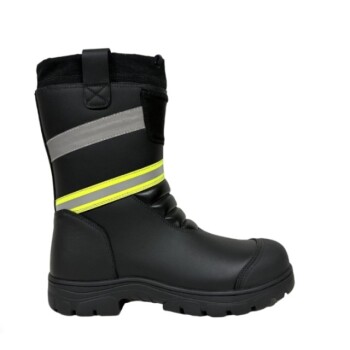
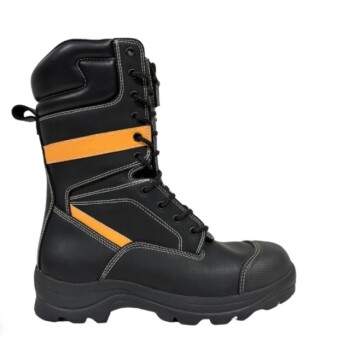
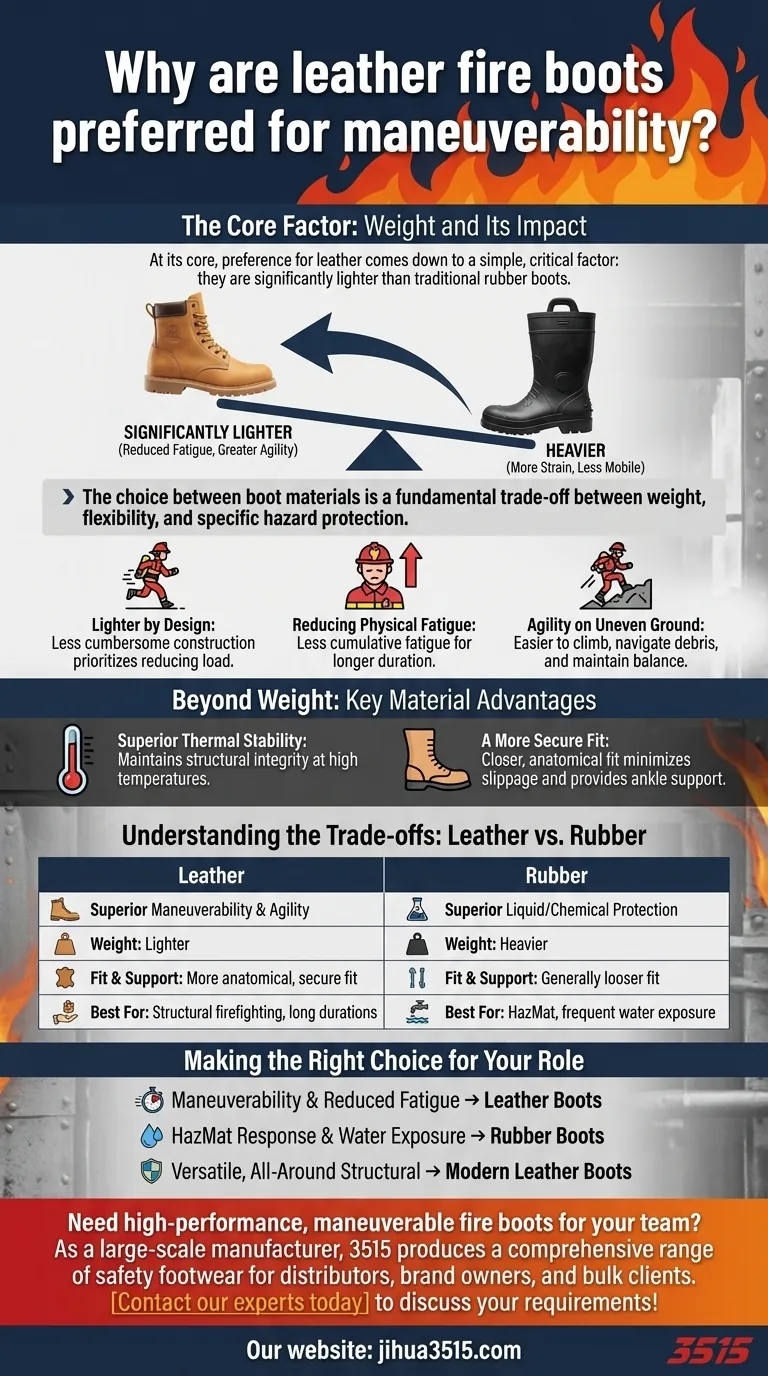
At its core, the preference for leather fire boots for maneuverability comes down to a simple, critical factor: they are significantly lighter than traditional rubber boots. This weight reduction directly translates to less fatigue and greater agility for the firefighter, especially when navigating difficult terrain or operating for extended periods.
The choice between boot materials is a fundamental trade-off between weight, flexibility, and specific hazard protection. While rubber boots offer superior defense against liquids and chemicals, leather's lighter construction provides a distinct advantage in mobility and reduces physical strain on the firefighter.
The Core Factor: Weight and Its Impact
The primary driver for leather's superior maneuverability is its lower weight compared to the dense, vulcanized rubber used in traditional fire boots. This seemingly small difference has a cascading effect on a firefighter's performance and safety.
Lighter by Design
High-quality leather, combined with modern materials, allows for a boot construction that is inherently less cumbersome. This design philosophy prioritizes reducing the load on the firefighter's feet and legs.
Reducing Physical Fatigue
Every ounce of weight carried on the feet requires significant energy to move. Over the course of a long incident, the reduced weight of leather boots means less cumulative fatigue, allowing a firefighter to remain effective and agile for a longer duration.
Agility on Uneven Ground
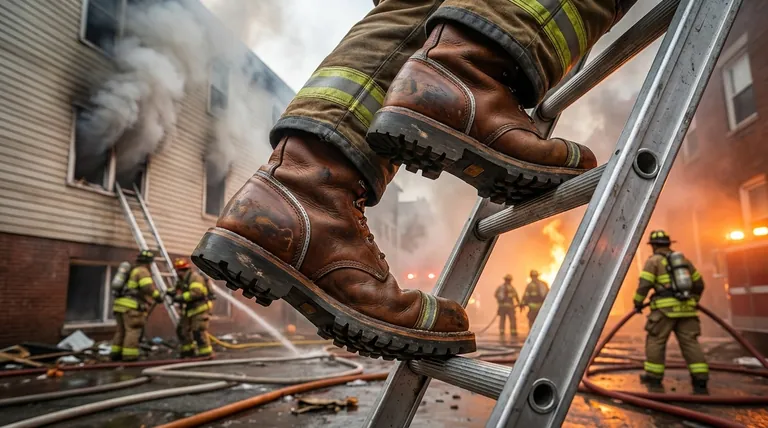
Enhanced maneuverability is most evident on unstable surfaces. A lighter boot makes it easier to climb ladders, navigate debris-filled structures, and maintain balance, directly contributing to firefighter safety and operational speed.
Beyond Weight: Key Material Advantages
While weight is the main reason, other properties of leather contribute to its suitability for demanding fireground operations, which indirectly supports better movement and safety.
Superior Thermal Stability
One of leather's most critical advantages is its stability at high temperatures. Unlike many synthetic materials that can melt or soften when exposed to extreme heat, quality leather maintains its structural integrity, ensuring the boot remains protective.
A More Secure Fit
Leather boots often provide a closer, more anatomical fit than their rubber counterparts. This secure fit minimizes internal foot slippage and provides better ankle support, which is crucial for confident and precise movement on hazardous terrain.
Understanding the Trade-offs: Leather vs. Rubber
Choosing the right boot is not about which material is universally "better," but which is the right tool for the specific job. Both leather and rubber have distinct strengths and weaknesses.
Where Rubber Excels
Rubber boots are non-porous, making them the superior choice for operations involving significant amounts of water, foam, or hazardous materials. They are easier and faster to decontaminate, a critical factor in HazMat incidents.
Maintenance Considerations
Leather requires regular cleaning and conditioning to maintain its water resistance and prevent the material from drying out and cracking. Rubber boots, by contrast, require minimal maintenance beyond simple washing.
The Modern Hybrid Approach
Many modern leather fire boots incorporate waterproof, breathable liners. This creates a hybrid boot that aims to offer the lightweight mobility of leather with the water resistance more traditionally associated with rubber.
Making the Right Choice for Your Role
Your operational needs should be the deciding factor when selecting footwear. Consider the most common hazards and tasks you face to determine the best fit for your situation.
- If your primary focus is maneuverability and reduced fatigue: Leather boots are the clear choice due to their significantly lower weight and more athletic fit.
- If your primary focus is HazMat response or frequent water exposure: The inherent impermeability and easy decontamination of rubber boots make them the safer and more practical option.
- If you need a versatile, all-around structural firefighting boot: Modern leather boots offer an exceptional balance of thermal protection, agility, and support for the vast majority of fireground scenarios.
Ultimately, selecting the right boot is a critical decision that directly impacts your endurance, safety, and ability to perform under pressure.
Summary Table:
| Feature | Leather Fire Boots | Rubber Fire Boots |
|---|---|---|
| Primary Advantage | Superior Maneuverability & Agility | Superior Liquid/Chemical Protection |
| Weight | Lighter | Heavier |
| Fit & Support | More anatomical, secure fit | Generally looser fit |
| Best For | Structural firefighting, long durations | HazMat, frequent water exposure |
Need high-performance, maneuverable fire boots for your team?
As a large-scale manufacturer, 3515 produces a comprehensive range of safety footwear for distributors, brand owners, and bulk clients. Our production capabilities encompass all types of professional shoes and boots, including advanced leather fire boots designed for agility and endurance.
We can provide the right protective footwear solution to enhance your team's safety and performance. Contact our experts today to discuss your requirements!
Visual Guide
Related Products
- Durable Leather Tactical Boots Wholesale & Custom Manufacturing for Brands
- Durable Leather Work Boots for Wholesale & Custom Manufacturing
- Durable Leather High-Ankle Tactical Boots for Wholesale & Custom Manufacturing
- Premium Grain Leather Safety Boots for Bulk Supply
- Durable Leather Work Boots Wholesale Manufacturer & Custom Factory
People Also Ask
- What specialized protections do tactical boots offer? Maximize Endurance with High-Performance Footwear
- What features should law enforcement officers look for in tactical boots? Essential Guide for Safety & Performance
- Importance of Professional Tactical Boots in Loess Gully Regions: Ensure Safety and Precision for Field Monitoring
- What is rucking, and why are tactical boots suitable for it? Discover the Ultimate Footwear for Heavy Loads
- What makes the traction of tactical boots superior? Unlock the Science of Unbeatable Grip