
A prescription orthotic is necessary when over-the-counter (OTC) inserts fail to resolve your pain or when you have a specific, diagnosed medical condition affecting your foot's structure and function. They are medical devices designed to correct abnormal motion, treat issues like severe plantar fasciitis, and manage high-risk conditions such as diabetic foot ulcers by precisely redistributing pressure.
The crucial distinction is one of purpose: over-the-counter inserts provide general cushioning and support, while prescription orthotics are custom-engineered medical devices designed to correct an individual's specific biomechanical faults.
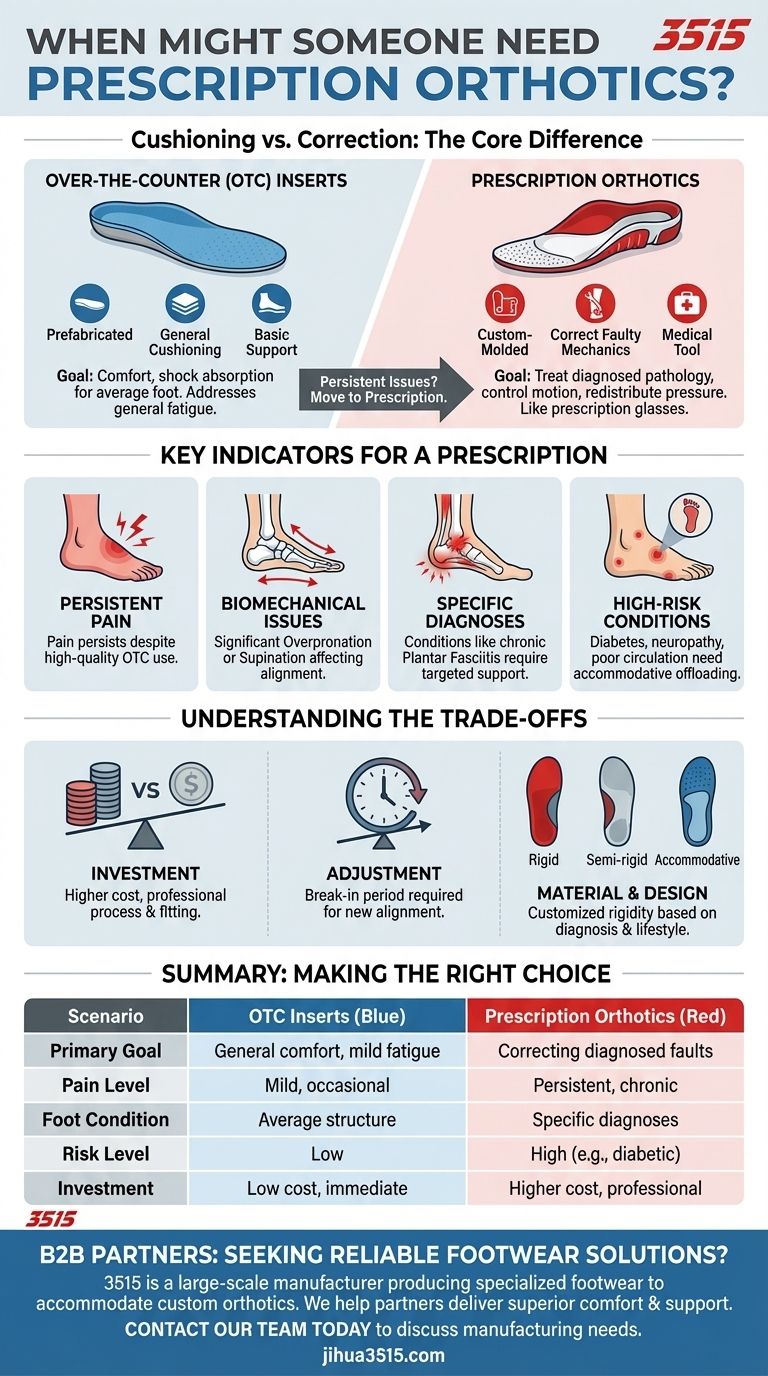
The Core Difference: Cushioning vs. Correction
Understanding when to seek a prescription begins with recognizing the fundamental difference in what these devices are built to do. They are not interchangeable solutions.
The Role of Over-the-Counter Inserts
Over-the-counter inserts are prefabricated and designed for the average foot. Their primary goal is to provide additional cushioning, shock absorption, and basic arch support.
They can be effective for addressing general foot fatigue, mild discomfort, or for adding comfort to shoes that lack support. Think of them as a generic, first-line approach to comfort.
The Function of Prescription Orthotics
Prescription orthotics are crafted from a precise mold or 3D scan of your individual feet. A podiatrist prescribes them to treat a diagnosed pathology.
Their function is to correct faulty foot mechanics. By controlling motion and redistributing pressure with precision, they can resolve pain not just in the feet, but also in the ankles, knees, hips, and lower back. They are a corrective medical tool, much like prescription glasses for your eyes.
Key Indicators for a Prescription
If you are trying to decide on your next step, certain clear signals indicate that a prescription orthotic is likely the appropriate solution.
Persistent Pain Despite OTC Support
The most common trigger is trying high-quality OTC inserts without success. If your heel pain, arch pain, or general discomfort persists after several weeks of using generic supports, it signals a deeper issue that cushioning alone cannot fix.
Diagnosed Biomechanical Issues
Conditions like significant overpronation (flat feet) or supination (high arches) cause an improper alignment that affects your entire body. Prescription orthotics can control this "abnormal motion" and realign the foot to a more neutral, efficient position.
Specific Medical Diagnoses
Certain conditions respond best to the targeted support of a custom device. Plantar fasciitis, especially chronic cases, often requires a custom orthotic to properly support the arch and reduce strain on the inflamed ligament.
High-Risk Foot Conditions
For individuals with diabetes, neuropathy, or poor circulation, the foot is highly vulnerable. A generic insert can create pressure points, but a custom accommodative orthotic is designed to offload pressure from sensitive areas, helping to prevent ulcers and calluses that can lead to severe complications.
Understanding the Trade-offs
While highly effective, prescription orthotics involve a different level of commitment than simply buying an insert off the shelf.
The Investment: Cost and Process
Prescription orthotics are a significant financial investment, often costing several hundred dollars and not always fully covered by insurance. The process also requires a visit to a podiatrist for evaluation and casting, followed by a waiting period for fabrication.
The Adjustment Period
Because they are forcing your foot and body into a new, correct alignment, custom orthotics often require a break-in period. They may feel strange or even slightly uncomfortable at first as your muscles adapt.
Material and Design
Orthotics are not one-size-fits-all in their construction. They can be rigid (for motion control), semi-rigid (a blend of control and cushioning), or accommodative (soft and supportive). The right choice depends entirely on your diagnosis and lifestyle, which a professional must determine.
Making the Right Choice for Your Goal
Your decision should be guided by the nature and severity of your specific problem.
- If your primary focus is general comfort or mild foot fatigue: Start with a high-quality, over-the-counter insert, as this is a cost-effective and often sufficient first step.
- If your primary focus is treating chronic pain (heel, arch, knee) that has not resolved with other measures: A consultation with a podiatrist for a potential prescription orthotic is the logical next step to address the underlying cause.
- If your primary focus is managing a diagnosed medical condition like diabetes, severe arthritis, or a significant structural issue: A prescription orthotic is a necessary medical tool to ensure proper treatment and prevent serious complications.
Ultimately, investing in the correct support for your feet is a direct investment in your body's foundational health and mobility.
Summary Table:
| Scenario | OTC Inserts | Prescription Orthotics |
|---|---|---|
| Primary Goal | General comfort, mild fatigue | Correcting diagnosed biomechanical faults |
| Pain Level | Mild, occasional discomfort | Persistent, chronic pain (heel, arch, knee) |
| Foot Condition | Average foot structure | Specific diagnoses (e.g., plantar fasciitis, severe pronation) |
| Risk Level | Low risk | High-risk (e.g., diabetic foot, neuropathy) |
| Investment | Low cost, immediate purchase | Higher cost, professional fitting process required |
Are you a distributor, brand owner, or bulk client seeking reliable, high-quality footwear solutions?
As a large-scale manufacturer, 3515 produces a comprehensive range of footwear, including specialized models designed to accommodate custom orthotics. We help our partners deliver superior comfort and support to their customers.
Contact our team today to discuss your manufacturing needs and how we can support your business goals.
Visual Guide
Related Products
- Wholesale Durable Safety Boots Manufacturer Customizable Steel Toe Work Boots
- Lightweight Breathable Sneakers with Wet-Traction Grip for Wholesale & Private Label
- Durable High-Ankle Tactical Boots Wholesale Manufacturer for Custom & Bulk Orders
- Lightweight Breathable Training Shoes for Wholesale & Custom OEM Manufacturing
- Wholesale Breathable Athletic Sneakers - Custom Lightweight Cushioned Footwear Manufacturer
People Also Ask
- What are the pros and cons of steel toe work boots? A Guide to Maximum Protection vs. Comfort
- What are the different types of steel toe work boots? Choose the Right Boot for Your Job
- What is the history of steel toe work boots? From German Invention to Modern Safety Standard
- How much weight can steel toe work boots withstand? Unpacking the 3,372 lb. Safety Standard
- What are some common myths about steel toe work boots? Debunked for Modern Workers



















