For occasional use of unsupportive footwear like wellies, the primary temporary solutions involve manually adding joint support and strictly limiting the duration of wear. These measures aim to mitigate the lack of inherent structure in the boots while still allowing for their use in appropriate situations.
The core strategy for managing unsupportive footwear is not to fix the boot, but to compensate for its weaknesses. This is achieved by providing external support to the joints and minimizing the time the body must rely on that inadequate footwear.
The Challenge with Unsupportive Footwear
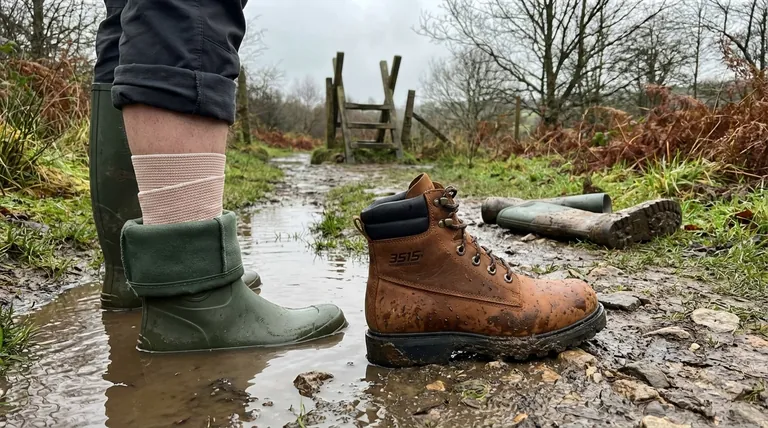
Wellies and similar boots are designed for a single purpose: keeping feet dry. Their construction often sacrifices the critical structural elements needed for proper foot and leg alignment, leading to potential issues.
Lack of Ankle and Arch Support
Most wellies are simple rubber or plastic shells with no built-in arch support or ankle stabilization. This forces the small muscles and ligaments in the feet and ankles to work harder to maintain balance, increasing strain.
Potential for Skin Breakdown
The materials themselves can also be a problem. Hard, unforgiving plastic is more likely to rub and cause skin irritation or breakdown compared to more flexible materials like natural rubber.
Temporary Solutions and Mitigation Strategies
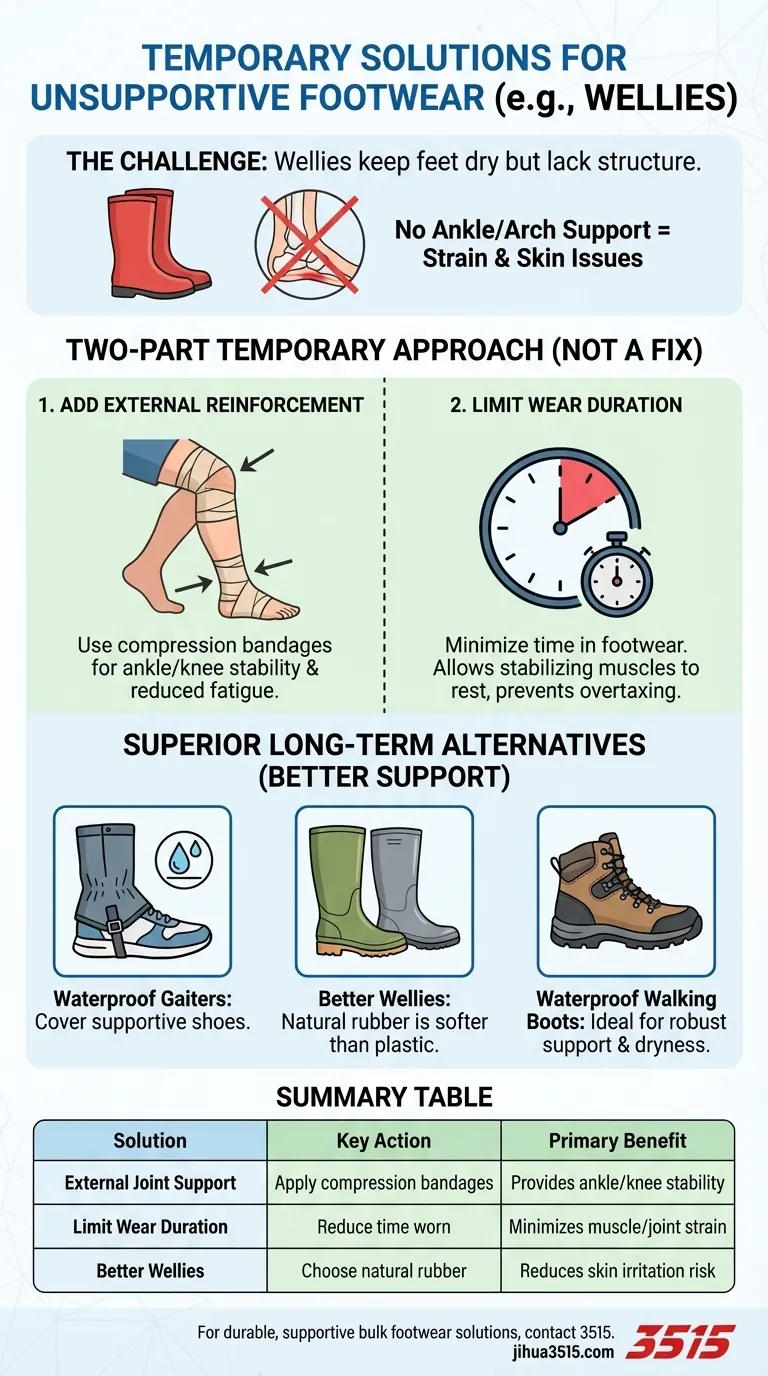
When supportive footwear isn't an option, a two-part approach can help reduce the immediate risks. These are temporary measures, not long-term solutions.
Add External Joint Reinforcement
One direct method is to physically support the joints. Using elasticated self-adhesive compression bandages around the ankles and even the knees provides a degree of external stability that the boot itself lacks. This can help prevent excessive joint movement and reduce muscle fatigue.
Limit the Duration of Wear
The second, equally critical strategy is to limit the amount of time the footwear is worn. This minimizes the period of strain on the feet and ankles. The goal is to allow the body's stabilizing muscles to strengthen over time, rather than being constantly overtaxed by poor support.
Superior Alternatives for Wet Conditions
While the above strategies can help in a pinch, a better long-term approach is to choose footwear that is both waterproof and supportive from the start.
Waterproof Gaiters
Gaiters, such as those from the brand Raindrops, are waterproof coverings that go over existing, supportive shoes. This allows a child to wear their everyday, well-fitting footwear while still getting the waterproof benefits of a wellie.
Better-Constructed Wellies
Not all wellies are created equal. Some, like the rubber wellies from Seasalt, are made from more pliable materials that are less likely to cause skin issues. While still less supportive than a boot, they can be a better option than cheap plastic versions.
Waterproof Walking Boots
For any activity involving significant walking or playing, waterproof walking boots are the ideal solution. They are specifically designed to provide robust ankle and arch support while also keeping feet dry, offering the best of both worlds.
How to Apply This to Your Situation
Choosing the right approach depends entirely on the activity and its duration.
- If your primary focus is a very short splash in a puddle: Limiting wear time and potentially using compression bandages with standard wellies is a reasonable temporary fix.
- If your primary focus is avoiding skin irritation: Seek out wellies made from natural rubber, as they are generally softer and more forgiving than plastic.
- If your primary focus is support during extended outdoor play: The best choice is to use waterproof walking boots or place waterproof gaiters over well-fitting, supportive shoes.
Ultimately, balancing protection from the elements with proper biomechanical support is key to ensuring healthy activity.
Summary Table:
| Solution | Key Action | Primary Benefit |
|---|---|---|
| External Joint Support | Apply elasticated compression bandages | Provides ankle/knee stability |
| Limit Wear Duration | Reduce time in unsupportive footwear | Minimizes muscle and joint strain |
| Better Wellies | Choose natural rubber over plastic | Reduces risk of skin irritation |
Need durable, supportive footwear that keeps feet dry? As a large-scale manufacturer, 3515 produces a comprehensive range of high-quality waterproof boots and shoes for distributors, brand owners, and bulk clients. Our footwear combines robust ankle and arch support with superior waterproofing, eliminating the need for temporary fixes. Let us provide the right solution for your needs.
Contact us today to discuss your requirements!
Visual Guide
Related Products
- Wholesale Durable Camouflage Canvas Shoes with High-Traction Cleated Rubber Sole
- Wholesale Breathable Training Shoes Custom Athletic Footwear Manufacturer
- Durable Waterproof Rain Boots | Custom Manufacturer for Wholesale & Brands
- Lightweight Breathable Training Shoes for Wholesale & Custom OEM Manufacturing
- Wholesale Durable & Breathable Training Shoes for Custom Brands
People Also Ask
- Why is the selection of high-strength fabric materials necessary in the production of canvas shoes and training shoes?
- What are the properties of canvas as a shoe material? A Guide to Lightweight Comfort & Style
- Can canvas shoes be worn in rainy conditions? The Truth About Water Resistance
- What are some examples of vulcanized shoes? Discover the Flexibility and Board Feel of Classic Sneakers
- What are the characteristics of canvas as a shoe material? A Guide to Lightweight, Breathable Footwear