
At their core, tactical shoe insoles are engineered with two primary technologies: structural arch support for stability and advanced moisture-wicking properties for climate control. These features work in tandem to reduce fatigue, prevent injury, and maintain foot health during demanding, prolonged use.
The technology inside a tactical insole is not about luxury; it's a critical performance system designed to manage the internal environment of the shoe and provide the structural foundation your foot needs to operate under stress.
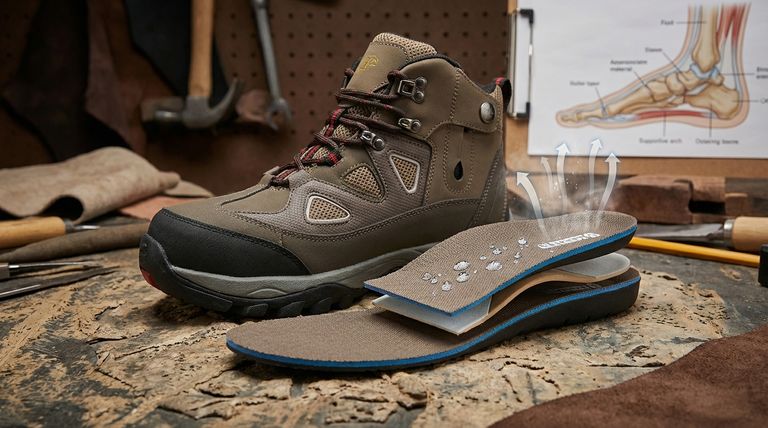
The Core Functions of a Tactical Insole
A tactical insole's primary job is to create a stable and healthy environment for the foot, directly impacting endurance and operational readiness. It achieves this through a few key technological approaches.
Structural Support and Alignment
The most critical feature is arch support. This is not merely for comfort; it ensures proper foot biomechanics under load.
By supporting the arch, the insole helps distribute weight evenly across the foot. This alignment prevents common issues like plantar fasciitis and reduces strain on the ankles, knees, and back during long periods of standing or rucking.
Climate Control and Hygiene
Tactical environments are unforgiving, and moisture is a constant enemy of foot health. Insoles utilize moisture-wicking fabrics and materials.
These technologies actively pull sweat away from the skin and move it toward the more breathable parts of the shoe's upper. This process is essential for preventing the friction that causes blisters and mitigating the risk of fungal infections.
Impact Absorption and Cushioning
While not explicitly a separate "technology," the materials used are chosen for their ability to absorb shock. This is often achieved with specialized foams or gel inserts.
Effective cushioning dissipates the energy from impacts on hard surfaces, reducing the cumulative stress on joints and muscles over a long day.
How the Insole Fits into the Larger System
The insole does not work in isolation. Its effectiveness is directly tied to the construction of the rest of the shoe, creating a complete performance ecosystem.
Partnering with the Upper
The insole's moisture-wicking ability is amplified by the shoe's upper. Breathable synthetic materials and mesh panels in the upper provide an escape route for the moisture the insole has pulled away from the foot.
Stabilizing for the Outsole
A tactical shoe's aggressive, slip-resistant rubber outsole can only provide maximum traction if the foot is stable inside the shoe.
The insole's arch support locks the foot in place, preventing it from sliding internally. This ensures that every movement translates directly into grip on the external surface.
Understanding the Trade-offs
Not all insoles are created equal, and the design often involves a balance between competing priorities.
Support vs. Flexibility
A highly rigid insole provides maximum arch support, which is ideal for carrying heavy loads or standing for long hours. However, this can feel restrictive during dynamic, athletic movements.
Conversely, a more flexible insole offers better ground-feel and agility but provides less structural support for endurance-based activities.
Stock vs. Aftermarket
Most tactical shoes come with a basic, factory-installed insole that serves as a general-purpose starting point.
However, users with specific foot shapes (like high or low arches) or mission requirements often achieve superior performance by replacing the stock insole with an aftermarket model tailored to their needs.
Making the Right Choice for Your Goal
The ideal insole technology depends entirely on your primary application.
- If your primary focus is long-distance patrols or guard duty: Prioritize an insole with significant, firm arch support and deep heel cupping to combat fatigue.
- If your primary focus is dynamic entry or close-quarters work: Seek a balanced insole that offers moderate support with enough flexibility for agile movements.
- If your primary focus is operating in hot or humid environments: Superior moisture-wicking and antimicrobial properties are non-negotiable to prevent blisters and maintain foot health.
Ultimately, the right insole transforms a tactical shoe from simple protection into a true performance-enhancing tool.
Summary Table:
| Technology | Primary Function | Key Benefit |
|---|---|---|
| Arch Support | Structural Alignment | Distributes weight, reduces strain on joints |
| Moisture-Wicking | Climate Control | Pulls sweat away, prevents blisters & infections |
| Impact Absorption | Cushioning | Dissipates shock, reduces muscle & joint stress |
Ready to equip your team with superior tactical footwear?
As a large-scale manufacturer, 3515 produces a comprehensive range of high-performance tactical boots and shoes for distributors, brand owners, and bulk clients. Our production capabilities allow us to integrate advanced insole technologies—like firm arch support and superior moisture-wicking materials—directly into our footwear, ensuring maximum durability, comfort, and performance for end-users in the most demanding conditions.
Contact us today to discuss your specific needs and discover how we can be your reliable manufacturing partner.
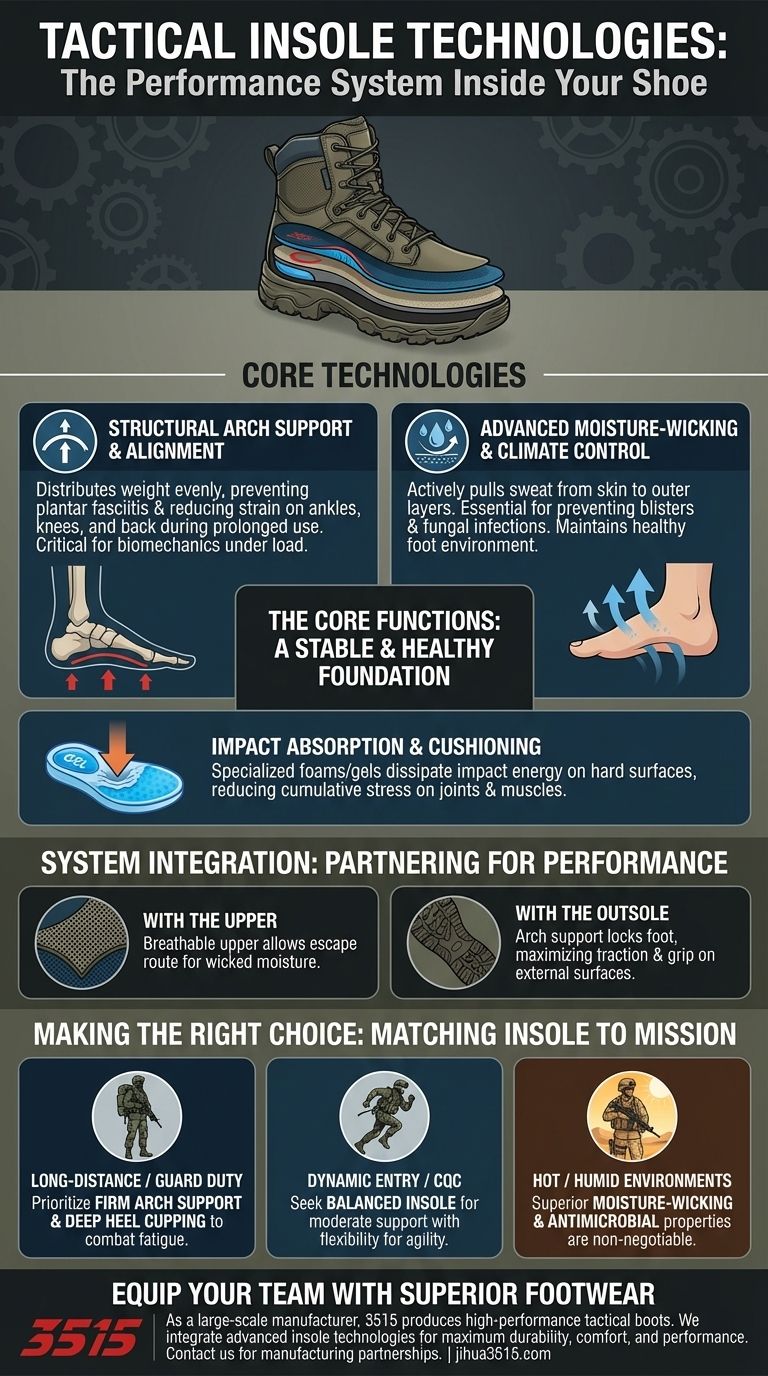
Visual Guide
Related Products
- Wholesale Waterproof Tactical Boots Custom Suede & High-Traction Soles
- Durable Leather High-Ankle Tactical Boots for Wholesale & Custom Manufacturing
- Durable Leather Tactical Boots Wholesale & Custom Manufacturing for Brands
- Durable High-Ankle Tactical Boots Wholesale Manufacturer for Custom & Bulk Orders
- Durable High-Ankle Tactical Boots for Wholesale & Custom Manufacturing
People Also Ask
- What waterproof technology is used in tactical boots? Unlock All-Weather Performance & Protection
- What are the advantages and disadvantages of waterproof tactical boots? A Guide to the Key Trade-Offs
- What is the significance of waterproof functionality in tactical boots? Essential for Health & Performance
- What is the role of professional 3D medical imaging software in optimizing tactical boot design and performance?
- What features enhance breathability and comfort in tactical boots? A Guide to Superior Footwear Performance



















