
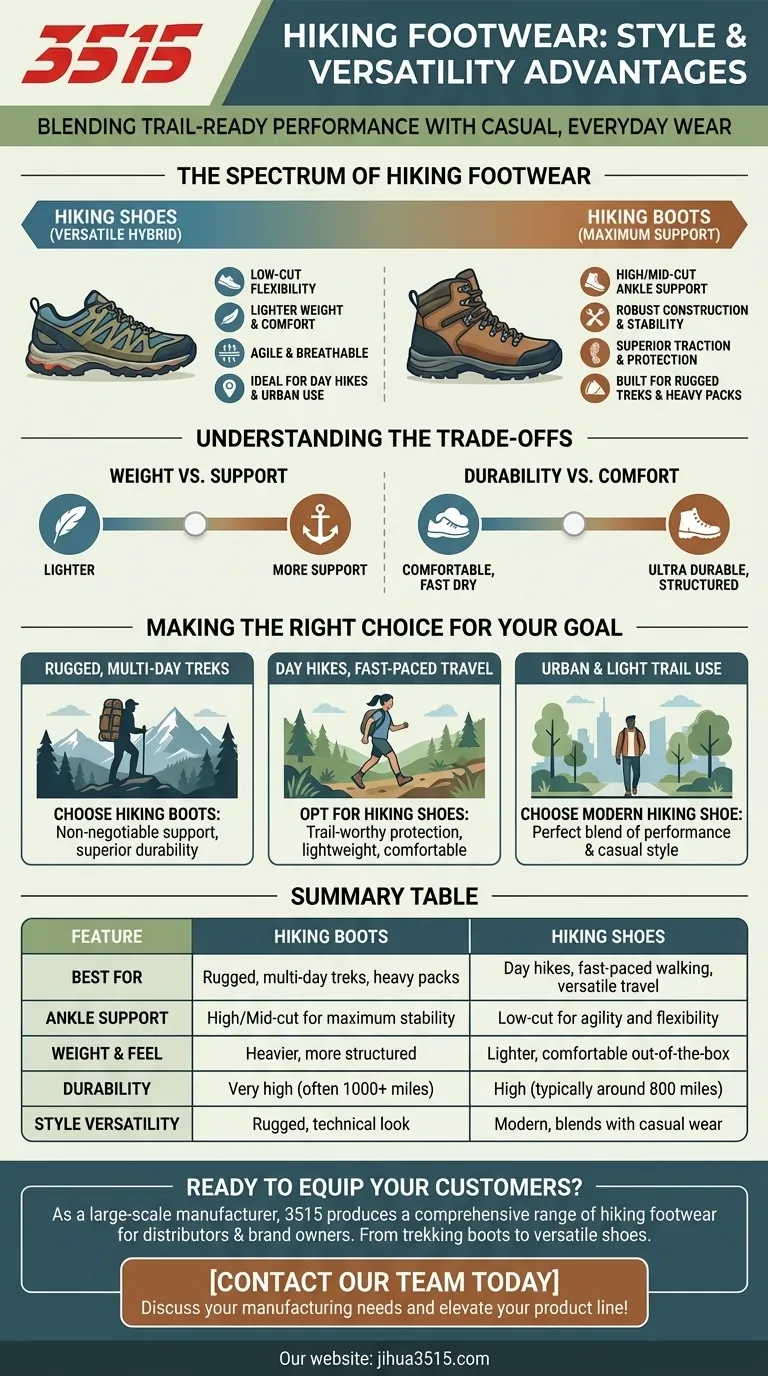
In short, hiking shoes and boots offer significant versatility by blending trail-ready performance with designs suitable for casual, everyday wear. Their advantage lies in providing a single footwear solution that transitions from outdoor adventures to urban environments without sacrificing durability or, increasingly, aesthetic appeal.
The core decision between hiking shoes and boots is a strategic trade-off. It's not about which is "better," but which provides the right balance of support, weight, and versatility for your specific blend of activities, from rugged trails to city streets.
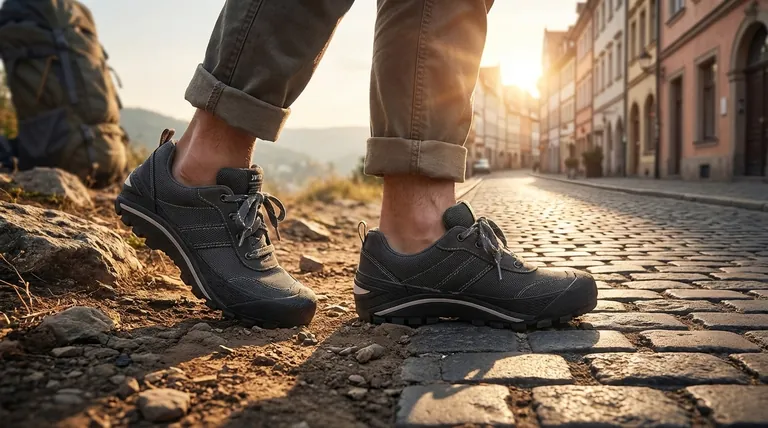
The Spectrum of Hiking Footwear
To understand their advantages, it's best to see hiking shoes and boots not as two separate categories, but as points on a spectrum of support and flexibility.
Hiking Boots: Maximum Support and Durability
Hiking boots are engineered for the most demanding conditions. They prioritize protection and stability above all else.
Key characteristics include high or mid-cut ankle coverage, providing crucial support on uneven, rocky, or wet terrain. This design helps prevent ankle rolls, especially when carrying a heavy pack.
Their construction often involves robust materials like leather and waterproof membranes, with deep, aggressive treads for superior traction. This makes them exceptionally durable, often lasting over 1,000 miles.
Hiking Shoes: The Versatile Hybrid
Hiking shoes occupy the middle ground, borrowing features from both traditional boots and nimble trail runners.
They offer much of the same underfoot protection and durable materials as boots but in a low-cut, lighter package. This increases flexibility and comfort, often eliminating the need for a break-in period.
While they sacrifice the ankle support of a boot, their lightweight and breathable nature makes them ideal for day hikes, groomed trails, and situations where agility is key.
Understanding the Trade-offs
Choosing the right footwear means acknowledging what you gain and what you give up with each option. This is not a matter of quality, but of purpose-built design.
Weight vs. Support
The most significant trade-off is weight versus ankle support. The added material in a mid or high-cut boot provides stability for weak ankles or heavy loads but adds weight, which can lead to fatigue over long distances.
A lightweight hiking shoe reduces this fatigue and feels more agile but places a greater demand on your own ankle and foot strength to maintain stability.
Durability vs. Comfort
Heavier boots, with their thick soles and leather uppers, are built to withstand immense punishment on rugged terrain. This robust construction, however, can make them feel stiff and require a break-in period.
Hiking shoes are comfortable right out of the box and dry much faster when wet. Their lighter materials, while still durable (lasting around 800 miles), will typically wear out sooner than a heavy-duty boot.
Style and Everyday Use
Modern hiking footwear has evolved significantly in style. Many hiking shoes and even some lighter boots feature designs that look perfectly at home with casual wear.
Their inherent durability and comfort make them an excellent choice for travel or daily activities that involve a lot of walking, offering a level of versatility that highly specialized trail runners or heavy-duty mountaineering boots lack.
Making the Right Choice for Your Goal
Your decision should be guided by how you realistically plan to use your footwear most of the time.
- If your primary focus is rugged, multi-day treks with a heavy pack: Choose hiking boots for their non-negotiable ankle support and superior durability.
- If your primary focus is day hikes, fast-paced trail walking, and versatile travel: Opt for hiking shoes that provide trail-worthy protection in a lighter, more comfortable package.
- If your primary focus is style and all-day comfort for urban and light trail use: A modern hiking shoe offers the perfect blend of performance features and casual aesthetics.
Ultimately, the right choice is the one that best matches the demands of your adventures and your personal need for support.
Summary Table:
| Feature | Hiking Boots | Hiking Shoes |
|---|---|---|
| Best For | Rugged, multi-day treks, heavy packs | Day hikes, fast-paced walking, versatile travel |
| Ankle Support | High/Mid-cut for maximum stability | Low-cut for agility and flexibility |
| Weight & Feel | Heavier, more structured | Lighter, comfortable out-of-the-box |
| Durability | Very high (often 1000+ miles) | High (typically around 800 miles) |
| Style Versatility | Rugged, technical look | Modern, blends with casual wear |
Ready to equip your customers with the perfect blend of style and performance?
As a large-scale manufacturer, 3515 produces a comprehensive range of hiking footwear for distributors, brand owners, and bulk clients. Our production capabilities encompass all types of shoes and boots, from durable trekking boots to versatile, stylish hiking shoes.
We can help you source the right footwear to meet your market's demand for trail-ready performance and everyday comfort.
Contact our team today to discuss your manufacturing needs and elevate your product line!
Visual Guide
Related Products
- Wholesale High-Traction Camo Boots - Custom Manufacturer for Brands
- Durable Rubber Sole Outdoor Shoes Wholesale & Custom Manufacturing
- Wholesale Lightweight Tactical Boots Custom Manufacturer for Desert & Combat Use
- Wholesale Waterproof Tactical Boots Custom Suede & High-Traction Soles
- Heavy-Duty Waterproof Nubuck Safety Boots Safety Shoes for Bulk Supply
People Also Ask
- What are the key features of the new line of camo boots? Built for Extreme Cold & Rugged Terrain
- Are camo boots necessary for hunting success? Prioritize Performance Over Pattern
- What is the technical logic behind using closed-eye testing for tactical boots? Unlocking Peak Footwear Stability
- How does the Rank Score Test identify the primary causes of premature failure in tactical and work boots? Key Insights
- What shoes to wear for a security job? Durable, Protective Footwear for Long Shifts



















