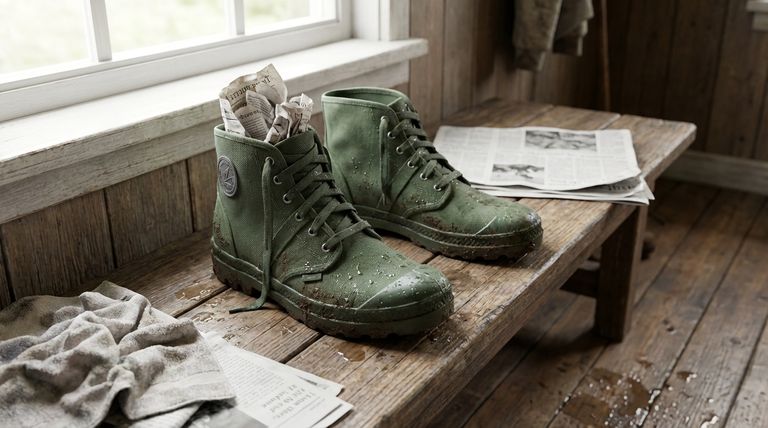
The most effective way to dry wet wellies is to remove them immediately, dry your feet, and stuff the boots with scrunched-up newspaper. This method absorbs moisture from the inside out without causing damage. You must allow them to dry naturally, away from any direct heat sources like radiators or fires.
Wet wellies are not just an inconvenience; they pose a risk to your foot health and the structural integrity of the boots themselves. The core principle is to use gentle absorption and air circulation, as aggressive heat will permanently damage the material.
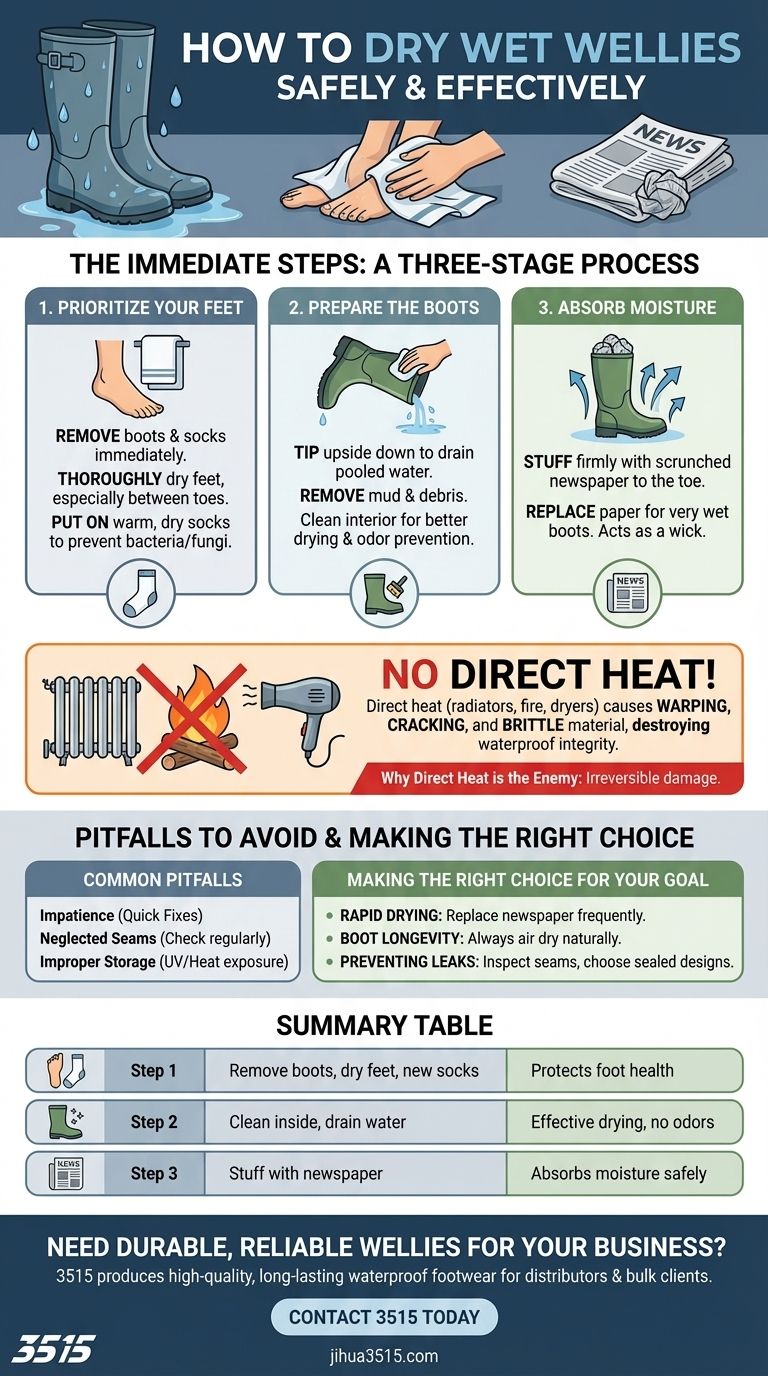
The Immediate Steps for Wet Wellies
When you discover water has breached your boots, acting quickly can prevent discomfort and long-term issues. The process is simple but requires two distinct priorities: your feet and the boots.
Step 1: Prioritize Your Feet
Your first concern should be your own comfort and health. Damp environments are a breeding ground for bacteria and fungi.
Remove the wet boots and socks immediately. Thoroughly dry your feet with a clean towel, paying special attention to the areas between your toes. Put on a pair of warm, dry socks.
Step 2: Prepare the Boots for Drying
Before you begin the drying process, give the boots a quick cleaning. Tip them upside down to drain any pooled water and remove any mud, pebbles, or other debris from the interior.
A clean interior will dry more effectively and prevent odors from setting in.
Step 3: Absorb the Interior Moisture
The newspaper method is the most reliable and safest way to draw moisture out of your wellies.
Simply scrunch up old newspaper into balls and pack them firmly inside the boots, all the way to the toe. The paper acts as a wick, absorbing the dampness from the boot lining. For very wet boots, you may need to replace the paper after a few hours.
Understanding the Drying Process
Patience is the most important tool you have when drying wellies. Rushing the process with high heat is the single most common mistake and will ultimately ruin your boots.
Why Direct Heat is the Enemy
Placing wellies on a radiator, in front of a fire, or using a hairdryer can cause the rubber or synthetic material to warp, crack, and become brittle.
This damage is irreversible and will compromise the boot's waterproof integrity, leading to more frequent leaks in the future.
The Best Method: Air Circulation
The ideal drying environment is a well-ventilated room at a normal temperature.
Once stuffed with newspaper, stand the boots upright or lay them on their side. If you have a boot stand or can prop them upside down, this can also improve air circulation and speed up the drying time.
Common Pitfalls to Avoid
Understanding what not to do is just as critical as knowing the correct steps. Avoiding these common temptations will significantly extend the life of your boots.
The Temptation of a Quick Fix
The biggest pitfall is impatience. Using direct heat offers a short-term gain (faster drying) for a long-term loss (destroyed boots). Always choose the slower, safer method of air drying.
Forgetting to Check the Seams
Wellies often leak not because of a hole in the rubber, but because of a failed seam. Truly waterproof boots have minimal stitching or are made from a single molded piece. Seams are the natural weak point where water can eventually work its way in.
Improper Storage
How you store your wellies matters. Keep them in a cool, dry place away from direct sunlight or extreme temperatures. UV rays and heat can degrade the material over time, making it prone to cracking.
Making the Right Choice for Your Goal
Your approach to boot care should align with your primary objective, whether it's a quick turnaround or ensuring maximum longevity.
- If your primary focus is rapid drying: Stuff the boots with newspaper and replace the damp paper every few hours until the interior is dry to the touch.
- If your primary focus is boot longevity: Always dry your wellies naturally using air circulation and never expose them to direct heat sources.
- If your primary focus is preventing leaks: Inspect seams for wear regularly and choose boots with sealed seams or a one-piece molded design for maximum protection.
Properly caring for your wellies ensures they are ready and reliable whenever you need them most.
Summary Table:
| Step | Action | Key Benefit |
|---|---|---|
| 1 | Remove boots, dry feet, put on dry socks | Protects foot health from bacteria/fungi |
| 2 | Clean inside of boots, drain excess water | Ensures effective drying and prevents odors |
| 3 | Stuff firmly with scrunched newspaper | Absorbs moisture safely from the inside out |
Need Durable, Reliable Wellies for Your Business?
As a large-scale manufacturer, 3515 produces a comprehensive range of waterproof footwear for distributors, brand owners, and bulk clients. Our production capabilities ensure your customers get high-quality, long-lasting boots designed to withstand the elements.
Contact 3515 today to discuss your footwear needs and secure a reliable supply.
Visual Guide
Related Products
- Wholesale Durable Camouflage Canvas Shoes with High-Traction Cleated Rubber Sole
- Wholesale Breathable Training Shoes Custom Athletic Footwear Manufacturer
- Durable Waterproof Rain Boots | Custom Manufacturer for Wholesale & Brands
- Lightweight Breathable Training Shoes for Wholesale & Custom OEM Manufacturing
- Wholesale Durable & Breathable Training Shoes for Custom Brands
People Also Ask
- Why is the selection of high-strength fabric materials necessary in the production of canvas shoes and training shoes?
- What are the properties of canvas as a shoe material? A Guide to Lightweight Comfort & Style
- Can canvas shoes be worn in rainy conditions? The Truth About Water Resistance
- What are some examples of vulcanized shoes? Discover the Flexibility and Board Feel of Classic Sneakers
- What are the characteristics of canvas as a shoe material? A Guide to Lightweight, Breathable Footwear