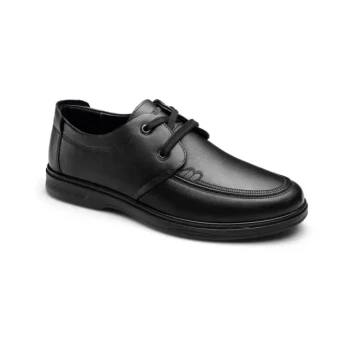
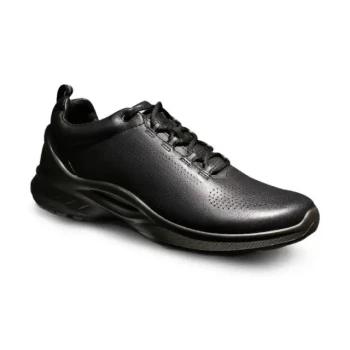
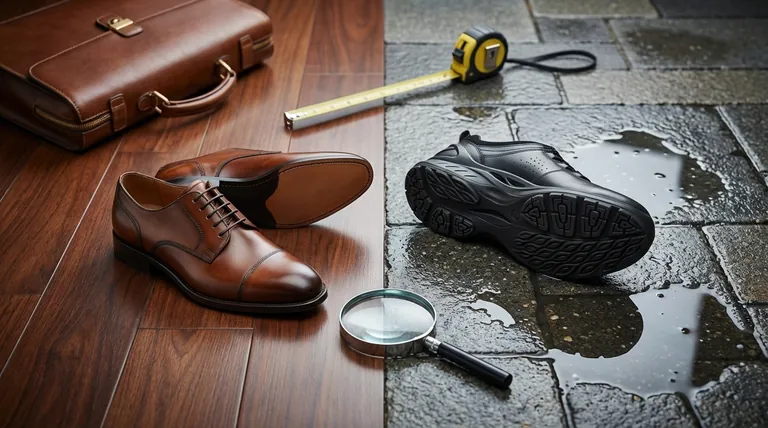
The choice between leather and rubber soles is a critical decision in selecting quality footwear, hinging on factors like your intended use, the environment, and your priorities for comfort and durability. Leather soles are the traditional choice for formal and dress footwear, prized for their classic aesthetic and ability to mold to your foot, while rubber soles offer superior durability, traction, and weather resistance for more versatile, everyday wear.
Your decision is not about which material is universally better, but which is the right tool for the job. Leather offers a bespoke fit and unmatched elegance over time, whereas rubber delivers immediate comfort, all-weather practicality, and superior longevity.
The Case for Leather: Tradition and Personalized Form
Leather soles are the hallmark of traditional, high-quality shoemaking. They represent a commitment to craftsmanship and a specific type of user experience that evolves over time.
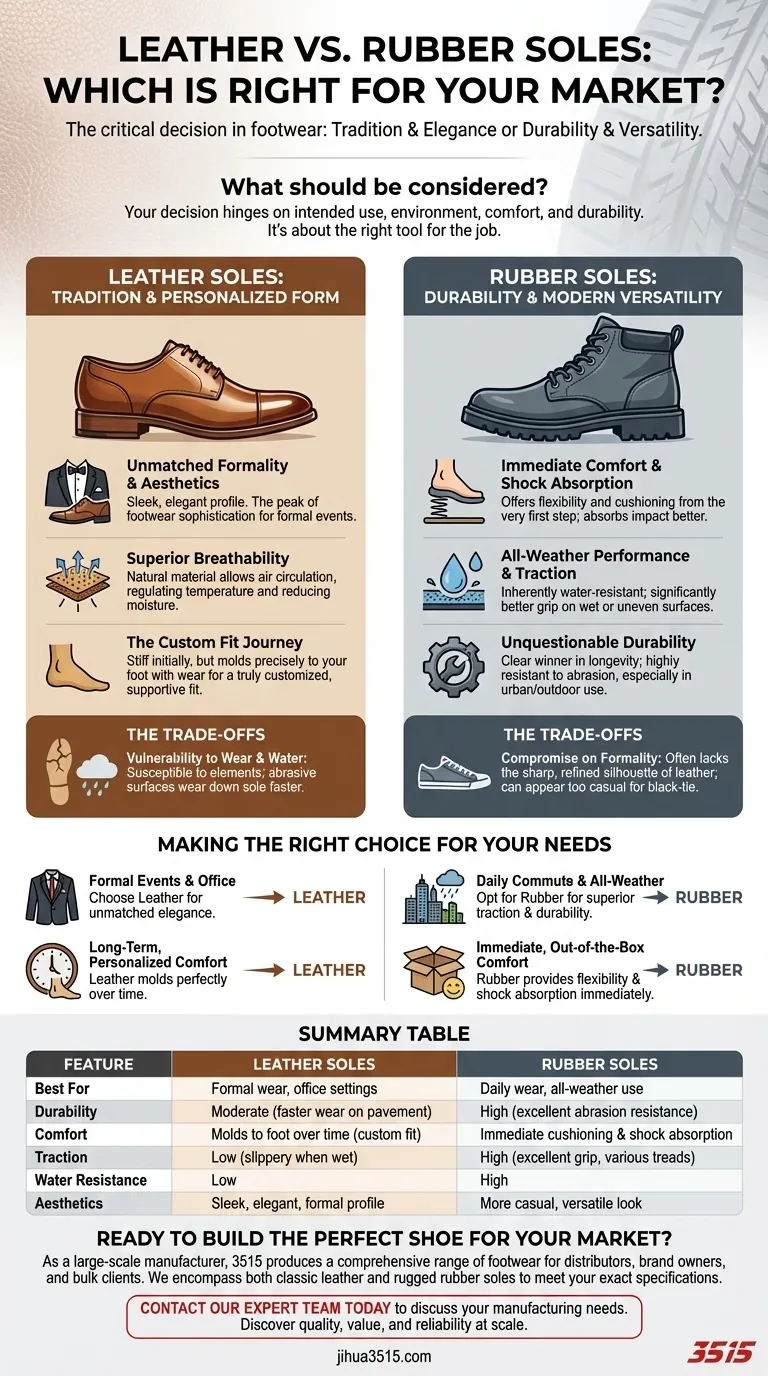
Unmatched Formality and Aesthetics
A sleek leather sole provides a slim, elegant profile that is essential for formal business, black-tie events, and dress shoes. Its clean lines and natural finish are considered the peak of footwear sophistication.
Superior Breathability
As a natural material, leather is porous and allows air to circulate. This breathability helps regulate temperature and reduce moisture buildup inside the shoe, contributing to foot health and comfort during long days.
The Custom Fit Journey
Leather soles are initially quite stiff. However, with wear, the combination of your body heat, moisture, and pressure causes the leather to soften and mold precisely to the shape of your foot, creating a truly customized and supportive fit.
The Case for Rubber: Durability and Modern Versatility
Rubber soles were developed to overcome the practical limitations of leather. They prioritize function, longevity, and immediate comfort for a more active and varied lifestyle.
Immediate Comfort and Shock Absorption
From the very first step, rubber soles offer flexibility and cushioning. They absorb impact far better than leather, making them ideal for walking on hard surfaces like concrete and providing a more forgiving, sneaker-like feel.
All-Weather Performance and Traction
Rubber is inherently water-resistant and provides significantly better grip on wet or uneven surfaces. The ability to incorporate various tread patterns allows for specialized traction, from simple city grips to heavy-duty work boot lugs.
Unquestionable Durability
In terms of pure longevity, rubber is the clear winner. It is highly resistant to abrasion and wears down much more slowly than leather, especially with frequent use in urban or outdoor environments.
Understanding the Trade-offs
Neither sole material is perfect for every situation. Understanding their inherent limitations is key to avoiding a poor investment and ensuring your footwear meets your expectations.
Leather's Vulnerability to Wear and Water
Leather's primary weakness is its susceptibility to the elements. Excessive exposure to water can damage the material, and abrasive surfaces like city pavement will wear down a leather sole much faster than a rubber one.
Rubber's Compromise on Formality
While rubber sole technology has improved, even the slimmest options typically lack the sharp, refined silhouette of a leather sole. For the most formal occasions, rubber can appear too casual or bulky.
The Nuance of Sustainability
Both materials can be sustainable choices. High-quality soles often use vegetable-tanned leather, which avoids harsh chemicals. Likewise, rubber is a natural, biodegradable material, and many manufacturers now utilize recycled rubber to reduce waste.
Making the Right Choice for Your Needs
Base your decision on the primary function you need your footwear to serve.
- If your primary focus is formal events and office wear: Choose leather for its unmatched elegance and classic profile.
- If your primary focus is daily commuting and all-weather reliability: Opt for rubber for its superior traction, water resistance, and durability.
- If your primary focus is long-term, personalized comfort: A well-made leather sole will mold to your foot perfectly, but requires an initial break-in period.
- If your primary focus is immediate, out-of-the-box comfort: Rubber provides flexibility and shock absorption from the very first step.
Ultimately, your choice of sole is the foundation of your footwear, so select the material that best supports your specific journey.
Summary Table:
| Feature | Leather Soles | Rubber Soles |
|---|---|---|
| Best For | Formal wear, office settings | Daily wear, all-weather use |
| Durability | Moderate (wears faster on pavement) | High (excellent abrasion resistance) |
| Comfort | Molds to foot over time (custom fit) | Immediate cushioning & shock absorption |
| Traction | Low (slippery when wet) | High (excellent grip, various treads) |
| Water Resistance | Low | High |
| Aesthetics | Sleek, elegant, formal profile | More casual, versatile look |
Ready to build the perfect shoe for your market?
As a large-scale manufacturer, 3515 produces a comprehensive range of footwear for distributors, brand owners, and bulk clients. Whether your customers demand the classic elegance of leather soles or the rugged durability of rubber, our production capabilities encompass all types of shoes and boots to meet your exact specifications.
Contact our expert team today to discuss your manufacturing needs and discover how we can deliver quality, value, and reliability at scale.
Visual Guide
Related Products
- Durable Rubber Sole Outdoor Shoes Wholesale & Custom Manufacturing
- Durable Canvas Work Shoes with Rubber Lug Sole | Wholesale Manufacturer
- Wholesale Breathable Perforated Leather Derby Shoes with Modern Comfort Sole
- Wholesale Modern Perforated Leather Derby Shoes with Chunky Sole for Custom Branding
- Wholesale Durable Camouflage Canvas Shoes with High-Traction Cleated Rubber Sole
People Also Ask
- What is the function of the sole in outdoor shoes? Find the Perfect Grip and Support
- What role do outdoor shoes and sneakers play in navigating external terrains? Engineered Stability for Every Surface
- How is AI utilized in the design of outdoor and safety footwear? Harnessing Big Data for Market-Driven Shoe Innovation
- Why is durability important when selecting outdoor shoes? A Guide to Safety & Long-Term Value
- What are the key components of outdoor shoes that affect comfort and sturdiness? A Guide to Durable, High-Performance Footwear