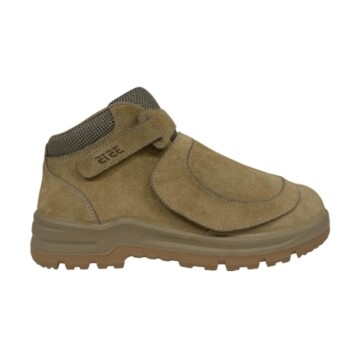
Professional ankle fixation braces serve as the primary defensive barrier in postoperative recovery for Achilles tendon detachments. These devices, often called walking boots, function by locking the ankle in a neutral position to drastically reduce tension on the surgical repair while allowing for the safe initiation of partial weight-bearing.
The walking boot acts as a critical bridge between surgical repair and functional mobility. By strictly controlling mechanical stress, it protects the vulnerable tendon-bone interface while simultaneously permitting the early, limited movement necessary to stimulate tissue regeneration.
The Mechanics of Structural Protection
To understand the boot's role, you must first understand the mechanical requirements of a healing tendon.
Rigid Support and Fixation
The primary function of the brace is providing rigid support. Unlike soft bandages, these boots utilize a hard exterior to enforce stability.
Maintaining Neutral Position
The device secures the foot in a neutral position. This specific angle is calculated to prevent the Achilles tendon from stretching prematurely, which could compromise the sutures or the reattachment site.
Restricting Excessive Movement
By physically limiting the range of motion, the brace restricts excessive movement of the ankle complex. This immobilization is non-negotiable in the early stages to prevent accidental dorsiflexion (pulling the toes up), which puts immense strain on the Achilles.
Facilitating Biological Recovery
Beyond simple immobilization, the brace plays an active role in how the biological tissues heal.
Offloading the Surgical Site
The design effectively reduces tension directly at the surgical site. By absorbing external forces, the boot ensures that the repair site is not subjected to destructive mechanical loads during daily activity.
Protecting the Tendon-Bone Interface
For detachments, the critical zone is the tendon-bone interface. The brace acts as a shield for this specific area, ensuring the soft tendon tissue has a stable environment to re-integrate with the hard bone surface.
Promoting Tissue Regeneration
The reference notes that these braces allow for controlled partial weight-bearing. This early, regulated loading is essential because it signals the body to regenerate tissue along the lines of stress, leading to a stronger final repair.
Understanding the Trade-offs
While the brace is a tool for recovery, it functions by imposing strict limitations that must be respected to avoid setbacks.
The Necessity of Restriction
The boot is designed to inhibit your natural gait. This restriction of movement is a deliberate trade-off; you sacrifice temporary mobility to ensure the structural integrity of the repair.
Preventing Symptom Recurrence
The alternative to using the brace is exposing the foot to improper mechanical stress. The boot minimizes the risk of symptom recurrence by preventing the patient from applying force that the healing tendon is not yet ready to handle.
Making the Right Choice for Your Recovery
The use of a walking boot is not passive; it is an active participation in your rehabilitation strategy.
- If your primary focus is Protecting the Repair: Ensure the brace is fastened securely to maintain the neutral position and minimize tension on the tendon-bone interface.
- If your primary focus is Accelerating Healing: Utilize the brace to safely engage in controlled partial weight-bearing, which stimulates necessary tissue regeneration without overloading the site.
Adherence to the fixation protocol is the single most effective way to turn a surgical repair into a permanent physiological recovery.
Summary Table:
| Key Aspect | How it Works / Benefit |
|---|---|
| Primary Function | Locks ankle in neutral position; primary defensive barrier. |
| Structural Protection | Provides rigid support, maintains neutral angle, restricts excessive movement to safeguard repair. |
| Biological Recovery | Offloads surgical site, protects tendon-bone interface, promotes tissue regeneration via controlled weight-bearing. |
| Controlled Mobility | Allows safe, early partial weight-bearing to stimulate healing without overloading. |
| Risk Mitigation | Prevents premature stretching, suture compromise, and symptom recurrence by limiting improper stress. |
| Adherence Importance | Crucial for converting surgical repair into permanent physiological recovery. |
As a large-scale manufacturer serving distributors and brand owners, 3515 offers comprehensive production capabilities for all footwear types, anchored by our flagship Safety Shoes series. Our extensive portfolio covers work and tactical boots, outdoor shoes, training shoes, and sneakers, as well as Dress & Formal shoes to meet diverse bulk requirements.
Ready to elevate your product line with our premium manufacturing? Partner with 3515 for unparalleled quality and efficient bulk production.
Contact us today to discuss your specific requirements and bring your designs to life!
References
- Hubert Hörterer, Sebastian Felix Baumbach. Recurrence rates for surgically treated insertional Achilles tendinopathy. DOI: 10.1007/s00402-023-05155-8
This article is also based on technical information from 3515 Knowledge Base .
Related Products
- Durable High-Ankle Tactical Boots for Wholesale & Custom Manufacturing
- Premium Suede Metatarsal Guard Safety Boots Work Shoes
People Also Ask
- How do tactical boots protect against injuries? Discover the Integrated Safety System
- How is the compatibility of polymer materials demonstrated in smart footwear? Enhancing Tactical & Training Performance
- How does additive manufacturing equipment reduce environmental risks? Sustainable Tactics for Modern Footwear Production
- What is the role of high-frequency acquisition hardware in technical skill analysis for outdoor and tactical boots?
- What are the different types of tactical boots available? Find the Right Boot for Your Mission